Happy Valentine’s Day! If old souls were to have a customized heart-shaped box of chocolates, what decadent delights would be hidden inside?
Dark Chocolate Truffle
Finding an old soul is rare, but loving them is nearly irresistible–just like classic truffles in a box of chocolates. They’re rich, semisweet, and melt-in-your-mouth delicious. Like truffles, old souls are classy, deeper than what’s seen on the surface, and cherished, especially when it comes to special occasions!
Vanilla Cream
It doesn’t matter whether or not vanilla creams are your favorite because they will always be in the box of candy. Vanilla is a traditional flavor, and you can count on them, even if you’d rather have that truffle that your sibling just ate! Old souls are like vanilla creams because they are typically good listeners. Need advice? A listening ear? To the vanilla!
Coconut Cluster
To assert that all old souls come from tropical locations, or that they are a bit fruity, would be ludicrous! Instead, a milk chocolate treat with crunchy coconut pieces compares to the eclectic tastes of an old soul. Old souls are often known for reading…..a LOT. They love looking back at history and appreciating the arts, both classic and modern. Like coconut clusters, old souls can bring a little flavor,flaur, and crunch to your day!
Salted Caramel
Unless this is an all-nut assortment, you will undoubtedly find some form of chocolate and caramel! Because many old souls are trustworthy and empathetic, you can count on a sweet caramel in the box…somewhere!
Chocolate-Covered Peanuts
Okay, yes, old souls can be a bit nutty, just as chocolate-covered nuts are simple but nutty. When old souls are passionate about something, they give their 110%, which makes them seem crazy and, well, nutty!
Dark Chocolate Raspberry Cream
Old souls may look ordinary, but on the inside, they’re full of compassion, unique wisdom, and surprises. They aren’t necessarily fancy, but there are only one or two in the box!
Chocolate Buttercream
If it’s not broken, eat it! Wait, that’s not right. Like vanilla creams, chocolate buttercreams are standard in a box of chocolates. Old souls love classics. They’ll write you letters, cook homemade meals, and follow other old-fashioned methods that suit them most. Quality over quantity is a priority, even though chocolate buttercreams are usually both tasty and well-represented in the box.
The sense of sight is so precious, not just because our unique eye colors are beautiful, but because sight opens up the world in front of us and brings it to life–reality.
In the world of literary analysis and criticism, perspective matters. Critics deconstruct texts, look for symbols, ascribe meanings, focus on arrangement of language, consider psychoanalysis, and highlight gender, cultural, and racial points of view.
In the world of song lyrics, which is consumed by poetry, literary theories can still be applied. For two 1960s records, Laura Mulvey’s literary theory of “The Gaze” works in various ways.
“The Gaze” lends itself to both psychoanalysis and feminism movements with its concentration on how women are mentally perceived by men. By its simplest definition, “The Gaze” is when men objectify women, taking into account physical attractiveness and pleasures rather than mental or emotional attributes. Women, then, become objects of desire.
As Valentine’s Day approaches, we can’t help but turn up both love songs and heartbreak songs. The Grass Roots’ “Temptation Eyes” and Guess Who’s “These Eyes” play on the theme of “The Gaze” and also work to reverse it. Here at COACS, we link everything together, even if the connection sounds a little crazy.
Don’t Miss a Slot in the Tape Deck! Subscribe to our newsletter
The Grass Roots, with legendary guitarist Randy Bachman and vocalist Rob Grill, had famous hits in the ’60s, including “Midnight Confessions” and “Live For Today.” Always passionate and smooth with lyrics, The Grass Roots continued that style with “Temptation Eyes.” The idea of The Gaze can be explored in several ways throughout this song.
The opening instrumentals are bold and intense, which will soon match the intensity of the lyrics as they move. Immediately, we learn that the desired girl lets Grill down with her freedom. She isn’t paying much attention to him, or at least taking the time to love him. Her eyes are tempting, which makes her even more seducing. Although Grill desperately wants the girl to spend the night with him, he talks about his soul and how her eyes look into his soul. From The Gaze point of view, he would want just the body, not the soul. A soul connection is more emotional and intellectual, meaning that the temptation to love the girl is much more than a simple physical attraction.
On the contrary, several lyrics do hint at The Gaze, drawing a fine line for the song’s narrator. He wants her “all for myself [himself]” and needs her “love tonight.” A sense of immediacy takes hold as he still craves body, not just soul. He’s human, I guess, so we can’t blame him too much, can we?
Nonetheless, The Gaze is present, even though he’s also falling for the girl’s soul by looking into her eyes. The eyes are a gateway, a rite of passage. Either a man will see the body, or he’ll see the soul.
“These Eyes” by Guess Who
By all means, this track by Canadian rock band Guess Who isn’t a rare find. However, it is a popular ballad featuring the outstanding vocals of Burton Cummings.
The keyboard introduction is a stark contrast from “Temptation Eyes,” as it presents a more somber and serious mood. It’s very reflective.
Cummings laments of losing a love and is convinced that his eyes will never see another love like he had with this current ex. Not only did she break her promises, but she’s shattered his gaze. The lyric “see” is interesting because Cummings talks of “seeing” love, not “feeling” it. No doubt, this lyric is likely meant to connect back to the idea of eyes and crying, but “seeing” does propose the question of whether or not he sees the body or soul.
Later on, Cummings sings of seeing “lots of loves.” On one hand, this line could be interpreted to mean that he’s had lots of lovers for whom is affection was mostly physical, and the current girl was the best of them all. There is no substantial evidence to truly prove this claim, but it does raise questions.
Because he mentions that his world has fallen apart, this relationship could have been soul-binding for him. The Gaze could go either way.
Just…Eyes
Both “Temptation Eyes” and “These Eyes” explore the idea of either objectifying women for sexual needs or loving women through the soul. The repetitive nature of each song goes to show that each man is obsessed with a woman. How that obsession unfolds could be dangerous. In the end, heart and soul should always trump pure lust. A man’s gaze will determine where his heart truly lies.
Before You Go…
Be sure to check out all past Monthly Mixtape reviews. You can also listen to past songs on the Guilty Pleasures of a Classic Soul playlist on either YouTube or Spotify!
Clacking computer or cell phone keys might be quick and efficient these days, in order to accomplish daily communication, but handwriting is still appreciated, especially by old souls!
Handwriting and language go hand in hand (no pun intended). Without the need for recording and sending information, handwriting wouldn’t be necessary. The various alphabets used around the world and throughout the centuries accomplished the same basic forms of human communication. Handwriting in any language still bears benefits for those willing to take up the pen.
Technology Fatigue
Imagine…just you, a piece of blank paper, a smooth-writing pen, and natural lighting, either from the sunlight outside or from a soft lamp.
Harsh bluelight from our technological devices can strain our eyes and leave us exhausted. Old fashioned paper and pen allow a break from the fast-paced nature of our advanced society. More paper, less screen time!
Additionally, handwriting is less strenuous than typing on a keyboard. Sure, anybody can develop carpal tunnel from too much typing or writing, but consider how taxing typing is. Our fingers have to constantly be in motion and jump back and forth. Typing isn’t simply in the wrists. Of course, we still use our fingers in handwriting, but writing is done with a gliding motion.
Content
In a world of immediate communications, we often send off texts and emails without fully thinking through our words. Even texting abbreviations like “rn” (right now) and “btw” (by the way) show how rushed our modern-day communication can be. We live in a “get-your-reply-out-and-get-going” society. Progress is, then, an important value, not necessarily the quality of the progress.
In writing a note or letter, the writer must slow down to choose the correct words, unless scribbling in a hurry. Instead of pressing memorized buttons, the brain sends signals to the hand in order to create the movements needed to form each letter and word.
In some cases, handwriting allows the writer to truly think and send communications that are longer in length and more beautifully written. Sometimes a manual process leads to a more cherished product.
Old Soul Connections
For old souls, handwritten letters are rare gems. Quite simply, this is because the time and thought involved in the writing process make the letter or note seem more genuine. It’s a work that can be crafted straight from the heart. Typed texts can still be as genuine, but handwriting is more personal. Everyone has his or her own unique style of writing, which helps to make the words stand out and feel closer to home. Standard computer fonts can make a letter seem too mechanical, while handwritten words carry a certain warmth. Whether the handwriting is composed in print or cursive, the effects are still the same.
Because some old souls are introverts, it’s only natural that old-fashioned handwriting appeals to people who enjoy solitary hobbies that involve deep thinking and creativity. These types of writers enjoy selecting the perfect words and arranging them so their meaning is beautifully and accurately reflected on the page. Empathy and affection are sure to appear on the paper as a result.
So is handwriting going out of style? Likely not, but when it comes to handwritten notes and letters, there is always room for more writers to join the paper trail. In a world of instant, mechanical communication, sometimes it’s therapeutic to sit down and compose a lovely and personal note to someone special as a token of appreciation.Will you pick up the pen?
Okay, how about in 2023? Life hasn’t seemed “normal” since Covid, but technology has advanced, war rages, natural disasters keep brewing, and politics is insane. Are we still alive?
In 1969, duo Zager and Evans were on the airwaves with their one-hit wonder, “In The Year 2525 (Exordium and Terminius).” Although it’s not the year 2525, and you and I will likely never see that century, the popular track can apply to modern life as we enter (a hopefully better) 2023.
“In The Year 2525” by Zager & Evans
Despite the eventual upbeat tempo, the opening lyrics set up the mournful tone of the song. The story, unfortunately, will not improve and become positive. In fact, this dismal foretelling of the future feels extremely dystopian.
As a result, I can’t help but make comparisons to literature, most notably The Giver and several Ray Bradbury stories. The song mentions that humans’ truths will be in the pill they take in the morning. This “pill” suppresses the intellect, the one characteristic that sets humans apart from animals. Humans wouldn’t be able to hold any personal opinions, similar to how, in The Giver, the characters take pills to suppress sexual and romantic desires. What kind of life is that?
As the years progress in the song, the human body itself becomes obsolete. In the age of technology, the song proposes that machines will have more purpose and power than humans, especially when those machines are literally allowing human bodies to function. No doubt a haunting consideration, the idea of machines overcoming man is becoming more popular as time springs forward. Oddly enough, this song was written and performed in 1969. Technology then was nowhere near as advanced as it is today. At our current speed, could we meet these doomful predictions much sooner than 3535?
Don’t Miss a Slot in the Tape Deck! Subscribe to our newsletter
Test-tube babies are already a phenomenon in today’s world, but the vision here in the song is cold and calculating. There is seemingly no human interaction or connection whatsoever. Humans require physical touch, especially during infancy. The interesting questions remain: “are humans killing themselves? Is technology killing humanity? Is it a bit of both?”
Even more disturbing is God’s role. We know that Judgment Day will arrive regardless, but how long might God take before He ends the misery we’ve created for ourselves? How many more centuries will we be allowed to “live” if God’s life within us is mostly replaced by machine? God, all-loving and all-powerful, could end that suffering much sooner. Or maybe not. How much of ourselves must we lose?
Will these future centuries be truly full of life? After all, if humanity surrenders itself to machines and technology, then fleeting pleasures will be no more. What can man enjoy with his suppressed emotion, intellect, and limbs? God’s image and likeness begins to fade when man becomes lazier and uses technology to make life too easy and self-centered.
Finally we come to the words Exordium and Terminius. Thanks to a simple Google search, exordium is the beginning of a discourse, while terminius refers to a final point in space time. Therefore, the song’s alternate title literally describes it as a discourse on, or leading to, the end of times.
Doesn’t sound to cheery for New Year’s, but this one-hit wonder from duo Zager and Evans reminds us, as we enter this new year, to not overlook the simplicities of life and what it truly means to be human.
Before You Go…
Be sure to check out all past Monthly Mixtape reviews. You can also listen to past songs on the Guilty Pleasures of a Classic Soul playlist on either YouTube or Spotify!
These are the pillars of Christmas. For Christians Advent is a season comprised of the four weeks prior to Christmas. In the customary Advent wreath, each candle represents the pillars listed above. As a time of preparation for the coming of Christ, the true meaning of Advent often gets overlooked as the secular Advent of commercialism weighs on our minds.
This year, however, Advent felt a little different for me. Instead of overlooking the “reason for the season,” I feel as though I was immersed in it, though not realizing it until after the fact. Following a car accident right before Thanksgiving, God has surprised me in ways I hadn’t thought possible. Hope, peace, joy, and love have been present for me this Advent, and I don’t believe I’ve ever felt Advent in these ways before.
As a result, instead of writing a fictional story for my annual “Heartwarming Christmas” series, I’ve decided to share a narrative of my Advent adventure.
Part I: Collide
“He’s not going to stop,” I told myself as I kept my foot on the brake of my one-year old Subaru. The traffic whizzed by on the bypass while I stopped on the exit ramp behind the car in front of me.
The white glitter sprinkled down on us, but the asphalt was dry. Through the rear view, I noticed him moving behind me, but I knew he wasn’t going to stop. As metal scraped metal, I cut the wheel to avoid a front-end collision. How did I know to do that?
No airbags, no concussion. No hellish hospital trip. No bodily damage or breakage. But the seats were…broken. She sustained more than fixable butt damage.
My flood was inevitable. You must mourn an inanimate object when it was the perfect companion, and the less fortunate need a new model, not you. I had a new model. I didn’t need another. I didn’t want another.
“You’re lucky you’re getting a new car!”
“I don’t need a new car. I have one.”
“You had one.”
“I don’t want another one.”
Part II: Too Good
“There’s no such thing as luck,” Obi-Wan Kenobi quips in Star Wars: A New Hope. And he’s partly right. As a devout Christian, I’m to believe that God knows the best plans for my life. He will guide me and lead me to where I need to be. Over the years I’ve experienced tiny coincidences, like God plopping people and occurrences into my life at the right time. Mostly, though, God knows how to play the necessary songs on the radio or inspire through a “perfectly-timed, Sunday Gospel reading.”
But does God deal His cards in “too good to be true?” Can I trust something or someone that came out of nowhere and radiates good vibes and pure intentions?
Stupid apps. Apps don’t lead to real personal connection (hello, A.I. 👋). But when I sat in the cozy truck cab that November day, just after the accident, I felt optimistic and terrified. The app was meant to be a marketing tool for myself, but then I stumbled, analyzed, and hit a small button. 24-hours later I was no longer unrequited.
And then, gradually, the conversations began and my mental checkboxes had been marked. I hadn’t expected the conversation and interests to be so mutual. Coincidence. Here was someone I hadn’t even met yet, and we were already clicking.
God can deal in too good to be true.
Part III: Scarily Accurate
Cue harsh reminders of 2016, a year when hot-shot celebrities dropped dead and my sense of normalcy crumbled under the weight of a family medical drama.
It seems as though my new acquaintance is suffering similar fates this year, and my heart is already broken. I don’t wish a “2016” on anyone, especially a polite someone who genuinely keeps the conversation going and respects me–right out the gate.
In these painful moments as a bystander, who feels like she should do more than pray, I have trouble quenching the deep burning passion to throw a bound copy of my college capstone. If I toss my memoir like a Frisbee, will it land 50 miles away and reach the lap of a fellow reader who will understand the misery on the bound pages?
I worry. I comfort. I wait. I worry. I wait. I hear an Eagles’ song. I worry. I comfort. I wait. I drive my brand new, miraculous red car, exactly like the last one. I worry. I drive. I wait.
Part IV: Advent Fulfilled
Tonight is the Eve of the day we’ve been anticipating. To me, today is more exciting than tomorrow. Today’s hope ejects me into the celebration of tomorrow.
And as I reflect on the past four weeks, I realize that God has helped me find PEACE in who I am and how much He wants me to rely on Him. I find HOPE in knowing that God provides in due time (even if His timing is immediate and unplanned). Hope that someone else out there shares my old soul mentality. JOY regarding the PEACE and HOPE just experienced. Joy of being me. Joy that Christ thirsts for me.
And, finally, LOVE. I LOVE even what I do not understand. When I care about something or someone, I care deeply. Full force. 110%. This heart, not completely unlike the gentle heart of Jesus, makes me human. It makes me alive. The bleeding heart might drive me mad, but it’s better to “have loved and lost.” And so I’ll continue holding on and pouring out my beautiful heart, not just on Christmas, but every day of the year.
If your cut-out sugar cookies look like the ones above, then you may close out this tab and go on your merry way, skipping to your oven!
Outside the world of baking championships on the Food Network, we common folk just want a decent-looking and tasting cut-out cookie, whether that cookie be homemade or out of a pouch. The point is, if you don’t care about your cookies looking gourmet, and you struggle with the stickiness of the dough, then see my tips below!
I Can’t Believe It’s Not…
BUTTER. You’re going to need butter. Sticks of margarine are easy and convenient for baking, but ONLY if they’re used at the right temperature. For sugar cookies, either from a package or from scratch, a stick of margarine is supposed to be at room temperature. In other words, it shouldn’t be too hard or too soft. You can try softening it in the microwave for small increments of time, but, if you’re like me, you end up melting at least a little piece of it because it’s difficult to be smarter than the microwave.
If the butter’s temperature isn’t just right, than the dough will be incredibly soft and sticky, or just clumpy. The trick is to take out a stick of butter and leave it on the counter for an hour or two prior to baking.
The Chill Factor
Unless you’re a rich baker, you likely don’t have a fancy chill blaster that will help your dough thicken and become easily “rollable.” Often times sugar cookie dough is still a bit soft and sticky despite the butter temperature. As a result, either setting your dough in the refrigerator or even the freezer for an hour or so can make the dough more manageable.
Le Fleur
Flour is a binding agent which makes it super helpful for rolling and working with sticky cookie dough. The ultimate fear is that you’ll use too much and make the dough taste dry and bitter. In this case you may need to add just a little more sugar. Or, you can use extra icing!
Like butter, flour can be scary because it can be difficult to find the perfect proportion. Don’t fret! Start with small amounts, whether your adding it to the dough or spreading a little on your rolling surface. If you’re worried about having too much flour on your hands, which you need to keep the dough from sticking to you until next Christmas, you can substitute with rubber gloves.
Keep Them Cookies Rolling!
One of the biggest tips to remember is that you don’t have to roll out large sections of dough, nor do you need to use the longest rolling pin in the world. Try using small hunks of dough and a smaller rolling pin. Don’t overwhelm yourself!
To make rolling easier, you can put your dough on a cutting board or between pieces of parchment paper.
Can that Royal Icing!
It doesn’t matter which baking show you watch, because they all mention and use royal icing. Royal icing is typically a combination of powered sugar (aka confectioner’s sugar) and milk or lemon juice or any other recipe you can find out there on the worldwide web.
However, mixing up the right consistency of royal icing can be hard and time consuming. After wasting time, energy, and ingredients, you still may have a runny glaze that will not help you decorate beautiful sugar cookies.
Icing in a can is made and sold for a reason! It’s is thicker than royal icing, but it will get the job done and save you time. Plus, it’s just as delicious!
If, however, you’re struggling because the canned icing is too thick, you can pop it in the microwave for about 10-seconds to thin it down and make it more manageable to work with.
Piping bags can also be a pain, from cutting the tips to stuffing all of your icing inside. Plus, you’re then left to dispose of these plastic bags. Looking for an easier and greener option?
Look for either plastic or metal piping containers that are washable. All you need to do is fill the squeezable container with icing, screw on the piping tip, and get to decorating. The only downside to these marvelous tools is that sometimes you need to refill them with icing multiple times, depending on the container’s size.
Icing is Now Paint 🎨
The piping containers mentioned above are great for flooding, a technique commonly used with royal icing. Sometimes, though, you just want to spread green icing on a wreath-shaped Christmas cookie, and a butter knife is just too thick.
I’ve recently discovered pastry brushes, and they’re so neat! You can spread your icing in thin layers, and it doesn’t clump, like with a butter knife. Softening your icing prior to use is very beneficial for painting the icing. You can even employ similar wet-on-wet techniques with the brushes. The variety in tip sizes make them even more effecient!
So the next time you think you have to be a master pastry chef to bake great cut-out sugar cookies, remember these quick hacks!!
When listening to individual artists, music lovers can typically notice how specific themes and sound styles are echoed across several songs from a particular artist. However, it is not often that artists have two songs with nearly identical titles. For example, in 2021, OneRepublic released their fifth studio album, Human. Nowhere in the media did the band, or composer Ryan Tedder, mention the track “Human” from their 2016 album, Oh My My. Therefore the two subjects and sounds are very similar to each other, but these connections are not directly stately.
Similarly, ’70s singer Leo Sayer had two tracks which, by the titles, sound as though they would be the same. In 1973, he performed the song “Don’t Say It’s Over” while, in 1977, performed “It’s Over.” With nearly identical themes, music analysts like myself can’t help but wonder if these two songs can connect to each other, even if Sayer had no intention of doing so!
Leo Sayer generally appears to be forgotten compared to mainstream bands of the ’70s. Most people, however, have heard one of his most famous tracks, “You Make Me Feel Like Dancing.”
“Don’t Say It’s Over” by Leo Sayer
In comparing these two songs, it only makes sense to take a look at them in chronological order. “Don’t Say It’s Over” is much more of a ballad than “It’s Over.” The soft and mournful piano introduction sets the tone and mood of this song. I like that, before we dive into the entire story of this broken relationship, we get a glimpse of how the relationship has been judged. The collective “they” Sayer refers to makes judgments about whether or not this romantic relationship is to be or not to be. This outward glimpse of gossip and grain-of-salt advice then turns inward as Sayer begins speaking directly to the lover in the song.
It’s interesting how Sayer’s emotions are at play here in the beginning. At first he says that “you’ll make me fall apart,” and then two lines later, “well, I might fall apart.” His wavering here shows the deep impact that the broken relationship will have on him going forward.
As Sayer progresses into the second verse, I personally feel like I could cry. Does anybody else feel the tears welling up? Vocally, Sayer, throughout his career, has been able to hit insane falsetto notes and convey intense emotion. In this ballad, we see the effects of the latter. The story of the girl taking him in when he was poor sounds a little cliche at first (or at least it reminds me of a few other songs I’ve heard), but when he laments that they have experienced and overcome tough situations together, the song cuts deep and feels intimately human. If they could survive other obstacles, then why should they say goodbye now? Sayer has a right, then, to beg her to say that the relationship isn’t over.
Although sad and emotional, “Don’t Say It’s Over” is a beautiful ballad that pulls listeners in, so much so that we feel like we’re part of the relationship.
“It’s Over” by Leo Sayer
By 1977, however, the emotions take a huge 180-degree turn! Is “It’s Over” talking about the same relationship as in “Don’t Say It’s Over?” Most likely not, but it certainly provides a huge contrast in both songwriting, vocals, and style.
Now the piano introduction is jazzier and upbeat. It’s not aggressive, but it has ATTITUDE! This song represents an acceptance, or realization. Here Sayer is not trying to fight or deny the fact that the relationship is over. In fact, he doesn’t see the point in the “bitterness” and “emptiness.” There’s a bit of sadness in the chorus/repetition of “it’s over,” but it sounds more confident that in the last song. In other words, Sayer’s accepted that it’s time to move on because she already has and has been on the lookout for someone new. The confidence, or attitude, also seems aimed at the girl’s wrongdoing. It’s a “hey, you’re partly to blame for why we’re over.”
In the second verse, he mentions the loneliness he’ll have to experience and how he’ll try to pretend that everything is still normal. These lyrics mirror what we heard in “Don’t Say It’s Over,” but Sayer doesn’t sound totally crushed like before.
The bridge of the song truly hits home the point that this breakup isn’t entirely on him. Sayer sings:
“I remember what you said to me / Take care when you share your love / Before you give it all so easily / Be sure that you can give enough / Look what happened here”
-Leo Sayer ; Tom Snow
He gave his love, but it blew up in his face and now he’s on the losing end of the situation. When he sings “it’s over,” there is frustration, and maybe even a little relief, that the relationship ended as it did.
Lots of Endings…
“Over” is the word of the day when it comes to these two songs by Leo Sayer. While they are not directly connected, Sayer’s extraordinary writing and vocal capabilities prove his diversity and flexibility in the music world. Emotions are always at play, and they lend themselves to fantastic storytelling.
So is this blog post “over” now?
“Don’t say it’s over!”
Before You Go…
Don’t forget to listen and subscribe to the Guilty Pleasures of a Classic Soul playlist, which compiles all songs featured on Monthly Mixtape! You can now listen on either YouTube or Spotify!
“If you want something done right, you may as well do it yourself!” How many times have you thought this sentence or said it out loud? The sad part is that it’s true. Sometimes we can only trust God and ourselves.
You might think that the start of November instantly means that the Halloween season is over. Au contraire! Besides, this Monthly Mixtape song comes from a movie set on New Year’s Eve.
In 1989, Ghostbusters II (herein abbreviated as GB2) hit theaters and reprised a similar story of the ghost-chasing crew, now saving New York again, and getting into trouble…always lots of trouble.
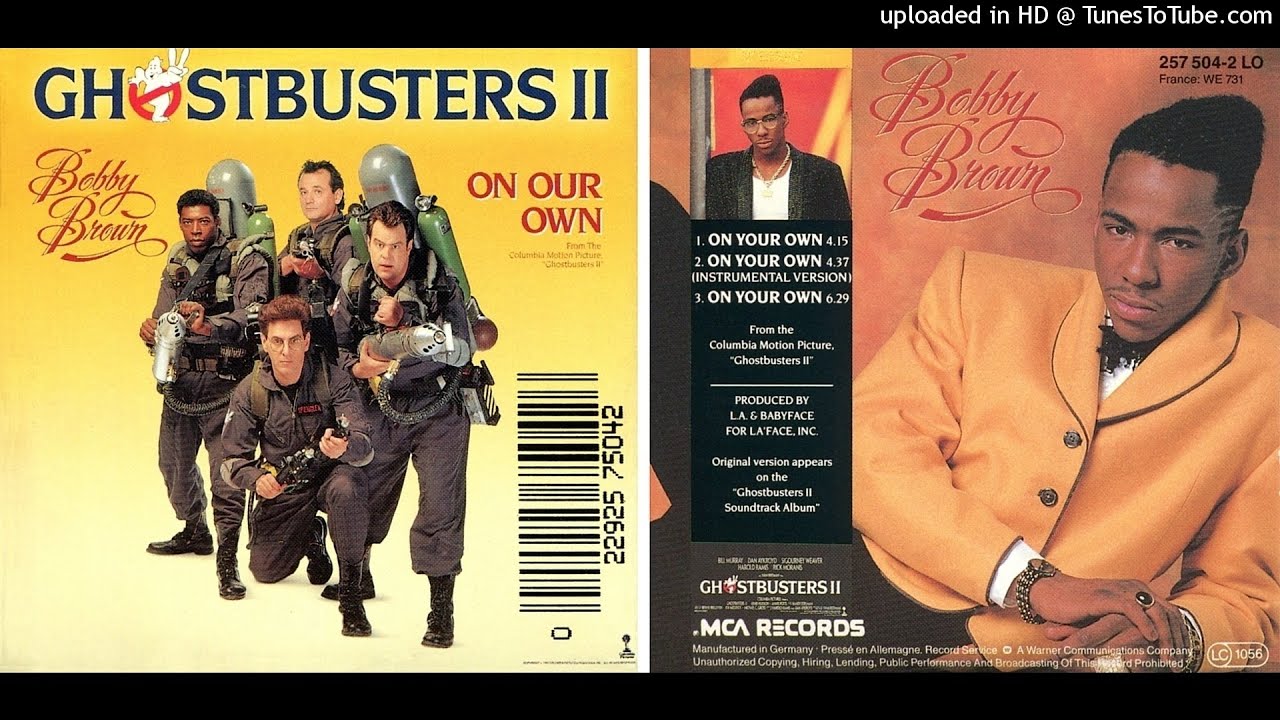
The soundtrack for GB2 was a bit more expansive than the first movie, in that other original songs besides Ray Parker Jr.’s theme song were featured throughout the movie. Ever since I was a kid, I’ve loved one repeated song in the film: “On Our Own.”
Bobby Brown had just left the R & B group New Edition to pursue a solo career, and he had already made a name for himself with tracks such as “Every Little Step,” “My Prerogative,” and “Don’t Be Cruel.” Now he pushed the envelope even further with a secondary anthem for a popular movie franchise.
What’s Monthly Mixtape? Each month on Confessions of a Classic Soul, Nicole reviews an underappreciated song from decades past. Her love for underrated songs, plus her literary analysis skills and music experience, allow her to find hidden gems within songs.
“On Our Own” by Bobby Brown
One of the cool characteristics about this song is that it lends itself to the beginnings of rap and the expansion of R & B, as both genres would further emerge in the 1990s. Songs like these from 1989 show the shift in sound that would occur in the upcoming decade. While the song isn’t heavy on the “rap” element, the rhyming pattern and fast, upbeat tempo give it a light rap feel.
Even more, this song tells a story, as its lyrics are smooth and continuous. At the beginning of GB2, we painfully watch Ray and Winston show up to a boy’s birthday party and sing to the GB theme song. The kids, of course, don’t give a hoot, especially because the ghost chasing business has slowed down tremendously, and the people of New York no longer believe that the Ghostbusters are legit.
As the plot advances, a pink slime is brewing in the sewers in New York while a painting of ancient tyrant Vigo comes to life. The slime feeds off the negative energy of the city while Vigo possesses the guy in charge of the art museum to steal Dana Barrett’s baby so Vigo can resurrect to a new life. The devious plan works pretty well for the majority of the movie, until the GB crew figure out the plan and “got a grip / came equipped / [and] grabbed their proton packs.”
I can’t help but smile when Brown calls the GBs “my boys.” In fact, in the movie, Brown can be seen holding the door open for them when they head to city hall to talk to the mayor. There is a bit of a double meaning with the line “try to battle my boys / that’s not legal.” Not only do the GBs get out of their criminal charges by trapping two ghosts that the judge sent to the electric chair, but they are courageous enough to go after Vigo and save New York City, even though the city’s citizens don’t care. The GBs are aiming for justice, so it’s not “legal” to stop them from this mission.
After a brief instrumental, the song shifts into more neutral territory, at least in terms of point of view. Although the lyrics do indirectly describe the GBs, since they want to win and catch the ghosts, Brown makes more connections by using “I” and “Me.” The “wanna take the ball” line can refer to any situation, sports or otherwise. The deviation in this verse allows this song to stand out as an ’80s motivator. It’s universal for all listeners.
But there is no “I” in Ghostbusters. Brown’s use of “we” focuses on the power of a team working together. In the case of GB2, Louis Tully couldn’t have saved New York by himself, even if he was an official GB. On the flipside, the plot and resolution relied on teamwork:
Dana already had history with Venkman, Stantz, and Spengler, so she knew where to go when weird things started happening with baby Oscar.
Poor Ray Stantz has to fall in the slime, hence allowing the group to truly discover it
They needed to keep a good cover story straight in order to get past the sewer construction guys
Janine and Louis make an awkward and careless couple…and then Oscar is kidnapped and taken to Vigo.
Winston talks about Revelation and the apocalypse…fitting for Vigo’s “taking over the world” scheme
Spengler plays with slime…and a toaster…plus a Jackie Wilson song.
4 guys + lots of slime = a statue of liberty that MOVES and breaks through a ceiling to save the day!
The people of New York sing “Auld Lang Syne” and spread cheer, which deactivates the power of the slime.
One of the verses that feels out of the place is the “yeah, I think this is gonna be another one of those funky ones / Heart. Soul / d-d-dance…”
What on earth does that have to do with a Ghostbuster??? Well, at times this song is easily universal in that it is a funky dance song that encourages listeners. On the movie front, the GBs need some extra encouragement since the entire city is against them. Between angry New Yorkers, stuffy government officials, an irate Vigo, a baby-obsessed art lover, and TONS of ghosts, the GBs certainly need all the help they can get, even if that motivation helps them to stay strong and lean on each other.
They’re too “hot to handle” because they’re dedicated, dramatic, and slightly crazy, but they’re “too cold to hold,” as they don’t quite settle down or make it too far with women.
But give them wild spirits, demons, and Slimer, and they become the ultimate nerdy heroes…”on their own.”
Want more from the COACS Ghostbusters files? Check out this vlog!
Before You Go…
Don’t forget to listen and subscribe to the Guilty Pleasures of a Classic Soul playlist, which compiles all songs featured on Monthly Mixtape! You can now listen on either YouTube or Spotify!
Sounds like an Edgar Allan Poe story, right? Or maybe a Karloff movie? The Gothic movement began with architecture, but it has expanded through various medias, further defining the movement itself.
In Gothic literature and film, unreliable narrators and characters spice up a story, making audiences wonder what’s truly happening and who to trust. The 1960 classic Hammer horror British flick Brides of Dracula features a slew of unreliable characters, with Van Helsing as the only source of trustworthy judgment.
Coach Driver
The film begins with a stagecoach traveling through dark woods, where it must stop suddenly because of a log in the middle of the road. The driver jumps off to deal with the log, and a mysterious tall and loaked man sneaks to the back of the coach and hitches a ride. Inside the coach is our main mademoiselle and Parisienne Marianne Danielle, who is traveling to her student-teaching placement, a private school for girls.
Once the coach reaches a small town in order to take a break for the horses, the villagers usher Marianne instead, and the driver stands near the inn and happily drinks from his little flask.
Just then, the creepy hitchhiker appears out of nowhere and shows the driver money from underneath his cloak. The driver looks hesitant and then ultimately takes the money. Here is our first example of unreliability. The driver is bribed into leaving, not worrying about abandoning Marianne in an eerie place.
Landlord and Landlady
The old couple at the inn are very welcoming and polite, ushering Marianne to come and eat. However, the creepy hitchhiker steps into the inn, and all the other patrons (mostly men) leave their food and drinks and go out the door. The landlord and lady’s smiles turn into expressions of horror. The hitchhiker leaves without saying a word.
Meanwhile, Marianne is confused as to why the coach left without her (yeah, so are we!). She reacts by saying that she must stay the night at the inn. The couple immediately respond that she couldn’t, and the landlord goes to get his cart so they can take Marianne to her school at once. By now it’s clear that something strange is happening in these parts and the people want Marianne to be safe. Marianne, on the contrary, is very naive and doesn’t realize how much danger she is in. We as the audience don’t know of what she should be afraid, but obviously the school will be a safe place for her.
But before the landlord can help Marianne make an escape, the Baroness Meinster flourishes through the door, with her black and red traveling cape and hat. She claims a table and commands wine.
Upon “noticing” Marianne (I say this because all of the oddness above has taken place so the baroness could arrive here), she tells her that she can stay at her castle for the night and take her to the school in the morning.
The landlord and lady chime in and say that they do have a room for Marianne. The baroness gives them a dirty look. In the end Marianne goes with the baroness, but the old couple’s fickleness comes as a result of fear. Their seemingly unreliable nature is a testament to their compassion. They don’t want Marianne hurt.
Baroness Meinster
At dinner, where she doesn’t eat but only drinks wine, the baroness explains that the man Marianne saw in the lower part of the castle is indeed her son. However, her son is “ill” and has made her suffer. She keeps him locked up and doesn’t check on him herself. Instead, Greta, the servant and old nurse, looks after him. The baroness also laments about happier times. Now she prays her son dies for all his trouble, and, in fact, the townspeople already think he’s dead.
At this point, Marianne is confused. Couldn’t they get help for this man? The baroness had already lied by saying she lived alone. Marianne is so naive that she doesn’t think anything of the creepy castle or the strangeness of her coming to it. Regarless, she doesn’t know if she can trust the baroness. Would you?
Baron Meinster
Enter the baron! Or, rather, enter Marianne through the door only to find the baron with an ankle chain to prevent him from escaping. In a nutshell, he reverses everything the baroness just told Marianne. He’s not ill, but being mistreated. Marianne succumbs to his initial charm (Thanks, David Peel) and calls the situation inhuman. The unreliability continues with the movie…
Marianne even climbs the walls and bushes to sneak into the baroness’s room to steal the key for the chain.
Greta
Greta, a grim-looking woman, isn’t the most friendliest servant, but she didn’t seem crazy. After the baron escapes, Greta sounds like a lunatic. It’s like she’s crying over him getting out, but then she laughs hysterically. She’s been like a mother to him, and she is clearly both loony and emotional. She’s sad he’s out, but happy. She laughs at the dead/undead baroness when Marianne questions her. Quite simply, her personality is unreliable.
Later on, Greta is seen interacting with the women the baron victimizes and turns into vampires. Greta and her hysteria encourage a young female vamp to push through the dirt of the grave. Yep, crazy!
Herr Lang
Herr Lang is in charge of the girl’s prep school (insert here your feminist commentary). When Marianne arrives at the school, his wife warns her that he is strict and doesn’t like poor punctuality. Hey, it’s not her fault she ended up passed out in the woods…well, it sort of is. Eventually he feels sorry for her and her lost luggage. He doesn’t fire her, and she is welcomed right away.
But here’s the thing. Lang doesn’t want any men in the school. When Marianne later falls to the baron’s power and agrees to marry him (although she just met him), Lang gets in an uproar. Why did Marianne just show up in his office with a man?!? When he learns that Meinster is a baron, suddenly his tone softens and he’s perfectly fine and accepting.
Lang’s flexibility of his own rules leaves him blind to the baron’s danger. You know, the whole vampirism thing…
Doctor Tobler
Compared to Dr. Van Helsing, Dr. Tobler is a total quack. He’s too preoccupied with his bottles of oils and salves. In his first scene, we see him putting his face over a steaming pot of a concoction he made. I guess his sinuses are clear! He isn’t very friendly to the local priest and merely laughs when Van Helsing says that Gina’s death is caused by vampirism. As a doctor, Tobler seems more concerned about his pills and own survival. He isn’t open minded. If Van Helsing weren’t in the village, the baron’s terror would be explained by simple excuses. He’s just not trustworthy.
Van Helsing
In one of Peter Cushing’s greatest roles, he plays the only reliable character in the film, perhaps with the exception of the priest. Van Helsing is a famous European doctor who came to help the village without delay and without compensation. He helps Marianne get to the school safely. He drives a stake through the baroness’s heart after she begs for relief from the vampiric state her son puts her in. Heck, Van Helsing has a packed bag with a stake, hammer, and crucifix! Gotta like this guy!
Van Helsing saves the day and rids the world of the baron, despite being bitten, burning the puncture marks on his neck, and almost being set on fire! When the haters and unreliables can’t fix the problem before their eyes, Van Helsing will always be the hero!
Leaves are turning and a chill is working its way into the neighborhood just as the birds are flocking out of it. Why do people like Fall so much? Here are a few old soul secrets from a fellow autumn lover.
Fresh Start
When the warm summer air slowly begins to chill, summer-lovers feel depression creeping in. Unfortunately, the promise of colder weather dampens people’s spirits. Old souls who like the autumn season are able to appreciate it for its little nuances.
Old souls who are able to look deeply both inward and outward recognize not only the fleeting beauty of the colorful leaves, but how the changing of seasons is a metaphor for our own lives. The holidays are fast-approaching, but then a dreary winter sets in afterward. As a result, a flurry of emotions (and snow) will make us miss summer and happier, sunshine-fulled times.
At the same time, old souls are the ones who can see that each season brings a new start to another quarter of the year. And because old souls are usually adept at listening and understanding multiple points of view, it’s only natural that they are are able to find joy and loveliness in the activities and moods that accompany each season, even if the trees are bare
An Introvert’s Quirks
FINALLY! The autumn chill calls for sweaters, throw-blankets, a warm beverage and a BOOK! Did I forget to mention roaring fireplaces, too? These favorite quirks are popular among old souls and introverts. But why? Old souls typically seek alone time to recharge, but they also like to explore and are curious by nature. Whether it’s reading, baking, or crocheting (which I am hopeless at), old souls are able to be themselves in the warm comforts of home.
Holidays
Don’t say it….Don’t say the “C” word. It’s only October! Eventually, however, Thanksgiving, Christmas, and New Year’s will be upon us. As this changing of the seasons get underway, the holidays fill old souls with hope and gratefulness. Old souls love traditions, whether they are passed down through family generations or designed anew. Traditions speak to our identities, whether personal or cultural. They are comforting and meaningful. During the holidays, our time is spent with purpose. We don’t simply paint pumpkins just to paint pumpkins. Loved ones are involved. We express our identities, which often seem lonely for old souls. We try to make the best of three months out of the year.
And there you have it–a few of the many reasons why old souls love fall. Just remember to make the most of the season! Christmas will be here before we know it. Let the leaves have their majestic dance before tumbling to the ground.




 Confessions of a Classic Soul