October 1st kicks off Respect Life Month, which has its roots in deeper meanings aside from the age-old argument of abortion. To be prolife is to embrace and emphasize life and not succumb to what is know as a “culture of death” mindset or society. Instead of shutting down opportunities to live, society should be striving to promote the well-being of individuals.
Today is one of the worst days of my year; but it’s also one of the best. While October 1st is the day when I finally acknowledge the beginning of the Spooky Season, it is also the day a young man with amazing potential lost his life. And I wish I knew him better.
In high school, cliques are cliques, and they don’t always intersect with each other. This was the case with Strider and me. I remember him the most from middle school when we had several classes together. He had the charm, that bright gleam in his eye, and a great sense of humor. I don’t know why I never fully established a crush on him (probably because our paths didn’t cross enough). At the time, I was ecstatic to know a person named Strider simply because I was obsessed with the Lord of the Rings. But once the high school years hit, he was on the vocational route and studied graphic design. I, on the other hand, dived into music, writing, and honors classes. We had two different lunch periods. He went to Vo-Tech. I never really saw him, and sometimes I forgot about him. Now I can no longer forget him.
I found out the news during a five-minute break in the college jazz band rehearsal. Like most of the young generation, I scrolled through my phone and suddenly had to face the news that Strider had passed. Shocked beyond belief and already wanting to break into tears, I texted a good high school friend who usually knew more about social circle news than I did. What made my own heart almost stop was the text that mentioned Strider had taken his own life.
Each year I struggle to come to terms with how this outstanding peer of mine is no longer here on this earth. I blame myself for not talking with him more often during our school days, but I had no specific reason to, and I hardly ever saw him.
Turning back to Respect Life Month, I can’t help but feel a renewed sense of urgency to connect with people, although I’m a self-proclaimed introvert. Life is a gift, a message I plan to ingrain into my 8th and 11th grade students this year. God put us on this earth for a reason, and He makes these nearly unbelievable connections between us and others. Our God-given talents allow us to come full circle and connect (and/or take care of) those around us, which promotes life. Really, it all circles back around to love, which we all need more of.
We can’t deeply connect with everyone, but taking smaller steps to get to know and serve one another might just be the key that unlocks a more peaceful humanity. After all, we’re all more alike than we care to admit.
We are busy people. The daily chaos never ends and minds never stop churning. However, taking just a few minutes to reach out to someone who you haven’t talked to in a while helps to build amazing connections between people, and that’s what most of us need in today’s crazy world. We need to know we’re truly cared for. Instead of tearing each other down, which leaves us hardened and unchanged, we can embrace that chance for life and walk with one another.
Would my getting to know Strider better have prevented his death? Likely not, as he had many other good and close friends. The point is, we can’t take our lives or others’ for granted. Our lives are gifts made in the image and likeness of God. God is love. We connect. We emphasize. We serve. We love. We must stride towards life no matter the cost and help others to recognize their importance in the world.
Pumpkin spice is wonderful, and I can be quite the Halloween queen, but September is still full of humidity and last-minute summer fun. So, enjoy the ice cream!
And you probably do. Have you ever wondered why some people prefer ice cream in bowls rather than in cones? Soft serve over hard scoops? While I am no psychologist or anthropologist, I propose that types of ice cream suggest how some people live their lives.
Cone v. Bowl
Ice cream can be a great treat for on-the-go, but whether or not the ice cream is in a cup can say a lot about the eater. For example:
People with bowls might be messy eaters
Sometimes bowls hold more ice cream than cones, so these eaters get the most bang for their buck!
Cups are essential for those who are generous enough to take ice cream home to loved ones
Cones are eco-friendly–no plastic or Styrofoam left behind!
Cones are perfect for constant movers. Seriously, how do you lick an ice cream cone AND drive?!
Slow eaters need bowls. And lids. That. Is. A. Fact.
Flavors
I’ve seen people stare at menus and then still order chocolate, vanilla, or twist ice cream. It seems, then, that these ice cream lovers are simple and stick to classics. On the other hand, other people love trying new hard and soft serve flavors from mint to teaberry. These customers are likely more adventurous and enjoy trying new things. Sometimes these people think the original ice cream flavors are too blah.
Shakes v. Sundaes
Drink it or eat it? Do you prefer your toppings dumped on top of the ice cream or mixed in? Answers to these questions help to unravel more details about ice cream lovers. Like with cones, many people prefer milkshakes simply because they’re ideal for traveling and are a quick, cool treat when temperatures rise.
Sundaes, on the other hand, are great for on the go when you want a favorite topping on top of ice cream. Possibilities are endless, and which toppings you choose say a lot about your personality. Hot fudge shows simplicity and Pina Colada shows a desire for trying new things or liking quaint flavors. There are no rights or wrongs: just ice cream!
Some customers don’t even want whipped cream and a cherry on their sundaes! Meanwhile, others want sundae toppings blended in the form of a Blizzard. While all ice cream may seem the same, customers prove time and again that that simply isn’t true, whether the combinations are traditional or wacky!
Cone Differentiation
Cone, waffle cone, sugar cone, pretzel cone…whether you lean towards a traditional cone or a sweet one, the type of cone also says a lot about your personality.
Regular cone: nothing wrong with traditional!
Waffle and sugar cones: great choices for those with a sweet tooth who love the combo of a sweet cone and a creamy treat.
Pretzel cone: although not as popular, these cones are perfect for those who crave a sweet and salty snack.
Sprinkles, Sprinkles, and MORE Sprinkles?
Whether you call them sprinkles, sprinklers, boom-booms, or jimmies, they aren’t just for kids. The colorful array of sprinkles are perfect for those who like to decorate their ice cream and make it more asethetically pleasing. Besides, people who are youthful and like a pop of crunchy sugar add fun and novelty to the ice cream world. Sprinkles come in various textures, shapes, and even flavors. Like a fashion accessory, sprinkles top off a unique taste, or style.
Soft Serve v. Hard Serve
Now for the final debate: soft serve or hard serve? For one thing, people sensitive to texture may choose one type of ice cream over another. However, for flavor seekers, hard serve may be a more convenient choice because multiple flavors can be stacked on one cone. Sometimes hard serve scoops don’t melt as fast, so messy eaters may opt for hard serve. Aesthetic may also play a role in the decision-making. Anyone can scoop ice cream into a bowl, but not everyone has the natural hand-eye coordination to swirl a neat soft-serve cone!
So the next time you enjoy ice cream, no matter in what season, ask yourself why you like the type of ice cream you do. You just might learn something about yourself in the process!
Have you ever heard another ’60s rock band that reminds you of the Rolling Stones? The Shadows of Knight gave me a Stones’ vibe as I listened to more of their music. Their most famous song, “Gloria,” lives on today, especially as the opening track to Francis Ford Coppola’s movie adaptation of The Outsiders (1983).
In July 2022, the band’s lead singer, Jim Sohns, passed away due to a stroke. This Monthly Mixtape review is a tribute to Jimy.
In deciding which song to review, I quickly became stumped between four choices. But, in times like these, friends are here to help! Thanks to my dear friend, Eileen, today we’re featuring “I Got My Mojo Working.”
“I Got My Mojo Working”
Several artists recorded their take on this song, including the Zombies and Manfred Mann. Quite frankly, I’m surprised that CCR (Creedence Clearwater Revival) never experimented with it. Nonetheless, after sampling a few of the other covers, I find it hard to not like the Shadows of Knight version better! The original artist and songwriter, Muddy Waters, is also worth a listen, although his version has more blues and folk mixed in.
First off, what is mojo? It’s a slang term that refers to attractiveness, luck, a talisman, and the general casting of a spell. In this song, the denotation refers mainly to luck and attractiveness–aka success in the field of women.
Hold on, feminist folks, because there is a bit of “women as possesion” in this track.
The song’s introduction is quite a jam, as it stirs up the mojo that Sohns will soon be singing about. When he does enter, his raspy vocals lend to the band’s rocky-blues sound.
Instantly, listeners can’t help but wonder why the mojo isn’t working on the current love interest. The repetition of the chorus is almost like the mojo radiating and intensifying. It’s there, it’s there, it’s there, but it’s stuck in limbo.
Sidebar: On one hand, Sohns’ rough vocals may seem a little ridged and forced; but rest assured that his tone contributes to the ’60s rock sound that reminded me of the Rolling Stones. Plus, notice the descending notes on the lyric “work.” Many readers know that I love those types of descending note patterns! 😉
I digress…..
He doesn’t know what to do with the unrequited love, so he travels to Louisiana for help and advice. It seems as though he’s desperately willing to put in the effort and time to make this love connection work. After all, he HAS the mojo, right?
In Louisiana, he finds the gypsy woman, and she gives him advice. Here enters a mood of spells and witchcraft, a negative connotation conjured up simply with the use of the word “gypsy.” The funny thing is, we never know what specific advice the gypsy woman gave him. Unless it’s a dose of “Love Potion No. 9,” he doesn’t seem to be progressing much toward his goal.
Okay, I think he’s angry now. He wants to control ALL the women with his mojo! Um….can you say wannabe chick magnet? At this point, some listeners will get the impression that the male persona in this song just wants control and thus objectifies women. He’s more interested in “making love,” which focuses on the body, not necessarily the essence of the woman herself. But, leaving feminist literary theory aside, the song is still a fun listen!
And….now we’re in love with the.gypsy woman! I wonder whose mojo is more powerful? Does he still want the original unrequited love, or is he wanting to settle down south?
Sadly, by the end, that mojo didn’t sway the woman. It’s frustrating that we’ll never know why.
Before You Go
Don’t forget to listen and subscribe to the Guilty Pleasures of a Classic Soul playlist, which compiles all songs featured on Monthly Mixtape! You can now listen on either YouTube or Spotify!
In the late 1990s and early 2000s, I went from being nonexistent to a very ambitious preschool kid. During this time span (from conception to school days), I had no clue that my parents were watching one of the most popular and thrilling sci-fi shows from the turn of the century (clearly the aliens didn’t wipe us out at the stroke of the year 2000).
A little over twenty years later, and I’ve been sucked into the vortex. Of reruns, that is. Instead of streaming new and endless shows like most young adults my age, I plop on the couch at night to see what outlandish journeys Agents Mulder and Scully have manged to get themselves into.
I’m no stranger to the sci-fi world, and I’m surprised I don’t have a permanent residence in the Twilight Zone! The X-Files’ mysterious and intriguing array of topics both mirrored and expanded upon other shows and films I’d already seen (ie. 👽👻🧛♂️🧟🔮🪄🦠). One episode led to another, and I, amazingly, was still able to sleep at night and stay sane!
Well, scratch that. The plots and partnerships featured in the famous series are so compelling that it IS possible to suffer from an X-File sort of mania.
Not sure if you’ve been seeing too much of Mulder and Scully? Here are the dangerous signs:
✅️ You firmly believe that “Fox” is a perfectly normal name for a child.
✅️ Every person who smokes could have a connection to “Smoking Man.” 🚬 How do we know they’re not related?
✅️ You have to keep rewatching epsiodes and seasons to keep track of alien abductions and to figure out which side of the X-files Assistant Director Skinner is on!
✅️ If you don’t say “Agent” before someone’s last name, you’re doing it wrong! First names are entirely overrated.
✅️ You have dreams that seem like they’d make for good X-File plots
✅️ You’re a teacher and now your students pop up in your weird X-File dreams–now ya gotta teach ’em and save ’em
✅️ You have a ridiculous dream that actor David Duchovny has actually been your neighbor in your small town for years (????)
✅️ At this point, stop having dreams. The episodes with parasites will keep you freaked out for days, so who needs sleep?
✅️ Assume there can always be a medical theory behind something bizarre, even if you have to use the words “although rare…” somewhere in your sentences.
✅️ Come to the conclusion that Cigarette Smoking Man is still secretly controlling government events. It would explain a LOT!
✅️ Constantly call Agent Doggett by the name “Gallo” in you head because you apparently knew him from the TV show Scorpion (CBS) first 🤔
✅️ Plus, freak out when your friend actually meets actor Robert Patrick at a fancy dinner event.
Actor Robert Patrick, who plays Agent Doggett, at a 2022 event supporting TAPS, the Tragedy Assistance Program for Survivors. He was a keynote speaker during a dinner event.
✅️ Assume every villain could be an alien. If green goo gushes from the bullet holes, back up and don’t breathe too closely…obviously!
✅️ Highly appreciate all the miles racked up on the FBI’s late ’90s/early ’00s model cars
✅️ Mulder and Scully clearly don’t have personal lives. If you’re still sitting in front of the screen, well, neither do you!
And if these warning signs seem too familiar, then welcome to the club. We all “want to believe!”
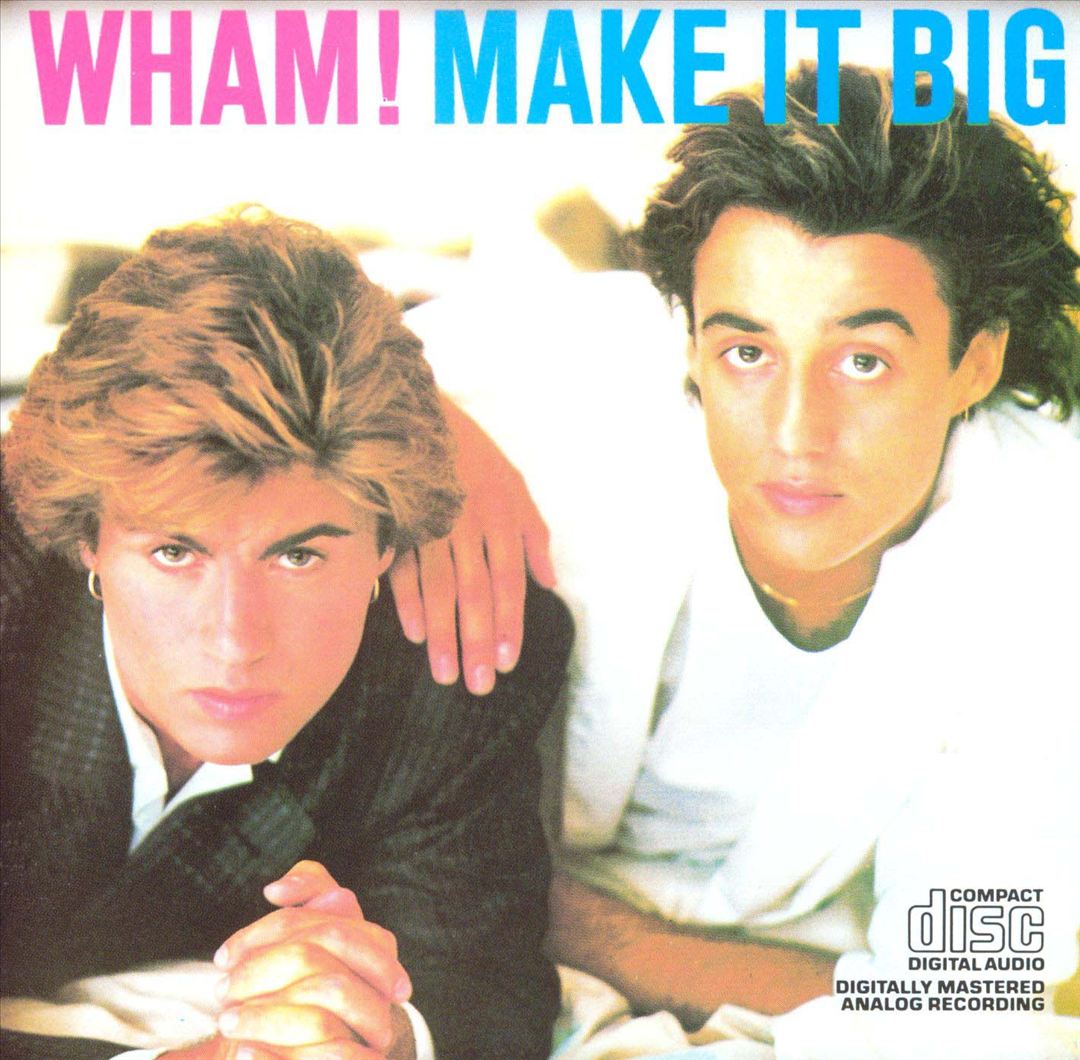
On June 28, 1986, George Michael and Andrew Ridgeley performed together as Wham! for the last time at Wembley Stadium (London). For the three years prior to this iconic day, the BFF duo had evolved both musically and personally. Their effervescent pop hits made them a hit with fans. And thanks to their manager, Simon Napier-Bell, the duo was the first Western band to perform in communist China back in 1985.
Wham!’s split, contrary to what many might think, was not a result of resentment. In fact, it was quite the opposite. George Michael’s songwriting and vocal ability were also evolving, and he was ready to go solo. After all, Wham!’s foundation was youth, and that image was not intended to last forever. So the faces of Wham! went their separate ways, but their songs remained proof of their mark on ’80s pop music.
In 1988 and 1989, Wham! was, in a sense, briefly resurrected with two new young faces. If George and Andrew would have continued their musical friendship into the late ’80s, then their sound would likely have mirrored that of Gene Hunt and Joe Pasquale, also known as Boys Club.
Boys Club was naturally influenced by Wham!. Their top 10 song “I Remember Holding You” is not completely unlike Wham!’s “Careless Whisper.” Although this new duo fizzled out before reaching Wham!-like status, their place in ’80s pop history should be recognized and celebrated. The public may have eaten up George Michael’s sensual solo career, as they certainly should have, but Gene and Joe were left in the dust.
Boys Club is amazing with or without the Wham! comparison. Here’s a deeper look into how Boys Club imitated Wham! but dove off into a fresh, late-80s perspective.
Boys Club
Finding detailed biographical information on Boys Club is difficult, especially because they weren’t superstars or around that long. The information that can be found mentions, of course, Wham!-influence. Additionally, Gene and Joe were, obviously, good friends. The most interesting tidbit is that Gene is actually a sibling of the family band known as The Jets, who also acclaimed some fame in the ’80s with songs like “Crush on You.”
Preview
Please use this video to compare both bands as you read the review below. To hear all of Boys Club’s songs, just go to YouTube! 🙂
“Wake Me Up Before You Go Go” v. “Dangling On A String”
The simplicity and buoyancy that made “Wake Me Up Before You Go Go” Wham!’s first #1 hit in America carries over into Boys Club’s “Danglin’ On A String.” The premise of both songs is that each singer doesn’t want to be left alone by the girl. In Wham!’s tale, the girl goes out dancing and leaves him at home. In Boys Club’s tale, the girl keeps moving on with other men and has left our guy in the dust.
The silly bubblegum pop of both songs is clear with the image of something “dangling.” For Wham!, it’s a yo-yo; for Boys Club, it’s a string. Essentially, both lead singers are being ghosted the old-fashioned way, before texting existed.
Figurative language also appears in both songs! Please see the chart below:
Band
Lyrics
Figurative Language
Wham!
“Boom-boom into my heart”
Onomatopoeia
Wham!
“Hanging on like a yo-yo”
Simile (comparison with like or as)
Wham!
“Make the sun shine brighter than Doris Day”
Metaphor
Boys Club
“My life will surely stop”
Hyperbole (extreme exaggeration)
Boys Club
“Heart’s in a noose”
Personification (giving human qualities to a inanimate object)
Boys Club
“You have made my life a book of games”
Metaphor
One of the main differences between the two bands, is that Joe’s voice sounds a little more mature than George’s voice. HOWEVER, there are clear cases of George Michael’s vocal transition as he performs through his early twenties. The point here is that, despite this being the Boys Club’s debut album, they have already reached a mature range similar to the one George develops towards the end of Wham!’s second album and into the final album in 1986.
“Everything She Wants” v. “Tell Me” v. “Credit Card Baby”
Cue money falling from the sky! Oh wait, that only happens in Wham!’s music video for “Everything She Wants” (“ESW”). Boys Club’s “Tell Me” is more lighthearted, but the meaning behind the song is the same: money and love are not equal. Meanwhile, Wham!’s “Credit Card Baby” (“CCB”), which is so full of bubblegum that you’re trapped in it, also falls into the same category as these other two songs.
The songs follow a pattern of mentioning how girls want money, not love. In “ESW,” George’s tone is discouraged and frustrated. He’s foolish to provide for the woman, but now a baby is in the mix and he’ll be bound to a woman he doesn’t even love. Similar frustration appears in “Tell Me,” but the point of view varies. Here, Joe is desperately hoping that the girl has good intentions of love and won’t take advantage by demanding money and worldly items.
Do girls act like this often? In Wham!’s bubbly “Credit Card Baby,” George throws caution to the wind and offers his money but not the love. It is a lighthearted reversal of “ESW” but not as desperate as “Tell Me.” George sings that, “From the ocean to the sky / there are things that you can’t buy / If you look you’ll see, one of them is me.”
“Heartbeat” v. “Loneliest Heart”
These two songs compare well due to two factors: loneliness and emotive performance. For Wham!, “Heartbeat” was the third track on the Make It Big album, and it begins to show how George could craft emotion into a song. “Heartbeat” is a lament and a personification, as George struggles with desiring a new unrequited lover. In anguish, he asks his “heartbeat” why the situation must be this way. Perhaps the most heart-wrenching line of the song is, “If we were meant for each other, / then why won’t you answer me?” The despair is coupled with a loneliness due to not winning at love.
Personally, I had trouble choosing a Wham! song to pair with Boys Club’s “Loneliest Heart.” This track is by far my favorite from the very underrated duo. Here, Joe laments on having the loneliest heart because his girl left him. Even worse, she left him through a letter!
Joe’s vocals are a combination of George Michael, Richard Marx, and Robbie Nevil: a strong blend and vocal range. “Loneliest Heart” is so powerful because of the escalation of the line, “Just when I thought things were getting better…” Sure, this relationship has had its ebbs and flows, but this heartbreak clearly came out of nowhere.
“Loneliest Heart “demonstrates that Boys Club had the songwriting and the chops to meet “Wham!-level.” Here’s a quick look at how this song compares to the first duo:
Boys Club
Wham!
“I work for you eight days a week”
“Some people work for a living / some people work for fun / I just work for you” (“Everything She Wants”)
“I’ve got the loneliest heart”
An exaggeration that sounds like something George would sing!
Soft on verses; skyrocket on chorus
Think songs like “Last Christmas” and “A Different Corner”
“You left the loneliest heart…And that lonely heart was mine”
George brings lyrics full circle to himself: “I know you’re sad….Baby, I’m your man”; “saw your lover with another and she’s making a fool of you…I don’t want your freedom…”
And if you’re still not convinced that “Loneliest Heart” deserves love, then check out the video below.
“Careless Whisper” v. “I Remember Holding You”
Now to finish this review with the song that jumpstarted George Michael’s solo career and the song that Joe Pasquale and Gene Hunt sent to the charts. Firstly, it is crucial to realize that Boys Club was not simply a Wham! copycat. Trace pop songs by boy bands throughout the decades, and you’ll notice similar themes of love and heartbreak. While both of these songs mirror each other in several aspects, they are NOT equal!
However, the songs share nostalgia and cheating. In “Careless Whisper,” George displays his guilt for cheating, and he goes on and on about never being able to dance again. The line that hits this theme home is “We could’ve been so good together / We could’ve lived this dance forever / Now no one’s going to dance with me.” The lonely tone is back again, coupled with memories that will never return.
Yep, Joe is having a similar problem. His heart had been “untrue” and now he’s ridden with memories of love that he’ll never relive again (with the same person). Perhaps the most poetic line of this song is “Time will never loose the memories we choose.” For both Joe and George, time hinders the healing process. Just as Joe will never forget the love he had because it’s always on his mind, George knows that “time can never mend” the hurt of the lover leaving him.
Additionally, there is the question of the guilt itself. Joe admits that ” Now my chance is gone / All alone / I’m reaching out / Even though I know it’s wrong.” He desperately wants another try with the girl, even though he admits he was wrong. George knows he was wrong, yet he still has to ask “Is what I did so wrong?” It almost sounds like he’s backtracking a little on the guilt.
Now let’s talk about saxophones. The story goes that George Michael rejected several highly professional musicians before he found the one who could play the “Careless Whisper” solo just the way he wanted. Although this solo will forever identify the song, George, and the 1980s, Boys Club incorporated more saxophone solos than Wham! ever did. In fact, Boys Club sax solos were edgier and (likely) more improvised. The solo in “I Remember Holding You” isn’t as sorrowful-sounding as in “Careless Whisper,” but they both reflect guilt and melancholy.
Wham! v. Boys Club
So what’s the verdict? Who is the better group of artists? Um…we don’t discuss that here, namely because I can’t choose between the two. Boys Club makes a great addition to the music scene of the late 1980s. They almost takeover for Wham! after the split. If Wham! were to have continued into the latter half of the decade, then Boys Club is similar to what they would’ve sounded like.
Although the bands are similar, both thematically and vocally, they each stand out in their own right. Whether globally famous or tremendously underrated, Wham! and Boys Club deserve to be celebrated and preserved for their roles in pop music history.
What’s Monthly Mixtape? Each month on Confessions of a Classic Soul, Nicole reviews an underappreciated song from decades past. Her love for underrated songs, plus her literary analysis skills and music experience, allow her to find hidden gems within songs.
Before You Go…
Don’t forget to listen and subscribe to the Guilty Pleasures of a Classic Soul playlist, which compiles all songs featured on Monthly Mixtape! You can now listen on either YouTube or Spotify!
Paper or plastic? No, not bags, but cash v. credit card. How about physical v. virtual?
In the United States, approximately 1,000 shopping malls are left in existence. Just a few decades ago, online shopping was a luxury, not a common reality. Malls with an assortment of stores were packed with shoppers, and not simply at Christmas time.
Locally, malls are fading away quicker and quicker. Once big box stores close, the smaller ones vanish without a trace. How does this affect small businesses? What about prices and availability? Has society become so lazy that people can no longer bear walking into a store to pick up their own clothes and groceries?
Consumerism wasn’t always this way, so what contributed to the disappearance of physical stores? How did malls go from becoming cool to being deserted?
It’s time to perform an autopsy on the mall rat.
Mallrat: (noun)
A person who spends an enormous amount of time in a shopping mall or center.
Back in the day, physical stores were everywhere, and there was no shortage of diversity in store names and wares. People could spend all day in stores browsing, eating, and hanging out. In the 1980s, singers were even discovered in malls!
Physical Stores v. Online Shopping
Physical stores may be disappearing due to bankruptcy and online trends, but this doesn’t mean that these stores are ineffective. Grocery stores are essential. If you’re low on milk and bread, you can’t afford to wait for a 24-hour delivery! Not every piece of merchandise should be bought online, at least for all shoppers. Older shoppers who struggle with technology rely on physical stores. If stores continue to vanish at rapid rates, then the older populations are limited to what they can purchase and where they can do so.
Online shopping, however, is simple and convenient. With a few clicks, a shopper can have virtually anything shipped and delivered to the comforts of home. Because, at least in America, people are working longer hours and are highly stressed, online shopping provides a convenient way to order necessities and desires without having to carve out substantial time each week to drive to a store and navigate aisles with crowds of people.
At times the conveniency of online shopping seems dangerous to human independence. With COVID, store delivery was a genius, safe option for shoppers to get what they needed and then travel back home without extra exposure to the virus. This option is also helpful for the elderly who can’t walk around a big box store as well as they used to.
However, with the number of infections slowly receding, consumers have stayed on the delivery bandwagon. Why go into a store when someone else can shop for you? But what about autonomy? Our society has become lazier by relying on the newest technologies that can turn off your lights and closeyour garage door. If shoppers who are perfectly capable of navigating physical stores simply bow out, then physical stores become even more dependent on other people. Why should store employees be servants to the consumers? Here, “consumer” is a more accurate word because people are receiving and using the items instead of shopping for themselves. They consume.
Then again, not everything can be found in a physical store. Looking for the perfect, customized birthday gift? Wal-Mart will not be customizing an ornament for you if you’re standing in the store. However, online shopping is the perfect place for gift-givers. Between Etsy and Amazon, finding that spot-on gift through the internet is a synch!
Could our society come to a point where we rely entirely on online shopping? I personally don’t believe physical grocery stores could disappear. That would be way too risky. Besides, some people don’t even have internet access due to income or location. We’re not going to completely starve our own people, hopefully.
What about clothes? I also don’t believe we’ll ever have stores without any clothing (see reasons above). Society can’t require all peoples to rely on the internet to satisfy basic needs like food and clothing.
Men’s clothing, for the most part, is simple to buy online. Women, however, vary in size and body type, including bust size. Sure, websites offer sizing charts and product details, such as clothing material, but is shopping for clothes online worth the hassle? If the clothes don’t fit, then the customers are in charge of preparing for the return: boxes and shipping labels! On the other hand, most physical stores allow customers to try on clothes before buying them. Wouldn’t customers be better off trying before buying?
In analyzing mall closures, the small businesses must be mentioned first and foremost. Stores like JC Penney and Macy’s will always earn a profit because of both physical and online sales. However, consider an independently-owned gift shop or collectible store. These businesses need people to be physically present in their stores. Depending on the business and the owner, online sales may not be the most efficient method for revenue.
When malls close, small businesses truly fall into jeopardy. The owners must decide how to keep their business and relocate. Or, these stores may simply close down for good. Even smaller restaurants and concessions falls into the same consumer pit.
The disappearance of store chains also contributes to higher prices. The stores that still contain hard-to-find items will no doubt boost prices to earn a profit.
Finally, a colleague recently pointed out to me that shopping is a social experience. It’s true, whether that experiences is positive or annoying. Nonetheless, humans are interacting with each other, even by being present in the same aisle. Online shopping is antisocial, making it a popular pasttime for people who come home from work and want nothing to do with people. Reading product reviews is nothing compared to two people in an aisle discussing the differences between two vacuum cleaners!
Malls used to be a social experience. People would run into neighbors or peers. There were concessions and restaurants galore, not to mention games and arcades.
Perhaps, at the end of the day, Malls would bring people back together, back into the social, physical world.
1,000 malls sounds like a lot, but remember that these malls aren’t at full capacity. Stores come and go, and many have gaps from where stores were once booming.
The next time you shop, remember your malls and local shops!
One-hit wonders can be like gold. The only downside is that the rest of an artist’s songs flopped, making that artist nearly invisible to listeners’ ears.
This same situation affected The Music Explosion, a ’60s band from Ohio. Besides two singles, the band virtually went unnoticed.
The band’s hit, “Little Bit O Soul,” is a natural earworm, especially as summer creeps its way in. ’60s music always reminds me of summer!
So what’s the deal with the soul?
“Little Bit O Soul”
Play the first 13 seconds of this song and pause. It’s stuck in your head now, isn’t it? This main line of rhythm is so simplistic, which makes it so effective, with its upbeat, cheerful tempo. It ascends and it descends. As we’ll see later on, the instrumentals help to enforce the song’s meaning.
Then enters lead singer of The Music Explosion, Jamie Lyons. His voice is raspy, which likely contributes to soul music, which will be explored further during the chorus.
The entire song plays on a very sucky human experience, otherwise known as a “bad day.” Like the opening instrumental shows, the song is meant to set an uplifting tone.
In my analysis, I figure “soul” has a double meaning, referring to both the music genre and a person’s spiritual core. This interpretation, however, can send us on a spiral of meanings and inquiries. If rock and roll is too loud and heavy, then how can it cure a person’s pain? It may numb it for a limited amount of time, sure, but the entire point of soul music is to, quite literally, reach the soul. It’s gentler and very reflective. Both meanings of the word soul come into play here. In order to heal and mend oneself, soul music can aid the soul.
Soul, on the other hand, can pertain to more than just a music genre. The only lyrics in this song that raise a few questions involve soul and prayer:
“You gotta make like you wanna kneel and pray / and then a little bit o soul will come your way”
-The Music Explosion
Now perhaps I’m reading too much into these lines, being a religious person and all, but how is God going to help you if you “make like” you’re going to pray? If “soul,” either the genre or the spiritual, is going to lift you up, then you can’t fake your way into it. Both provide energy, but you have to want that energy. Blessings and fortune don’t always drop from the sky.
If the spiritual “soul” is analyzed in the way that it should be, then it can definitely be noted that it has the power to encourage the downhearted and depressed. In Christianity, the Holy Spirit strengthens, guides, and comforts.
Music, by contrast, can also cause these effects and boost mood. So, either sense of the word “soul” is applicable in this song.
What about the soul, or essence, of being unique individuals? Here at Confessions of a Classic Soul, we’re all about being unique old souls. Personalities allow a person to stand out among a crowd, and all humans have specific traits and abilities that allow them to have a special place in society. Maybe, if individuals were to remind themselves of who they are (remember their soul and what is good about it), then they would receive the boost of confidence and hope they need to dive back into the game of life!
Even more, the lyrics stitch together problems and solutions. These solutions are commonplace, making it possible for the listeners to relate to the song immediately. Feeling down? Have a broken heart? This song is a reminder of the human experience because listeners heard themselves in the lines! In fact, toward the end of the song, Lyons sings “just remember what I said,” which proves that this song can be a supportive reminder of how life will improve. Just don’t forget the soul part!
Lastly, I want to touch quickly on word painting. In short, this term means that the music notation represents the actual lyrics of a song. Think back to the instrumental introduction of this song (it’s probably still stuck in your head, anyway): the simple bassline moves up and down the scale. The music is literally the soul and represents the central message of life getting better. In general, take notice how this ’60s song isn’t straight-up rock and roll. It, too, is comprised of at least small bits of its lyrical matter. SOUL!!
With all this said, have a wonderful summer, and don’t forget “a little bit o soul!”
Before You Go
Don’t forget to listen and subscribe to the Guilty Pleasures of a Classic Soul playlist, which compiles all songs featured on Monthly Mixtape! You can now listen on either YouTube or Spotify!
Ah, May 4th, the Christmas for Star Wars lovers. Have you ever considered the spiritual and religious references in the saga? What about heresy?
Although the Jedi order isn’t exactly a religion, there are several similarities between it and spirituality, or the belief in a higher presence.
First off, the light and dark sides of the force are obviously pitted against one another. Any spiritual belief typically stems from the good v. evil controversy. It’s almost like the angels in Heaven fighting the demons in Hell (I nominate Obi-Wan as St. Michael the Archangel!).
Consider the force for a moment. How would you define it? It’s not physical, although it can manipulate physical objects. We can sit and discuss midichlorians, but the force is like a essence or spirit. It is the representation of all that is good. In Christianity, the Holy Spirit is the sign of the love between God the Father and Jesus the Son. Besides, the force is supposed to be used to achieve good….unless you’re wearing a black helmet and love to choke people.
Before diving into the heresy, we must also consider the inner characteristics of both the Sith and the Jedi. Basically, each Jedi strives for peace, but in order to do so, one must first control desires and work on inner discipline. Think about it: they’re not allowed to marry; they wear certain robes; there are padawan learners; training does not begin with swinging a lightsaber–they must build their own; many leave home to become a Jedi; they must not be hasty in decisions.
Do you see it yet? The Jedi are like MONKS!! Not only do they undergo extensive training,, but they work for peace and combat injustice in society. In fact, they even develop virtues to strengthen themselves!
Qui-Gon has wisdom
Yoda can tell you right from wrong–justice and prudence
Obi-Wan is pretty temperant
Mace Windu jumps around a lot AND takes on Palpatine–if that’s not fortitude, what is? (the man is forced out of a window for heaven’s sake!)
On the other hand, then, Sith members are on the “seven-deadly-sins” route. Afterall, envy and pride lead to wrath, or hate, and hate leads to killing a previous Sith lord in order to move up the ranks.
Now comes at least one heresy. A heresy, in a religious context, is when someone spreads a false teaching about the religion. By denying the teaching and believing another theory, a heretic goes against the church, possibly taking others with him.
For example, in the history of Christianity, the first heretic was Arius, who said that Jesus was more human than divine. This teaching argues against the relationship between the Holy Trinity. So, what’s this have to do with a Death Star blowing up the galaxy?
Jedis aren’t supposed to marry because emotional attachments allow them to lose focus and discipline. Have you ever met a married monk?
Anakin Skywalker, of course, doesn’t exactly follow rules. His love for Padme quickly takes center stage (despite the incredibly awkward age difference from Phantom Menance to Attack of the Clones). He doesn’t see anything wrong with his actions. It isn’t as though their love is fake. Besides, he believes he can take care of his “chosen one” vocation and a family. He rejects the Jedi teaching and goes his own way. Anakin’s heresy only contributes to his downfall and eventual conversion to the Dark Side.
Throughout the prequels, it is clear that Anakin has his moments of pride and arrogance. He’s also not very patient and can act recklessly (hence why Obi-Wan isn’t always particularly fond of flying with him). His conversion is not a dramatic surprise. His character, over time, begins to change and unfold. Can we go far enough to say that lust led him to commit heresy?
Nonetheless, we must consider the effects of Anakin’s heresy. Without it, Luke and Leia would never have been born. What impact would this have on the future? Who could destroy the Death Star or lead the Rebel party? But would Anakin even be a Sith? How much did Anakin’s marriage push him over to the Dark Side? Palpatine promised he could help Padme and not let her die in childbirth. Anakin was tempted. He leaves the light, and Padme still dies.
Yvonne Elliman is Mary Magdalene and doesn’t want anybody else if she “can’t have you.”
Elliman is famous for her role as Mary Magadalene in Tim Rice’s Jesus Christ Superstar. Her sensational performance of “I Don’t Know How To Love Him” from the musical even earned her a Golden Globe.
In 1978, she returned to the spotlight with “I Can’t Have You” from her album Night Flight. In looking at Elliman’s discography, music lovers can’t help but realize hidden gems that deserve to be discovered.
“I’ll Be Around” is beautiful and inspirational. It follows Elliman’s typical style of ballads that feature her lullaby-like vocals.
“I’ll Be Around”
The inspirational lullaby opens with a soft and sweet piano. When Elliman enters, her deep range continues to set the gentle mood.
Although the lyrics are simple, they are far from cliche. In fact, the rhyme scheme is subtle, not cheesy or irritating. For example, “knowing” and “growing” help to build the song and its seriousness rather than tear it down. The near rhymes (like “run” and “become”) contribute to this effect as well.
Perhaps the real questions in the song are “what have we become, and why are we running?” Elliman tells us that we’re afraid of what we’ve become. Is that good or bad? If it keeps us on the run, where are we running to? Why?
As the song progresses, we learn that we’re trying to reach dreams and rise above ourselves. We’re moving out of our comfort zones. Even though she speaks of emptiness, the comfort in her voice encourages us to not worry.
At first, using the words “little fool” seem a bit insulting. However, this name is not meant to be derogatory. Instead, Elliman reminds us that our dreams aren’t over, and we have the power to press on ahead.
In considering the point of view of this song, it seems Elliman is talking to another woman or even a young girl, especially with the use of the word “little.” Regardless of the specific person she is addressing, this song may just be trying to break feminine stereotypes. Rather than be weak and sink to the bottom of her fears, a woman must realize that she has the power to be the woman she wants to become. If that woman needs support, Elliman will “be around” to help!
As humans, obstacles constantly stand in the way of our dreams and goals. At one point or another, we all cower with doubt and grow depressed at our failures. Support groups are integral to our success and mental health. Without confidence and emotional comfort from friends and family, we may never be able to save ourselves from ourselves and rise to our full capabilities. So, Elliman is showing her support–in song form!
In fact, it is possible that this song is a song of self-love. Could Elliman be addressing herself?
Finally, because this blog is all about old souls, this song represents an old soul’s loyalty. Old souls are often sought out for advice and are good listeners. Therefore, like Elliman, old souls will be around to support those who need an extra boost of encouragement!
Before You Go
Don’t forget to listen and subscribe to the Guilty Pleasures of a Classic Soul playlist, which compiles all songs featured on Monthly Mixtape! You can now listen on either YouTube or Spotify!