Yes, we will always secretly check your grammar! A degree in English doesn’t end with the physical piece of paper that’s framed on the wall. Instead, the skills and loves English majors develop during their studies continue on.
As a recent graduate with a degree in English, I can confirm that English majors will never change their stances on the following topics.
The Personal Library Grows…
Not only do English majors accumulate tons of books from their college classes, but they will continue gathering books throughout their lifetime. Overrun bookshelves are a guarantee, as English majors are lifelong readers. We will never put down our books, nor will we stop trying to cram them all in every crevice of the bookshelf that we can. Take it from me, I have a stack of poetry books, creative nonfiction books, and American classics from college that line one entire shelf. The Norton and Bedford anthologies for American Literature and Shakespeare also take up quite a bit of room. So what do I do when I have to return the leisure book I’ve just finished to the appropriate shelf? Stuff it in or lay it on top! English majors have a will, and they will find a way to make room for the books. When the going gets tough, the library is still available; sometimes borrowing is better than owning!
Ahem! Are you sure you need a comma in that sentence? Did you use “amount” instead of “number”? Do you know where your punctuation goes after a citation? Don’t worry, English majors are watching and observing (with their hawk-like precision), but they’re not truly judging you.
As English majors, we tend to know many rules of writing and conventions. However, we also realize that we cannot point out every error, nor is it our place to ridicule you. The English language is complicated and confusing enough, and we also mess up the grammar rules, especially in informal conversations. So if you say “more stupid” instead of “stupider,” we won’t be too harsh on you.
Literary Theory Fanatics
Freud, Foucault, Woolf; Formalism, New Criticism, New Historicism, Feminism, and Ecocriticism. English majors can let their geeky colors show when literary theories are involved. Literary theories are perspectives that can be applied to literature and life. These theories are like magnifying glasses of varying colors. Each glass represents a new theory, and each new theory comes with its own characteristics and guiding questions, thanks to beloved literary scholars.
Literary theories are important because they allow for multiple meanings of a text, unless Formalism is at play (which is another story). The ability to think both critically and flexibly is invaluable, especially to employers, and it makes individuals more well-rounded. Even more, literary theories can also be applied, in some instances, to social situations; so, literary theories are multi-purposeful!
Song Lyric Analyzers
Music = poetry. English majors like myself love to analyze different texts, songs included. Because songs are poetry, lyrics can be analyzed for deeper meaning. Some lyrics are highly figurative, using lots of imagery, similes, and metaphors. For example, if I were handed Duran Duran song lyrics, I could analyze them for hours. In fact, I have several theories about the meaning of “The Reflex.” On the other hand, an English major’s tendency to dive in can lead to overanalysis, in which case a song can lose its essence, especially with simple songs such “Wake Me Up Before You Go-Go” or “I’m a Believer.” Nontheless, we English majors tend to also be songbirds.
2+2=5, Right?
English majors love words, so numbers aren’t always their strong suit. Now, some English majors are great at math, especially those who took on a double major in engineering or science. In general, however, we English-minded people rely on a calculator and do everything in our power to avoid mathematics. In fact, perhaps the best part of algebra class was the use of variables in an equation. Solving for X can be fun, after all.
Math involves abstract thinking (don’t get me started on absolute values), but so does literature and writing. While English majors don’t occupy themselves with determining the value of “i,” they do focus on deeper meanings in a text. Poems, more often than not, are abstract and require deeper analysis (insert Shklovsky’s defamiliarization theory). Math and English are very much alike in this sense, and some individuals are more adept at one versus the other.
Lifelong Writers
Because English majors love the written word, many of them continue to write well beyond their college years. Whether it’s research, creative writing, argumentative papers, or even journalism and blogging, English majors like to stay close to their roots. Writing, as said time and time again, is very therapeutic, and helps thinkers express themselves, especially when they cannot speak their true intent. I, for example, am always afraid that I’ll say something stupid-sounding in public. So, instead, I write out my feelings–sometimes in letter-form, which is the best way for me to communicate what is on my mind.
Writing, then, at its simplest form, is communication. The world needs English majors (and writers from other majors) to effectively convey information to others, whether it be strictly informational or creative. We don’t stop our writing once we’ve receive our diplomas.
Lifelong Bookworms
True, an English major’s diploma may sound like simply a “degree in how to read and write,” but it represents a lot more. An English major will always be a reader, writer, communicator, and thinker. These skills are highly beneficial in the workplace, proving that an English degree is flexible and valuable. We may be nerds, but we’re smart, skilled nerds!
The Hollies, a British music group who began their career in the 1960s
Memorial Day weekend is upon us, which means summer, summer, SUMMER! And ’60s music. When I was little, I’d constantly play my mom’s ’50s and ’60s cassette tapes, so the ’60s have become my own personal summer soundtrack.
Today we’re heading back to 1965 for a classic “British Invasion” group. Music aficionados undoubtedly know of “Bus Stop” and that “Long Cool Woman (In A Black Dress),” but most won’t know another Hollies’ track called “We’re Through.” I stumbled across this song while shuffle-playing The Hollies’ essential playlist on Spotify. The song itself is fairly simple, as it depicts a breakup caused by an affair. The vocals and the lyrics, however, give the song its true essence.
“I’m telling you, my friend /…we’re through!”
“We’re Through” by The Hollies
The song kicks off with Don Rathbone’s drum roll and an easy guitar groove, a perfect way to ease into summer! When Allan Clarke jumps in on vocals, the song immediately turns serious. The first line that stands out is “You take pride in making me blue.” Instantly, the tone has become somber, and the fact that the girl is proud of cheating slices at the heart of the song. The emotion is infused into the song from the downbeat of Clarke’s first lyric.
“You take pride in making me blue”
-Allan Clarke, Graham Nash, & Tony Hicks of The Hollies
Even more, Clarke’s vocal abilities in this song intensify the emotion and the meaning. He elongates lyrics in the lower register and then skyrockets to higher pitches in later lines. This back and forth combination in each verse, as well as the duration of each individual lyric, drags the listener along through the song. As his experience of heartbreak is pronounced, listeners feel the experience as well through the varying range of notes.
Focusing on the lyrics, the word “friend” is repeated throughout the song. The lover is referenced as “friend” in the first verse, implying that the singer has accepted that this girl is indeed no longer a lover. Friendship is no doubt a part of a romantic relationship, but here the word has a lesser connotation. The girl is simply a “friend.” No more, no less. At the same time, he still cares for her as a friend, or he wouldn’t feel the need to tell her they’re through. In the second verse, “friend” is the word the girl uses to describe the “other guy.” Obviously he wasn’t “just a friend,” or the song wouldn’t exist, especially without all of Clarke’s vocal emotion. Overall, “friend” has a negative connotation in these lyrics, as it is the true cause of the heartbreak and why the relationship must be ended.
As the song progresses, listeners wonder if the girl can even be considered a “friend.” After all, friends still treat friends well, and the girl clearly is not affectionate in return. Through Clarke, we learn that he treated her as a gentleman should, and he can’t see why she would run off with a new man. The line following this one, however, cuts the deepest: “‘Cause I can’t leave you alone.” He still loves her and doesn’t truly want to let her go. The heartbreak has reached its climax in these lines; there is anger, bitterness, sadness, and guilt wrapped up in all of these lyrics. He nearly blames himself for knowing the relationship would end, but, in the end, he did keep his commitment to the girl.
These lines repeat one last time, almost a lament for this broken relationship. The last stanza of lyrics transitions into acceptance. The entire song feels like the grief cycle, and Clarke emerges at the end. He has mourned the relationship and decides to move on, without the girl.
Wait, We’re Through?
Yes, didn’t you hear the news! “We’re Through” is a Hollies’ song that has most definitely fallen through the cracks over the years. At its core, the song is simple, yet highly expressive. Although it is a typical “heartbreak” song, Allan Clarke’s vocals, the contradictory lyrics, and even Graham Nash’s strumming (yes, of Crosby, Stills, and Nash fame), give the song its extra oomph. It packs a powerful punch, but at least we can all move on after we accept that “we’re through.”
Before You Go…
Don’t forget to follow and listen to Guilty Pleasures of a Classic Soul, the playlist dedicated to all the songs featured on Monthly Mixtape. You can find the playlist on either Spotify or YouTube (see links below!). Get ready to vote on which hair band we’ll feature on July’s Monthly Mixtape. Stay tuned!
“A long time ago in a galaxy far far away”…those are the only words you need to hear, and you know exactly what part of the galaxy you’re in. You’re prepared to see droids, Wookies, lightsabers, and Sith lords.
The Star Wars universe is indeed another universe all its own, one that’ll likely continue expanding for generations to come. All fans remember their first time flying into the galaxy, and most were only children when they viewed it for the first time. These fans then pass down the films to their children, and the saga rolls on. In a sense, then, Star Wars is a part of childhood that never fades away.
What is it about Star Wars that makes it so timeless for kids of all ages (from ages 1-to-92, if we’re quoting “The Christmas Song”)? On this May Fourth, let’s take a closer look at why the franchise is a timeless legacy. As we journey to the galaxy far far away, you’ll also catch a glimpse of my own childhood as an enthusiastic Star Wars fan.
A Galaxy of Escape
Captain Kirk may have boldly gone before A New Hope‘s release in 1977, but to say that the Star Wars universe isn’t magnificent would be a lie. On the contrary, viewers bounce back and forth between planets, and mega fans can rattle off which characters come from which planet. The list of planets and systems itself is quite lengthy. In fact, there’s:
Tatooine
Alderaan
Naboo
Hoth
Endor
Yavin IV
Coruscant
Bespin
Mustafar
Geonosis
Kashyyyk
Dagobah
And the list goes on! As a result, it is easy to get lost in the Star Wars universe, and it becomes an escape from the real world down here on planet Earth. Plus, every minor character has a name of some sort (what was George Lucas thinking!). Super fans can name practically every minor character, from TC-14 to Salicious Crumb!
Without a doubt, the Star Wars universe is expansive, and it continues to expand now that Disney holds the rights. From the latest trilogy to the Baby Yoda and Mandalorian craze, Star Wars is here to stay as a galaxy to which everyone can escape.
“I was hooked after watching A New Hope around age 7. From then, the movie reminded me of that summer when I ‘crushed’ on Luke Skywalker. I would even sometimes pretend to be Princess Leia, trying to escape from Vader and Tarkin! My hair wasn’t up to par, though!”
-Nicole’s earliest Star Wars Memories
Imagination and Heroics
One of the reasons why kids are so mesmerized with Star Wars is because of the creative freedom it provides. With aliens, lightsabers, and the Force, what’s for kids not to love? When it comes to play, the sky is, literally, the limit. Kids can imitate whichever character they want, or they can create a new persona for themselves to play.
Don’t forget the lightsaber duels! Young Padawans are ever eager and willing to duke it out with lightsabers, even if theirs doesn’t light up.
“My green lightsaber didn’t light up, but I was still over the moon to have it! I used to pretend I was a Jedi filming a new episode or film for my imaginary TV channel, called ‘The Everything Channel.’ When our elementary school teachers finally allowed us to bring our lightsabers to school one day for recess, all of us Star Wars gurus were ecstatic. However, it didn’t go too well, because I don’t think we made it more than a day or two without having to give up the lightsabers.”
Nicole’s lightsaber memories
All children need heroes to look up to, so what better choice than to look up to the Rebel Alliance? The Alliance (and the Resistance in the latest trilogy) show kids that it can be okay to stand up for what you believe in. These groups give kids hope that they, too, can grow up to save the world and inspire others. Whether its fighting in the Clone Wars, pulling off a master escape plan from Jabba’s barge, or destroying not one, but TWO Death Stars, Star Wars allows kids to dream, even if their full fantasies are only recreated during play.
Additionally, Star Wars is full of intriguing and memorable characters, all of which attract moviegoers, kids included. No matter the age, viewers can’t simply forget Han Solo’s sarcasm, Darth Vader’s metallic breathing, Emperor Palpatine’s eerie laugh, C-3PO’s ramblings, Admiral Ackbar’s “Trap” warning, or even that dude that wants to offer you death sticks (“you want to go home and rethink your life”). Forgetting Jar Jar would be a blessing, but no one can. In sum, the unique personalities of the characters and the chemistry between them open up countless doors for kids. These characters are different, and they teach kids that being different is okay. They show various personalities and world views, including insights on politics when it comes to the Trade Federation. The films also introduce kids to the balance of good and evil, dark and light, as contrasted between the Jedi and the Sith. Underlying morals show kids correct ways to act, so they don’t turn into smugglers and cranky ship part dealers!
“I used to have a purple rain jacket with a hood. Every time I put that hood over my head, I pretended to be a Jedi. Mind you, I was a Jedi Knight hanging out with Obi-Wan. Nobody wants to be a Padawan–Anakin sure didn’t!”
The “Jedi” cloak memory
“The Force Will Be With You…Always”
Obi-Wan wasn’t kidding with these words! Star Wars has become such a massive icon in pop culture, and the boom isn’t dying down. Merchandise has been around since the beginning of the saga, and more is produced today with Baby Yodas and BB-8’s galore! Kids of all ages can even act out their Star Wars fantasies at Universal Studios. The video gaming industry has definitely boomed thanks to Star Wars, with a multitude of games that expand the universe even further for players.
“One year for Christmas, my parents got me a Star Wars ‘Plug n’ Play,’ you know those video games that you connected to the TV with the yellow and white wires? I used to be so good at the lightsaber duel. Every once in a while I blow off the dust and let off some steam by blowing up the Death Star or flying around in an X-Wing. Needless to say that one of the buttons sticks now…”
The ‘Plug n’ play
Meanwhile, don’t forget the music! John Williams’ legendary score (which he has composed for all the major Star Wars films) is timeless in and of itself. When the main theme begins or when the menacing “Imperial March” enters, so does familiarity. Star Wars has become so familiar to popular culture, that it has become a comfort. No wonder kids carry that piece of “home” and “childhood” along with them into adulthood!
Ewoks and Wookies are Here to Stay!
Clearly, Star Wars, although many many light years ahead of us, is not going anywhere anytime soon. The impact it has had on viewers all around the world is amazing, but not surprising. It is a universe that is an escape, a joy, a thriller, an adventure, a tragedy, and an inspiration. What would a world without Star Wars look like? Fortunately, our kids will hopefully never have to find out, because Star Wars is a timeless classic!
May the Fourth be With You!
Happy Star Wars day to one and all. Before you go, please check out the Hilsmaniacs’ latest YouTube episode, Star Wars Trivia. I’m grateful for the opportunity to guest star in the video and play a trivia game with a few very good friends. Think you know Star Wars? Better see for yourself below!
When I was 10-years old, I couldn’t get enough of Grease. Although I was too young to comprehend half of the innuendos throughout the movie musical, I knew I loved the music. One time, I attempted to compose my own song that had remnants of Olivia Newton-John’s “Hopelessly Devoted to You.” I was devoted all right!
Now that I’m older, I admit that I still can’t get enough of Danny and Sandy, but I’m also able to scope out more of Olivia Newton-John’s work, as she has clearly become one my favorite female vocalists. In a recent bender of listening to her other songs, I came across “Have You Never Been Mellow,” which is derived from the 1975 album of the same name. As someone who worries way too much, this song easily hit home for me. “Mellow” is in the name, and it is certainly the message of the track. By the end of the song, listeners will be wondering why they, too, aren’t mellow!
“Have You Never Been Mellow”
Listen to “Have You Never Been Mellow”
Naturally, the beginning instrumental is, well, mellow. It sounds a bit sad at first, but as soon as Newton-John’s vocalizing comes in, the song starts to take its shape. The message of this song relies on personal experience, as she relates that she used to be like “you,” or like us. The message, then, becomes a classic warning of “don’t let history repeat itself.” Humans like to hurry, especially because the stresses of everyday life are very demanding and overwhelming. Humans also like to stick their noses in and give their opinions. What Newton-John instantly explains in these first lines is that we don’t have to hurry or be heard. We can simply live.
The “mellow” mood continues in the chorus, and I particularly like how the word “mellow” is slowed down and emphasized. In fact, the other lines in the chorus are drawn out: enunciated and elaborated. Newton-John’s voice rises and falls as she literally sings her message. Here, humans don’t have to be strong all of the time. The world is restless, with its constant demands, and Newton-John urges us to slow down and take our time. Instead of diving from one fleeting pleasure into the next, we can look inside ourselves and simply be ourselves. We don’t have to have all the answers, and we are allowed to take time for ourselves; we’re not superheroes, we’re humans. The lyrics in the chorus are sung as questions. Newton-John is directly asking listeners to reflect on these ideas. She’s not pointing fingers, but tenderly suggesting.
What strikes me in the second verse is the line “head up in the clouds.” Normally, this cliche refers to daydreamers. However, here, the line shows that a person who’s head is up in the clouds is oblivious to peace and relaxation. This person, instead, is too busy running around and trying to get all of the work done. This person cannot realize that the world just asks way too much sometimes.
The “I was like you” repetition emphasizes that Newton-John doesn’t want listeners to be like her. She wouldn’t be singing this song if she hadn’t come to her own realization that it is okay to be mellow. Therefore, the more she repeats these lyrics and allows her vocals to soar, the better chance she has of getting her point across.
In the end, people who just keep running from one activity to the next aren’t hard to understand because it’s human nature. Most of us have grown up in a hard-working family, and the adult world demands that we work double-time. We need someone to “take our hand(s)” or we’ll continue to run along at full speed. We don’t need burnout, we need mellow!
The chorus is repeated one final time at the end of the song. One last time, Newton-John reminds listeners that we can find joy and peace inside of ourselves, inside our own hearts. If we take time to just be mellow, then we can live one moment at a time and stop stressing about the future. She doesn’t say that living for one moment at a time is easy, but it is certainly possible to do. Humans have weaknesses, and one of them is the ability to become tired-out. As Newton-John so gently and sweetly comforts with her soft lyrics, listeners can learn that to be mellow is perfectly acceptable.
Before You Go…
Be sure to listen to and follow Guilty Pleasures of a Classic Soul, a playlist dedicated to the songs featured on Monthly Mixtape. You can follow or subscribe on either Spotify or YouTube. See links below!
Have you been told numerous times that you’re an old soul? That’s wonderful news! However, being a young old soul can also be a curse, especially when you feel that you don’t fit in with others your age. Old souls are known for their empathy and deep relationships with others, but old souls can also find themselves lonely. Of course, there are pros and cons to every personality type, which don’t make one personality better or worse than another. Let’s take a closer look at young old souls!
“She’s an old soul with young eyes, a vintage heart, and a beautiful mind.”
–Nicole Lyons
Alone Time and Sensitivity
Old souls are bleeding hearts, and they are not only great listeners, but they are also very self-aware. Therefore, social interactions can be exhausting, whether old souls are generally introverted or extroverted. No matter the personality, old souls need time to recharge after long social engagements, mainly because they have absorbed others’ emotions. Old souls are very empathetic, and they have to process others’ emotions.
On the flipside, old souls are aware of their own emotions. Not only do they bear the load of listening to and feeling for their friends, but they must grapple with how they feel about personal situations. At times, the mix of both sets of emotions becomes overwhelming. Without time to recharge, old souls become burned out.
For young old souls, especially those who are just emerging into adulthood, it can be difficult to balance all of the high emotions, hormones, and stresses that come with day-to-day living. Even at the college age, young old souls are overwhelmed by their emotions and their peers’ emotions.
How do old souls recharge? The method, of course, depends on the old soul, but silent activities such as reading and writing are two great methods. Simply watching a favorite TV or listening to a favorite song can do the trick as well!
Wisdom and Maturity
For the most part, old souls are known for their ability to be knowledgeable and wise at a young age. At this point, young old souls truly begin to diverge from their peer group. They may feel like outcasts, or they may be frequently sought out for advice. In some cases, old souls feel lonely and popular. While they don’t want to be like a magic eight ball that has all the answers, they don’t always mind helping others. In fact, old souls do thrive off helping others, especially because they are empathetic. However, this does not mean that old souls can’t feel the effects of giving too much of themselves. When this occurs, they are more inclined to retreat and recharge.
What exactly is wisdom? With philosophy aside, old souls are mature in the sense that they speak as though they’ve had lots of life experience. In some cases, they have actually had experiences that forced them to grow up early. They take time to think situations through. While some old souls see the big picture, others are detail-oriented. Either way, old souls are thinkers.
Young old souls, then, struggle sometimes to understand their peers. They are more inclined to scoff at college parties and instead spend time studying and earning good grades. Their values differ from their peers, often veering toward more traditional values and customs.
Classic Interests
Classic interests may just be the most complicated undertaking for old souls. Many enjoy spending time with classics, whether it be books, songs, films, or anything else. These older interests appeal to the maturity and wisdom old souls possess, and they provide both comfort and relief when it’s time to recharge.
It should come as no surprise that old souls have a thirst for knowledge, and they often take on their own educational projects out of sheer curiosity. Whether it be researching an actor form decades past or diving into ancestry records, old souls are invested because they care. Empathy extends into all their projects and situations, not just social situations. Thus, their need for knowledge contributes to their maturity and wisdom, and it makes them even more credible. They use the past to provide advice and to live in the present.
However, for young old souls, the thirst for knowledge and the love of classics can be both exhilarating and depressing. Often, young old souls feel lonely and separated from their peers because of these classic interests. Their peers do not value the same songs and books, making them feel like outcasts. Meanwhile, they wonder how their peers can like modern interests, and they wonder what it is that makes themselves so special and odd at the same time.
The truth is, old souls are important and necessary. Classics are classics because they stand the test of time. Without younger generations who appreciate these classics, art would fade away without receiving the same type of recognition it used to. And while young old souls often suffer the painful loss of musicians, actors, artists, and authors who pass away, they continue to support their idols in order to help keep history alive and well.
Young Old Souls Have Power!
Young old souls may feel negative effects of their personalities, but they continue to blossom and celebrate life. They appreciate traditions and values that are taken for granted, and they use their empathy to better other lives besides their own. Old souls have a healing power, not to mention that they’re also pretty groovy!
Think you might be an old soul? See the video below to find out!
Before fans ever heard about “Jessie’s girl,” they were told to “speak to the sky.” Rick Springfield’s music career began in the late 1960s when he was a member of the band Zoot. Fast-forward to the early ’70s, and Springfield went solo, only to take a brief hiatus and pursue an acting career. In the early ’80s, he took up music again and grew in his fame with the likes of “Jessie’s Girl”, “Affair of the Heart”, “Love Somebody”, and “Don’t Talk to Strangers.” Although his first few albums practically go unnoticed, at least here in the U.S., it’s time to blow off the dust and head back to 1971. Read more about Springfield’s career here: https://open.spotify.com/artist/6IFXsrXBpwbIqtOUOiAa3p
With the Christian season of Lent nearly over and Easter right around the corner, “Speak to the Sky” is a poignant song to review this month, as the song references praying and speaking directly to God.
“Speak to the Sky”
Rick Springfield’s “Speak to the Sky,” 1971
What is particularly striking about this song is the difference in style ’80s music fans hear from Springfield in the early ’70s. This song does not have a hard rock feel, but is instead a very soft rock that almost lends itself to folk. In fact, this song sounds very ’70s! Even more, it is gentle but upbeat, characteristics that set the mood for a song about prayer and God. Yet, through it all, Rick Springfield’s voice sounds just the same!
Humans tend to turn to God when things go wrong, which Springfield very simply mentions in his opening lyrics. For as simple as the song is, it still feels very personal. After all, not many popular songs focus on religion. The repetition of “the air” is a nice touch that emphasizes who Springfield is addressing. Naturally, “the sky” and “the air” are references to God, and the repetition in this first verse is a soft reminder. Interestingly enough, Springfield notes that the world will look better from the air. Humans aren’t in the sky, God is. God views the world differently than humans. Springfield uses these opposing viewpoints and mindsets to show how prayer is beneficial. By praying and relying on God, he is able to see the world more positively, and he is reassured that everything will be fine.
The next set of lyrics captures the same idea and mood of the world looking better with God, but there is also an informal tone at play here. God is to be revered, glorified, adored, worshipped. Can weak humans simply “talk” to God like talking to a friend? Yes! This is Springfield’s point. He is able to converse with the Lord with honesty, while also revering, glorifying, adoring, and worshipping!
The following verse covers more on human weakness. Springfield talks of stumbling, being blind, and getting lost. As taught in Christianity, God is a shepherd, and humans are lost sheep. Here, Springfield lightly touches on these themes as he confides in the Lord. He places his trust in God so he can find the true path, where God needs him to be.
Still light-hearted, Springfield points out that his words don’t always rhyme. Sometimes they’re not right. How imperfect humans are! In other words, Springfield is saying that his language does not have to precise or fanciful. He can simply be himself while he talks to God. He can be open and brutally honest. He can be human.
The song continues to repeat and remains easy-going, just like prayer and God’s love. All is simple and sweet.
Although God is technically everywhere, not just in the sky, humans have become accustomed to saying that God is “up there in the sky, in Heaven.” No matter where the faithful are looking or speaking, God will be listening!
“Speak” to the Sky, Don’t Shout (God can Still Hear You!)
As the Lent of another crazy year winds down, I wish all my readers a happy and blessed Easter season. As we enter Holy Week, you can bet I’ll be speaking to sky, and hopefully Rick will be, too!
Before You Go…
Be sure to listen to and follow my playlist dedicated to all of the songs reviewed on Monthly Mixtape. You can either play and follow on Spotify or YouTube. And make sure you subscribe to the Confessions of a Classic Soul YouTube channel for teasers for upcoming posts!
Thanks to our beloved TV characters, we have an array of one-liners that we can exclaim or spout off in nearly any situation. Which catchphrases we choose, however, depends on personalities, our values, and, of course, our favorite shows. Are you cool like the Fonz, or are you always butting in and asking odd questions like Columbo? It’s time to learn which classic TV catchphrase is your best fit!
“Up Your Nose with a Rubber Hose”
It’s not the most pleasant experience (not that I’d know!), but it is an iconic catchphrase from the ’70s show Welcome Back, Kotter. In this show about teenagers in high school, Vinnie Barbarino (John Travolta) is a member of the Sweat Hogs. Barbarino is always playing it cool and winning the ladies. Push his buttons, though, and he threatens you with the ultimate comeback: “up your nose with a rubber hose!” Viewers never see this feat performed on the show, thankfully.
If this is your catchphrase, then you don’t tolerate any shenanigans! You defend yourself with words, even if you don’t follow through with the threat. You have a bit of sass, and you see yourself as “cool.”
“Aaay”
Vinnie Barbarino is cool, but no one is cooler than the Fonz. Arthur Fonzarelli (AKA Fonzie or the Fonz) is the coolest character on Happy Days. The ultimate ladies’ man, with his greased back hair and leather jacket, Fonz is the one the other teens consult for help, especially romance tips. He’s admired and respected.
Therefore, his famous “Aaay” is a positive expression. It’s undoubtedly a sign of being cool. So, if you’re an optimistic, cool ringleader, then you might just find yourself saying “Aaay” to anyone and everything. You’re not going to sweat the small stuff, that’s for sure!
“Oh, ______!”
Oh, the exclamation of a housewife! Alice Kramden from the Honeymooners always exclaims “Oh, Ralph!” Wilma Flintstone is always exclaiming, “Oh, Fred!” The “Oh” is used both positively and negatively. It can signify either an “I love you” or a criticism. Whether husbands are acting like heels or bringing home bouquets of flowers, wives will remain so speechless that all they can utter is “Oh, _____!”
What does this mean for you? If you’re a woman who finds herself in the same situation, then you can fill in the blank with your own man’s name. On the other hand, this one-liner could also mean that you are surprised easily. Maybe you’re always searching for words and “Oh, _____” is all you can say, even if it’s simply “Oh my!”
“I’m Coming, Elizabeth!”
How many heart attacks has Fred Sanford had? Well, every time he has a shock or wants to escape a self-inflicted bad situation, he grabs his heart and tells his deceased wife that he’s coming to join her. In Sanford and Son, Fred Sanford is an iconic exaggerator, alongside his junk/antique business. He’ll do anything to get out of a jam, even if that means saving himself and leaving his son Lamont behind.
If you find yourself saying this catchphrase, then you might tend to exaggerate or tell long, elaborate stories. You may love yourself a bit too much, but we’re not judging. After all, we still love Fred, although we pity Lamont!
“Did I Do That?”
Oh, Steve Urkel, yes, you did do that! Family Matters is all about family, including the next door neighbor. Steve is an eccentric teen who winds up irritating the Winslows as he tries to court their daughter. A good-natured and seemingly innocent lad, Steve never intends to break or ruin things. In the end, he always ends up asking, “Did I do that?”
If you, too, are asking this question fairly often, then you may be a bit of a clutz. However, it doesn’t mean that you’re not a decent person. On the contrary! You own up to your mistakes, and the last thing you want to do is hurt the people you love. Maybe being a Steve Urkel isn’t such a bad thing!
“Just One More Thing…”
Lt. Columbo will never run out of questions! In Columbo, the detail-oriented lieutenant solves murder cases, all while the audience is aware of who committed the murder. Columbo haggles suspects and asks a series of strange questions as he puts together the entire story.
If you’re always asking follow-up questions, then you might be nosy or simply inquisitive. Maybe asking questions is an essential part of your job. You are dedicated, and you care about what you are doing. You are also very detail-oriented and observant. You have questions, and you need answers! You don’t want to bother people; you just want knowledge.
Just one more thing…will we ever catch a glimpse of Columbo’s wife?!
“Danger, Will Robinson!”
Space is dangerous, and the Robinsons are stuck in the galaxy. Luckily, they set up their home on the spaceship and make the best of life. The robot is always protective of young Will Robinson. When danger is afoot, the robot repeatedly warns, “Danger, Will Robinson.” A personal warning system to foretell danger? That’s a reason to look forward to the future!
You may not be a robot, but if you’re logical, observant, and can tell when something is not right, then you may be a great asset. You can help others see what’s real and what isn’t.
“Da Plane, Da Plane!”
Welcome to Fantasy Island! Nothing is truly real, but Mr. Roarke and Tattoo, who always shouts “De plane, da plane” as new guests arrive, are waiting. Tattoo’s excitement is so hopeful, even though the guests will have their dreams fulfilled and shattered during the course of their weekend on Fantasy Island. Perhaps Tattoo is just ecstatic that the guests will change during their stay. They will come to understand what they need in life, and what they don’t. They ultimately find their true purpose.
While you’re likely not shouting about planes, unless you live near an airport, you might be like Tattoo in that you are easily excited by new objects, people, and experiences. You want the best for others, even if they are total strangers. Your optimism shines through, and you are rooting for happiness.
“You Rang?”
Have you ever wondered if Lurch loves his job at the Addams’ house? His corpse-like manner will never lead to an answer, but his classic phrase “you rang?” shows his obedience. He does what he is told and comes every time Gomez or Morticia rings the bell. He’s not a dog, he’s just Lurch.
Okay, so you’re not a dead (?) doorman or butler, but you might be very loyal to your job, friends, and family. You are content with your life and are not greedy. You follow rules and do your best.
“Book ‘Em, Danno”
On the sunny islands of Hawaii, Steve McGarrett and Danny Williams work in law enforcement. Whenever the two defeat criminals and are ready to make an arrest, McGarrett always says, “Book ’em, Danno.”
You may not be arresting anyone, but if you consider yourself a very serious person who means what you say, then you’re a McGarrett kind of person. You are absolutely no nonsense, and always get the job done, even if you make your partner clean up afterward.
“Live Long and Prosper”
Put up your best Vulcan salute and say the words–you know them by heart! Mr. Spock always wishes well when he proclaims “Live long and prosper.” The words are never said in vain, and the second in command of the Enterprise always says what he means, as he’s a logical person.
So you might not be a green-blood, pointy-eared Star Trek character, but if you are usually sincere in your words, then you’re a “live long and prosper” kind of person. You wish others well in a polite, genuine way. You’re not going to fake your greetings, but instead be well-mannered and respectful.
Which Classic Catchphrase are You?
Which catchphrase matches your personality the most? Let us know in the comments!
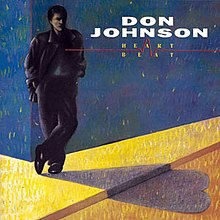
Valentine’s Day may be over, but not everyone has found a soulmate. This just happens to be the case in Don Johnson’s song “Heartbeat.” If you’re rereading that last sentence to double check that you’re reading it correctly, rest assured that you are! Many hit actors in the 1980s had songs on the radio, proving that acting wasn’t their only artistic talent. It should come as no surprise, then, that Sonny Crockett can sing!
In fact, Don Johnson has two albums, which can be found on Spotify. From my standpoint, 1986’s Heartbeat, Johnson’s debut album, sounds very Miami Vice-like from a lyrical perspective. With a voice that could fit in with the likes of the Eagles, Don Johnson indeed proves that he is a man of many talents.
“Heartbeat,” originally written by Wendy Waldman and Eric Kaz, and recorded by Waldman herself, has a lot of heart and beat in it. The tone of the song also modulates as it intensifies and emotions grow stronger. What does it mean to have a heartbeat? What does it mean to be without a heartbeat? Only the song can tell!
“Heartbeat”
Watch the music video for “Heartbeat” here!
Immediately, the ’80s rock-style hits the listener with heavy guitars and a clear beat. Like most rock songs, the opening lines are very bold. Right off the bat, listeners know that Johnson is out on his own. He doesn’t need to be tied down by other people’s money. Independence is key here…until it isn’t. He notes that people tell him that he can only beat the odds for now. He may be near the love of his life, but he remains numb to her. So, he continues searching for his heartbeat, his love.
Johnson’s vocals are timeless on this track, especially on the chorus. The rock edge in his voice sounds similar to Glenn Frey, who sang “You Belong to the City” for Miami Vice. Not only does Johnson’s voice elevate on the “heartbeat,” but it also descends on “beating like mine” (if you’ve read Monthly Mixtapes before, you know that those three-note descending patterns are a weakness of mine). This combination of soaring and descending shows how much he cares about finding love–still in a manly ’80s-rock way!
Then there’s the second verse. Things escalate here, as Johnson recounts the same old story of past lovers who think they know him but don’t. If they break his heart, he’s resilient enough to overcome the heartbreak and simply move on. However, he is still “restless” for his other half. Even more, his voice grows stronger as he exposes his “restless heart” and its true feelings.
Next comes a bit of a reversal. Johnson mentions again what other people tell him, and now people say that true love is hard to find. He knows finding his heartbeat is hard, but he also believes that he “can feel it in the rhythm of the heartbeat in the street.” This very poetic line draws parallels to “You Belong to the City” and Miami Vice. Just as Sonny Crockett lives and breathes the city, Johnson, in this song, believes that his heartbeat is out there. The city gives him hope that he will soon find that love.
The instrumental break only adds to the emotional search depicted in the song. The question of “how does it feel now without a heartbeat?” begins the climax of the song, and the screaming guitar riff during the break only intensifies the search. The song picks up a desperate tone now. Johnson’s questions about not having a heartbeat, which is still figurative of course, heighten the tension. First he was fine all alone, used to it. Now the need for that burning love is amplified. How would it feel without a heartbeat? Without the love of a soulmate, the restlessness would just continue on and on without an end. Two halves make a whole, and without that other half, the heart cannot beat fully or strongly.
Johnson’s repetition of “looking for a heartbeat” further contributes to the new desperateness of the song. He is not as composed as he was in the beginning. Instead, his passion for finding the heartbeat grows each time he belts out the word “heartbeat.”
Will Don Find His Heartbeat?
The song gives us no answers as to whether or not he will find his heartbeat. Johnson’s persona in the song echoes the characters he has played on screen, especially the personalities of Sonny Crockett and Nash Bridges. Both of these characters have romances with many women, yet the love doesn’t stick around for too long. “Heartbeat,” then, seems like a fitting song for Don Johnson to perform, and he executes it in true ’80s-rock fashion. Today Johnson, of course, is married with many children of his own, and he can be spotted on NBC’s new hit show Kenan.
Before You Go…
Be sure to listen to and follow Guilty Pleasures of a Classic Soul, the playlist dedicated to all of the songs we’ve featured on Monthly Mixtape. The playlist looks small right now, but a new song is added each month! You can follow the playlist on either Spotify or YouTube.
Angus MacGyver can create and fix just about anything, no matter where, no matter the surrounding objects. Give him a roll of duct tape or a few paper clips, and he’s ready to save the world. He doesn’t see himself as a hero. To him, he’s just…MacGyver, a practical and down-to-earth kind of guy.
Over the past few years, CBS has rebooted classic TV favorites such as Hawaii Five-O, Magnum P.I., and, of course, MacGyver. While the beloved ’80s hit show starring Richard Dean Anderson is timeless, the current reboot (started in 2016) featuring Lucas Till is just as action-packed and loveable. Mac now becomes fresh and relevant for today’s audiences.
In my opinion, one MacGyver is not better than the other, considering both actors represent the humble and intelligent character. Here is how MacGyver has changed and how he will always be just the same old guy who can save the day.
Who is this MacGyver?
Meet Angus MacGyver. He was raised by his grandfather and, in the reboot, spent time in the military. Alongside his ability to calculate and apply physics concepts at short notice, he also knows quite a lot about diffusing bombs. But don’t get him wrong; MacGyver hates guns, and he refuses to use them. The people around him may use them, but he is a true humanitarian. He works for the Phoenix Foundation, solving unusual, complex situations with his true genius, and his consistent tool of choice is a Swiss Army knife. Mac is a very observant man, and this characteristic is obvious as he scans his surroundings for objects he can use. He often stares off into the distance, thinking.
Solitary v. Team Work
The main difference between the original show and the reboot is the amount of solitary work MacGyver does. In the original, Anderson’s MacGyver tackles most of his missions alone, with the two consistent supporting characters being Pete Thornton (Dana Elcar), Mac’s boss, and Jack Dalton (Bruce McGill), a good friend. Each episode features characters that he works with, but these characters are only central to the specific episode’s plot.
Switching gears, the reboot focuses on teamwork, which is actually a 21st century skill most employers look for today, making the show very relevant for today’s audiences. The current lineup features boss Matty Webber (Meredith Eaton), former military agent Russ Taylor (Henry Ian Cusick), computer hacker Riley Davis (Tristin Mays), security detail of the group Desi Nguyen (Levy Tran), and Mac’s best friend Wilt Bozer (Justin Hires), who makes prosthetics and helps out the team.
From left to right: Matty (Eaton), Bozer (Hires), Riley (Mays), MacGyver (Till), Russ (Cusick), Desi (Tran)
As a whole, the team works very well with each other, as every member has a specific role and tasks are divided according to each person’s role. Although the work of this character-driven team may seem to take away a little of the focus from MacGyver, the titular character, nonetheless, is still his same old self. When he is in the zone, thinking and creating, MacGyver is still a solitary man. After all, on many occasions, other characters comment on Mac’s genius, admitting they don’t have a clue what he’s doing. Sometimes MacGyver seems downright insane, but the tricks work every time!
Comparing the reboot’s larger cast to the original’s smaller one, character interactions are very similar. Witty dialogue infused with sarcastic banter takes center-stage in the less-serious scenes, whether the comebacks reference Star Wars or Arnold Palmer!
Breaking the Fourth Wall
When people think of “breaking the fourth wall” in TV and movies, they usually think of comedic treasures like Blazing Saddles or the Monkees. Who would expect MacGyver to do the same?
In both versions of the show, Mac often narrates to viewers what he’s making. He’ll explain the physics or chemistry behind his split-second creations. By “thinking out loud,” he’s directly talking to, and acknowledging, the audience. In a sense, just the act of making things out of ordinary objects that viewers are very familiar with extends the fictional MacGyver into everyday life. Viewers feel empowered enough to think they can also solve problems with the objects around them. But please, don’t try everything you see!!
The MacGyver reboot recently broke the fourth wall big time by airing an episode where the characters are living in quarantine during the pandemic. Mac ends up rescuing his neighbors and saving their son. Throughout the episode, the characters’ quarantine frustrations are obvious. They hate being cooped up; they rejoice at the arrival of toilet paper; they even praise Dr. Anthony Fauci with a made-up song. When Bozer’s mother experiences COVID symptoms, emotions run high, leaving Mac and Bozer to realize that their friendship has been distant lately, despite their living under the same roof. Overall, this episode hit home. By incorporating the tragic reality of today’s world in this fictional world, the characters themselves become more realistic. Even the Phoenix Foundation heroes can grapple with the same feelings and experiences as the viewers.
Thornton and Dalton
In the original show, Peter Thornton and Jack Dalton were frequent characters, but their roles were slightly different in the reboot. Mac’s boss in the beginning of the reboot was Patricia Thornton, who was eventually ousted as mole and needed to be taken down. Matty then replaced Thornton, and she remains the assertive, yet caring, boss that the team truly needs.
Dana Elcar as the original Pete Thornton
The ’80s Thornton may be “in charge” of MacGyver and the one who assigns missions, but he is also a good friend who supports MacGyver in the craziest situations. In some cases, Thornton has to come to Mac’s rescue and help smooth things over, much like Matty does in the reboot. The bond between Mac and Thornton runs deep. Toward the end of the series, Thornton reveals that he has glaucoma. He has been putting off the diagnosis due to his stubborn pride, and he comes to lose his vision. In fact, Dana Elcar, the actor who portrayed Thornton, actually did suffer from glaucoma and lost his vision around this time. MacGyver, as observant as he is, notices Thornton’s mishaps, like grabbing the wrong carton of juice from the refrigerator. Without delay, MacGyver asks Thornton what’s wrong, demonstrating the pair’s strong friendship and MacGyver’s heart.
Bruce McGill as the original Jack Dalton
Then there’s Jack Dalton. Where to begin? Again, the versions of Jack in both the original series and the reboot are somewhat different, but the smart-mouthed, fun-loving friend remains. In the original series, Jack Dalton (Bruce McGill) is MacGyver’s lifelong friend, but he also manages to get himself (and Mac) into trouble. Lots of it. He’s forever chasing down treasure, lost gold, or, really, any type of good luck that will help him fund Air Dalton, his airline company. MacGyver always gets himself dragged into one of Jack’s ridiculous schemes because he can’t say “no” to a friend in trouble. Thanks to Jack, MacGyver has been tied up, imprisoned, and almost killed. Yet, the two remain good friends. Jack is carefree and very opportunistic. He goes with the flow and continues to move on to the next thing. He’s crazy; he’s funny; he’s wild; he’s Jack.
George Eads as the modern Jack Dalton
For the most part, Jack Dalton (George Eads) in the reboot is also fun and a little wild. As the story goes, he and Mac served in the military together (where Mac diffused bombs), but they didn’t originally get along. At the Phoenix Foundation, Jack is like the security guard. Mac, of course, doesn’t use a gun, so that’s where Jack comes in. He takes care of the bad guys. Well, he did. A few seasons into the show, Jack left to work on another mission and recommended Desi for his current job. Recently, Jack died during his mission, and the Phoenix family completed it for him. This episode was, without a doubt, a tear jerker. Many fans who have watched the reboot from the start loved Jack’s character and the bond he shared with the whole team (think: tons of sarcasm and wisecracks). More often than not, it was Jack’s cell phone that Mac needed to destroy or dissect in order to save the day. For the Phoenix team, losing Jack was far from easy. He had touched all of their lives, and their grief shows how human these geniuses are.
Love Life–Because Someone’s Going to Ask!
Ask ’80s audiences. Ask modern audiences. No matter which fans you talk to, both will declare the MacGyver actors as heartthrobs. But what about the character himself?
In the original, it’s clear that MacGyver is a hit with the ladies. While he’s not a “James Bond” type of ladies’ man, he does meet some women along the way who he eventually kisses. The most poignant relationship he has had pops up in the final episode of the series where he learns that he has a son (who is just like him in the “fixing things” category), and his former lover has been killed.
Meanwhile, the modern Mac has a complicated love life. In the first episode of the reboot, a supposedly “dead” lover returns, but she’s not on the right side of the law. Then things went quiet on the romance front until Desi replaced Jack. Mac and Desi’s relationship has been up and down, considering Mac didn’t trust her when he went rogue to save the world from Codex, an organization run by his aunt, whose goal was to rescue humanity from itself by destroying the world and starting over (yeah, sometimes it feels like a soap opera with all the family drama).
But there’s never a dull moment! The couple has been rekindled, and Mac recently met Desi’s parents. Meanwhile, the drama continues as Riley has secretly been crushing on Mac; in fact, many fans want to see Mac and Riley together, calling the relationship “MacRiley.” No matter which girl he stays with, most members of the Phoenix crew generally voice frustration over not being able to discuss work with significant others. So, the best choice is to date within the small circle of people.
Double Crossing, Secret Ops, Murdoc, and More
There are so many other details that make MacGyver, well, MacGyver. Here is a list of other similarities and differences between the original and the reboot:
MacGyver’s not afraid to go undercover, whether that means going to prison in order to free someone else or dressing up for black-tie events with bad guys. If it’ll help him get the job done, he’ll do it!
And then there’s the double crossing. Why not add a little drama? Many times, especially in the original, the so-called “good guys” aren’t as nice as they seem. They usually have an agenda and Mac is the true good-hearted guy who unknowingly helps the bad guy (or woman). But don’t worry, Mac always saves the day in the end!
In the reboot, viewers learn that Mac’s dad is alive and has been watching him at the Phoenix Foundation all along. Want to guess his code name? Yep, it’s Oversight. However, when Codex wrecked havoc on the world and MacGyver’s family life, Oversight sacrificed his own life for his son. And, because his dad suffered with cancer, MacGyver worked on a way to get rid of cancer. But that’s a another story…
Hockey! In the original show, MacGyver laces-up his ice skates for hockey-themed plots. The most notable episode is when MacGyver steps in as substitute head coach for a high school hockey team, and he helps a teenage hockey star make sense of a professional career path.
And who could forget Murdoc?! That answer is no one. MacGyver’s insane archenemy is always trying to outdo and kill him. The crazy look in his eyes is terrifying, and he doesn’t care who he murders along the way. Both Michael Des Barres (original) and David Dastmalchian (reboot) hit the nail on the head when it comes to Murdoc. In the reboot, he even has a son and manages to find a sliver of humanity within himself.
Michael Des Barres as the original Murdoc
So Do We Have Enough Duct Tape?
Probably not. But if we hide it, rest assured that MacGyver will find another way. He doesn’t give up, as he’s always thinking. As long as MacGyver’s passion is to help everyone he meets, he will always find a way to save the day, either on his own or with a group of good friends.
There’s no one like MacGyver, and I’m thankful to be able to watch two of him!
Further Reading
If you want to read more about MacGyver, check out these sites. I used them to fact-check this review.
“Communication” by Spandau Ballet, released in 1983
These days technology allows us to communicate quicker and more effectively, but devices don’t take into account human error. Better technology doesn’t guarantee perfect communication 24/7. Communication in day-to-day activities is hard enough. Communication in romantic relationships? Forget it!
In 1983, British group Spandau Ballet hit it big in the U.S. and the U.K. with their song “True,” also the name of their third album. The New Romantic band later released their song “Communication,” but it failed to gain as much momentum as the songs “True” and “Gold.” Written by Gary Kemp, one of the band’s guitarists, “Communication” still has a neat groove and is very poetic, as it tackles the woes of love and communication.
As most ’80s songs, the synthesizers come in loud and clear at the beginning. What strikes me is that this introduction already sounds disjunct. It hurts the ears a little, but it’s still very catchy. For a song about failed communication, the instrumental captures the nature of the song from the very first note!
Tony Hadley’s vocals are never incomplete, but he starts the verse singing about how communication isn’t complete. This line is very direct, and it catches listeners a bit off guard with the idea that communication is incomplete, not whole. After all, humans rely on all forms of communication in order to live. Humans are social beings. Already in this first line, we see how personal the song will become.
The verses of this song pack a punch, as they are the most poetic (which also means that I’m apt to read into them way too much!). The alliteration of “grass is greener, but it always grows” guides the listener along, and provides familiar imagery. The rest of the first verse expands on how communication is incomplete, and how the singer (persona Hadley is singing) and his lover aren’t on the same page. She’ll never be able to reciprocate this communication, these “love messages.”
And now he’s alone. “Communication let me down” feels very universal. It’s a message that resonates and hits home, no matter what type of failed communication listeners are experiencing. At the same time, Hadley’s voice doesn’t sound like it’s full of despair over his being left behind, at least not yet. Instead, this chorus feels a little light-hearted; it’s not a matter of life and death.
Okay, you got me: I had to look up what a Telex was (if you don’t know either, click here: https://www.askdifference.com/telex-vs-fax/). The second verse kicks off with the idea that whether a message is sent through a Telex machine (like a text) or spoken, the singer isn’t receiving messages directly. By hearing things second-hand, he has no way of knowing what’s true. Is he hearing everything he needs to hear?
The singer even admits to being incognito. If his identity is hidden, then he isn’t accurately communicating his real self either! It seems that he might be both a victim and an instigator–but mostly a victim. Without a rendezvous, he can’t even meet to clear up any miscommunications! As he continues, he grows more frustrated with communication failures. Who can blame him!
The bridge of the song is the climax of communication troubles. Now he’s waiting by the phone, but the phone can only create more problems. He realizes that he can’t spend time cleaning his heart up and fixing what communication damaged. Love just isn’t worth it.
Talk is Cheap
Spandau Ballet’s “Communication” shows us that communication is flawed, and sometimes it just isn’t worth the trouble. Yet, to be human is to communicate, so giving up communication isn’t exactly an option. Changing how we use communication, though, may help. If we say what we mean and follow through on our promises, then we will be on track toward communication that is whole, not incomplete.
Before You Go…
Be sure to listen to and follow my Spotify playlist dedicated to the songs featured on Monthly Mixtape. Every month I add the new song I review to the playlist. Check it out below!