In literature, figurative language is widely used to build connections for the reader. Imaginative and flowery language help readers to make comparisons and engage with the text. Likewise, metaphors and other figurative devices allow writers to deliver strong emotions and express their message.
Because song lyrics are essentially poetry, music also makes great use of figurative language. Even if the singer isn’t the songwriter, singers usually take the written figurative language and perform it in a way that evokes meaning.
Rockabilly artist Johnny Horton was one of these singers. Even if he didn’t compose the lyrics, he knew how to keep the tone light-hearted or mournful.
Between the late 1950s and early 1960s, Horton’s popularity grew as he joined the ranks of pioneer Rockabilly performers (Rock + Country = Rockabilly). Many of Horton’s notable songs were ditties that retold the stories of past historical events, such as in “North to Alaska,” “The Battle of New Orleans,” and “Sink the Bismarck.”
On the flipside, Horton also had a knack for passionate vocals, especially for ballads and songs of romance.
Now combine figurative language and emotive country boy Johnny Horton….BAM! The result is beautiful and moving; Horton’s 1959 song “Whispering Pines” is no exception. This song is perfect for this time of year between a dreary January and heart-filled (or broken) Valentine’s Day.
“Whispering Pines” by Johnny Horton
“Whispering Pines” opens with a very haunting introduction on account of the descending backing vocals. That female voice immediately sets the somber tone. It’s almost like snow drifting to the ground!
Personification is a type of figurative language where an inanimate object or animal is given human-like qualities. This song is packed with personification, as winter “calls” and pine trees “whisper.” Not only does this language set the sorrowful mood, but it shows just how heartbroken and desperate Horton is at the loss of his love.
Nature, here, is also accurately portrayed in some cases, as in the mourning dove. Horton compares his own loneliness to the saddened coos of a mourning dove. The heartbreak isn’t an isolated experience because Horton is attempting to find connection and comparison in the outside environment.
When the wind blows through trees, there is a whispering sound as the pine needles sway back and forth. At least, this is the picture that Horton is picturing. That “whispering” is echoed in the backing vocals from the beginning of the song. Yes, the trees are being personified here and can’t actually whisper, but, again, Horton is making comparisons to nature. He is in such lonely solitude that all he hears is this whispering. His only friend and comfort right now comes from the trees blowing in the wind. Desperately, he laments about losing his love and begs for answers…even if he’s pleading to trees.
Although the imagery of the squirrel and his mate might remind you of a cartoon-type of romance, Horton is still making comparisons. It’s pretty bad if the squirrels have a better love life than you!
All around him, Horton sees love unfold while he only wants his to return. He can only rely on nature to help him. In other words, there isn’t much he can do. Whether or not his baby comes to him is no longer in his control. He has no choice but to let life take its toll.
The repetition of “whispering pines” and other alliterative sounds in the lyrics continue to echo Horton’s sorrow. Unfortunately, we don’t learn if there is a happy ending.
Before You Go…
Make sure you listen to and follow the Guilty Pleasures of a Classic Soul playlist!
“New Year, New You!” Sounds familiar, doesn’t it? How many times have your resolutions fallen flat before January even ends?
One of the responsibilities of teachers is to plan and prepare. Non-teachers tend to forget that, without planning and creating student learning objectives, a classroom is already destined to turn into a train wreck, no matter what day of the year.
As you plan and prepare for the new year, consider the following method for writing goals and objectives. The ABCD method helps to clarify and specify goals in order to make them more attainable. It also ties into Bloom’s Taxonomy, if you want to get all fancy and discuss educational practices.
The most important thing to remember is that these goals can always change, and you don’t have to abandon them if they’re not going as well as you had hoped. This method allows for tweaks and adjustments. And if you have to scrap your goal and start over, then go for it!
ABCD Identified
A -> Audience
B -> Behavior
C -> Condition
D -> Degree
Audience
The audience, simply, is who should be accomplishing the goal. Teachers start their lesson objectives by saying “students” or “learners.”
Behavior
After identifying the audience, you must state the desired behavior of the objective/goal. Keep it short. You should only use one verb per objective. The behavior is literally the goal!
Condition
The condition (could be more than one) is the how of your objective. If you plan to lose weight, how do you plan on achieving that loss? This is where you start to specify your goal so it’s more tangible and attainable.
Degree
Finally, the degree component is the frequency and/or duration of the goal. In other words, how will you measure your goal? Degree is often one of the trickier parts of objective writing. It will include numbers of some sort, whether that be in the form of time, repetitions, or even percent of accuracy. This is also where you can tweak your goals. In some cases, a degree may not be necessary.
Teaching Example
Here are examples of what lesson objectives look like for teachers. Each part is highlighted as Audience, Behavior, Condition, Degree:
The students will be able to identify the parts of speech in a sentence by completing a labeling exercise every day for 5 minutes.
The learners will be able to infer the meaning of unknown vocabulary words by underlining the context clues, with 80% accuracy by the end of the 9 weeks.
New Year’s Resolutions Examples
I will be able to walk 6,000 steps a day by walking 5 laps around the building during lunch break.
I will be able to declutter my house by writing a list of areas to be organized and then spending 30 minutes a day on one of the listed areas.
I will be able to read one chapter of the Bible a day by listening to an audio version during my work commute.
Halloween feels like yesterday, and Thanksgiving is upon us. Let’s settle the debate once and for all before we hang up the candy canes and pack Fall away.
I’ve always been a candy corn fan, and it’s not Fall if I don’t buy a bag. Candy corn haters, however, think the treat is way too sweet and has a disgusting texture. Everyone’s entitled to opinions, or course, but what about meaning instead of taste?
As we prepare to gather around the family table and give thanks for another year around the sun, let’s consider a religious context for…yep, candy corn.
First, we must understand color psychology. This theory relates to how we culturize the colors we see. Red refers to anger or passion. Green reminds us of money. White is usually pure and innocent. Different cultures naturally view the meaning of colors based on their own traditions and values.
When looking at candy corn through a traditional lense, we typically think about Autumn, harvest, and Halloween. Have you ever thought about the Holy Trinity?
The tricolor design of the candy can represent the equilibrium between God the Father, God the Son, and the Holy Spirit. Working from bottom to top, God the Father is yellow, representing God as the foundation and author of life. The love between God and the Son (Jesus) creates the Holy Spirit (God’s presence, or breath). Therefore, the yellow and orange colors lead to the white tip of the candy, here representing the Spirit.
Crazy, right? We’re not done. Consider the color meanings.
Yellow: yellow is a bright color that symbolizes intellect, creativity, and joyful energy. God the Father is omnipotent or all-knowing. If creation stems from Him, then it only makes sense that yellow represents Him and His divine power.
Orange: orange is still a positive color, a combination of the loving red and the energetic yellow. It connects to rejuvenation and communication. God the Son, Jesus, came to earth to teach sinners and show them how to prepare for eternal life. From Jesus, we get the “love God above all things and love your neighbor as yourself.” That love and optimism allows Jesus to communicate with God’s people and rejuvenate faith.
White: white is purity, innocence, perfection, openness, and new beginnings. The love of Father and Son are perfected through the Spirit. It leads to holiness, which is also pure and clean.
Still unconvinced? Just pop a piece of candy corn in your mouth and continue to mull it over.
When disturbing stories are narrated and performed by the right storyteller on screen, the words from the page become the essence of what they were meant to become. When director Roger Corman took Edgar Allan Poe’s Gothic, spine-chilling stories and transferred them to the big screen, Poe’s characters came to life like never before. But without the passionate performances of the irreplaceable Vincent Price, Poe’s creations would never have been portrayed so accurately.
Poe’s famous short story “The Masque of the Red Death” received such a filmic retelling. As with all literature that is retold through the silver screen, the differences between mediums can be beneficial to the merit of the plot; or they could totally ruin the entire experience.
Corman’s directed version of “Masque” is deeply rooted in the macabre, but where it strays from Poe’s gothic mind is both fantastic and a bit of a disservice.
Plot
Essentially, the plot of the story and movie are the same: Prince Prospero abandons his people during the Red Death epidemic and shuts himself up in his castellated abbey, along with all of his rich and noble friends. For months, they remain inside the castle, living in luxury. When Prospero holds a lavish masquerade for his guests, he can’t have been happier… until a cloaked figure appears. The figure turns out to be the Red Death, who then kills all of the guests, Prospero included.
The Seven Rooms
Rooms–not dwarves! In the story, Poe makes it abundantly clear that Prospero loves the bizarre and macabre, down to the finishings of the architecture. He constructed a hallway of rooms, all structured on angles. Therefore one room literally juts into another. Each room is a different color, with the final room being a pitch black room with a red window.
The rooms each have a singular window, by which light shines from outside via lit coals that produce light. There were no candles.
Corman’s film, however, only features five of the colored rooms. These rooms form one straight and level hallway, and there are candelabras to light the rooms. Although different from the story, these rooms still hold significance. The sequence of colors can represent emotions or the stages of life. No matter the exact layout, the rooms show the progression of Prospero’s eventual downfall.
This truncated depiction of the rooms does take away from fully showing Prospero’s eccentricity. As viewers, we’ll take what we can get.
The Clock
A large clock marks each hour with chimes that frighten the guests to the point where the music and revelry stop. The clock haunts them, reminding them of their mortality during this time of fast-spreading illness.
In the movie, the clock is not stationed in the black room. Instead it’s in the main ballroom where the masquerade takes place.
Character Development
In Poe’s story, Prospero is the only character who is featured. Corman’s addition of characters does deepen the impact of Prospero’s selfishness and true values.
At the beginning of the film, Prospero arrives in the village and harasses the people. He ends up imprisoning Francesca’s father and her lover, Gino. Prospero insists that she must choose which man should be killed. For Prospero and his wealthy friends, entertainment is the main focus. A fight to the death sounds great, right?
Plus Prospero is portrayed as a satanist in the film, while Francesca is a devout Christian. Both of their faiths are challenged as they butt heads. Prospero says there is no hope in the world and wants Francesca to convert. She, of course, tries to dissuade him; she sticks to her faith even after Prospero takes her cross necklace and forbids her to wear it.
Meanwhile, a decent portion of the film follows Prospero’s wife Juliana as she completes her rituals and commits herself to being the bride of Satan. The final stages of this process get very psychedelic as she is almost killed by several attackers in this foggy and trippy scene that is almost dreamlike. Once she surpasses the obstacles and is a true satanist, she steps out of the black room (here considered the satanic chapel) and is mauled to death by a falcon.
Eventually Gino, Francesca’s boyfriend, is released from Prospero’s prison and left to face the Red Death. His mission, however, is to find a way to free Francesca. He has some help from Death, the mysterious cloaked figure.
When Prospero confronts the cloaked figure in the black room, he at first thinks it’s one of his friends playing a trick on him. Then he grows excited, thinking the figure is Satan. As a devout worshipper, Prospero is pleased with himself that he brought all these souls (aka his rich friends) to the devil.
The Red Death then enlightens Prospero that Death has neither god nor master. It also doesn’t have a face. The Red Death then infects all the party goers who die. When Prospero manages to finally unmask the figure, he sees his own face, a reminder that we make our own heavens and hells. Regardless, death is inevitable.
But never fear–Francesca and Gino escape the castle unscathed. Prospero and his friends are dead, and the film ends with several personified Deaths cloaked in multiple colors, likely representing the rooms in Prospero’s castle.
Takeaway
Combine Poe’s Prospero and Vincent Price’s Prospero, and the “Masque of the Red Death” would become complete. The intensity and grotesqueness of Poe’s diction and style can’t be replicated. At the same time, Price’s iconic eerie voice and spot-on acting couldn’t make for a better Prospero. Some of the differences between the film and movie aren’t significant enough to dilute the plot and theme. Roger Corman’s use of blood, fog, colors, costumes, and sets scream “1960s,” but not in a slasher or jump-scare horror kind of way. Faith, morality, death, and the human condition are all challenged, making for a timeless and noteworthy story.
Want to sweeten up your brownie recipe? Looking for a classic snack with a modern twist?
Enter the chocolate syrup and pistachio pudding brownie!
This simple recipe adds a nutty and gooey layer to a brownie mix that appears in an old Hershey’s recipe book.
So without further ado…
The Hershey’s Foundation
Many of the recipes in my grandmother’s old Hershey’s cookbook are great starting points for what I bake. Generally I use off-brands of products, not Hershey’s, and I substitute ingredients when possible. At times the amount of butter, chocolate, butter, and sugar can be changed to meet my own modern standards.
For these brownies, I followed most of the recipe above and then added pudding on top. See below!
Ingredients
1 egg
1 cup brown sugar
3/4 cups chocolate syrup
1 1/2 cups all-purpose flour
1/4 teaspoon baking soda
1/8 dash of salt
1/2 cup melted butter OR 1/2 cup plain applesauce
3/4 cup chopped walnuts (optional)
1 package pistachio pudding mix
2 cups milk (or as directed for pudding mix)
Steps
See captions in each picture for each step! 👩🏼🍳
In a separate bowl, mix the package of pistachio pudding as the box directs–typically requires 2 cups of milk. You can refrigerate it while you mix together the other sets of ingredients Mix the brown sugar, melted butter or applesauce, chocolate syrup, and egg in a separate bowlIn ANOTHER bowl, sift your dry ingredients Gently stir dry ingredients into the chocolate syrup bowl (a little at a time until dry ingredient bowl is empty)TIP: To make this recipe slightly healthier, replace the required 1/2 cup of melted butter with a 4oz container of applesauce. This is a direct substitution. A 4oz container yields about a 1/2 cup.If desired, stir in chopped walnuts (or any nuts) before pouring batter into panGrease and flour a 13 × 9 inch baking pan. Preheat oven to 350 degrees After spreading brownie batter evenly, take globs of the pistachio pudding and spread them over top of the batter Ta-Da!
Bake the brownies at 350 degrees for 35-40 minutes. Then cool, cut, and keep refrigerated. Enjoy! 😋
Waves are crashing behind a couple who kiss underneath the moonlight while a cinematic love song swoons in the background…..
Unless you’re Danny Zuko or Sandy Olsson and preparing to go back to Rydell high school and tell your friends all about those “summer nights,” the romantic scene above is likely one you mostly see on a movie screen (no offense, Grease).
Beaches are paradise (but don’t ask me, because I’ve never been to one), and many people get swept up in the sandy fantasies of love by an ocean. Unsurprisingly, these ideals are captured and longed for in the music scene as well. These beachfront songs are played over speakers all year long, regardless of the season.
As summer winds down for another year, I can’t help but think about connections between two classic beach songs that flow beautifully into one another.
The Shangri-las’ timeless “Remember (Walkin’ In The Sand)” from 1964 has been memorialized in recent years with the famous “Oh no” line being used in TikToks and the like. Sure, the line still fits when it’s out of context of the song, but the classic hit itself shouldn’t be carelessly ignored.
Likewise, when remembering the 1980s, The Go-Gos’ hits remain highly popular, as do several tracks from lead singer Belinda Carlisle after she pursued a solo career. While “Vacation” and “Heaven Is a Place On Earth” will always be memorable favorites, we shouldn’t forget “Circle In the Sand” from a Carlisle solo album.
Details and imagery from each song create an intriguing push and pull effect, as if the story of one song leads straight into the story of the other. And if that isn’t enough to spike the volleyball over the net, we’ll also take a quick look at a hard rock rendition of “Remember (Walkin’ In The Sand)” that will be sure to melt your ice cream cone!
What’s Monthly Mixtape? Each month on Confessions of a Classic Soul, Nicole reviews an underappreciated song from decades past. Her love for underrated songs, plus her literary analysis skills and music experience, allow her to find hidden gems within songs.
“Remember (Walkin’ In The Sand)” by the Shangri-las
The Shangri-las, a female teenage trio from the 1960s, was headed by lead singer Mary Weiss. In “Remember…”, the classic track begins with an echo effect and background vocalization. In a fuller version, like in the video above, the girls provide spoken dialogue with Weiss saying, “I know you love me too.” This statement, very general, is neither positive or negative because we gain no context, especially with a silent background. However, it does set listeners up for potential themes of romance.
Weiss’s natural soprano vocal sets the mournful tone, and her youth can also be heard in how high her voice can soar. Her vocals perfectly relate to the teenage love song that is about to unfold. And hey, there are seagulls crying in the background!!
Sooner rather than later, we learn that her lover has gone across the ocean and just now sent her a letter telling her that their relationship is through. A letter?! Sounds like a bit of a jerk move. The song doesn’t allow us to know how much time has passed between the lover leaving and then sending the letter. Perhaps part of that mourning in Weiss’s voice lends itself to that long pause in between. All this time she thought the relationship was stable, or maybe she had been reeling, unsure of it because they were out of touch. Nonetheless, the repetition of the lines “let me think” shows that she is panicking. This confirmation of a sunken love is still a heavy weight.
Additionally, the “oh no” that repeats a few lines later represents that panic settling down into realization. Now she must come to grips with the words written in the letter. For Weiss, this love equaled life. She distributed her love (aka life and energy) into the relationship. Now that she can no longer invest that love/energy into the lover, she is unraveling. What’s her purpose? What can she do now? That life she had now seems worthless.
Throughout the song there are several parallels of the comings and goings of the relationship. Right now they’re apart, but at one time their lips met. They used to be together walking on the sand, but now they’re oceans apart. In the end, she must come to terms and realize that this relationship isn’t going to formalize into a happy teenage beach movie conclusion.
“Circle In The Sand” by Belinda Carlisle
In 1987, Belinda Carlisle’s powerhouse voice stood out even more once she pursued her own music apart from the legendary girl-group The Go-Gos.
“Circle In The Sand” begins with a light guitar introduction, perhaps reminiscent of the dreamy beach romance Weiss referred to before her relationship ended. Summer here is ending. While Weiss’s summer ended with a broken heart, Carlisle tells a bit of a different story.
The line “I won’t walk away again” is a commitment. She isn’t taking off across an ocean. On the contrary, Carlisle and her lover are bound together, never-ending, just as a circle is. Eternity is present here: a beginning and end that continues. The promises and dreams that Weiss holds onto come to fruition in Carlisle’s ballad. In fact, this song sounds like it could be an answer from Weiss’s lover. The message of remaining committed in a relationship is all that Weiss longs to hear from her far-away lover. She so desires that never-ending circle in the sand!
When Carlisle mentions the cold wind and tide moving in, she’s likely using this imagery to refer to challenges that arise in the relationship. Instead of allowing that tide to wash away the circle in the sand, she is embracing for impact and decides the bond is strong and worth it.
In further comparison, Weiss was walking with no direction while Carlisle is moving round in the circle. Carlisle’s relationship is a track on which it can stay bound and never-ending. Weiss’s, however, seems more like the teenage summer fling. It, quite literally, walked off into the ocean.
The Aerosmith Rendition of The Shangri-las!
Let’s just say that Mary Weiss and Steven Tyler are NOTHING like each other in the vocal department. However, Aerosmith is currently on their final tour of their career, so I couldn’t pass up the chance to reflect on their cover of the Shangri-las’ “Remember…”
Unlike the Shangri-las, there are no beach vibes, just the mournful ballad, now played on heavier guitars. During the chorus, Tyler is very quick on his entrances. The tempo of the walking-on-the-sand memories is increased. Although I criticized this rushed tempo at first, I realized that it makes this cover more manly. The quicker Tyler delivers these lines, the more the sexual passion and tension are infused. The mood isn’t so dreamy and hazy here as desperate and full of longing. The emotion isn’t heavily drawn out or whiny but edgy. You’re not going to hear his voice break as if he’s going to start sobbing. There are still vocal lifts and breaks, characteristics of Tyler’s iconic voice, but the sound is of a broken man trying to keep himself together.
This is definitely not a song many would expect Steven Tyler to tackle, but it certainly works in a rock world! Dream on!…
Before You Go…
Don’t forget to listen and subscribe to the Guilty Pleasures of a Classic Soul playlist, which compiles all songs featured on Monthly Mixtape! You can now listen on either YouTube or Spotify!
The old soul returneth! As generational divides deepen and kids morph into the “iGen,” or technology-oriented, population, rest assured that young old souls exist (isn’t that why you’re here anyway?). Today’s youth, namely individuals 40 and under, aren’t all blind to the methods and appreciations of generations past. In fact, they have their own wisdom and experiences that keep the classics shining, sometimes in a new light and context.
While it’s true that Confessions of a Classic Soul has been hibernating these past few months, I’ve since gained many insights as to the presence and growth of people my age who are undoubtedly Classic Souls.
From the new friends I’ve met to occurrences in media and pop culture, here are my findings…
Loving the Classics
We all know that if “it’s broke, don’t fix it.” This is the motto for hundreds of old souls who firmly believe that the way products and art forms were created years ago are more genuine than modern forms, hence “withstanding the test of time.” In recent years, a surge in classic rock, cars, and the 1980s have surfaced among youth.
Not convinced? Clearly you haven’t met:
TH: who just made a mega Spotify playlist of tracks from the 1960s-80s. There is plenty of Beach Boys and Toto to keep spirits up. 🎶
DA: physical therapist who refurbished a record player/stereo for use within the rehab facility. 🏋♂️
RJ: budding violin virtuoso who isn’t afraid to play a composition from an opera. 🎻
DS: who probably can’t even name the number of records he owns or how many concerts he’s been to. Dedication is attempting to travel to the west coast to catch one of the final Dead and Company shows. 🤘
JS: who can tell you anything you want to know about Jane Austin and Pride and Prejudice. 📕
EL: what ISN’T she obsessed with? 😍
GS: it’s yellow, but this Corvette has been places! ⭐️
LW: whose 2023 graduation scrapbook is full of photos from a Polaroid! 📸
SMG & NG: Renaissance-themed wedding 💍
Pop Culture
From movies to trends, there is no doubt that the classics are resurfacing and reentering our mainstream culture.
Flip Phones
In 2015 I received my first phone for my 16th birthday. It was indeed a flip phone, which of course set me apart from my Apple peers. Flip phones started as an awesome upgrade from the brick-like cell phones. Heck, even cool TV detectives used them (hello, Horatio Caine and CSI)! As Apple and Android continued to produce more and more modern devices, flip phones quickly became less popular and were associated with the elderly.
Record players and records have made a major comeback in recent years. This alone shows that, while online streaming is convenient, there are enough old souls who still like the physical aspect of their media.
I’ve also heard rumors that cassettes are making a comeback! Pencil, please! ✏️
Additionally, just consider the fads in getting the music into ears. Headphones were the cream of the crop in the 1980s. How else were you going to use your Walkman?! Earphones came next, and now airpods that connect to Bluetooth have taken the world by storm. Yet, even on a college campus, I’ve seen a resurgence in large headphones 🎧. As long as you can hear the tunes, right?
Old Tropes and Sequels
TOO MANY SEQUELS AND REMAKES! Many old souls, including young ones, are skeptical of modern remakes and sequels. The list of shows and movies that have been rebooted or reimagined in the past five years alone is stunning. What have we seen lately?
Disney movies getting live-action transitions, from The Lion King to The Little Mermaid 🧜♀️
West Side Story got a modern makeover
The Star Wars Saga saw three more original movies, plus independent movies like Solo and Rogue One, not to mention shows like the Mandalorian and a Kenobi backstory.
Ghostbusters: Afterlife and the female-led versions
Law & Order reboot, which still includes actor Sam Waterson.
Night Court reboot, which still includes John Larroquette as Dan Fielding.
CBS has plenty of Star Trek spin-offs!
Amazon’s Rings of Power as a prequel to The Lord of the Rings. However, it has received many complaints. I never finished the series and couldn’t get past an age difference not portrayed as Tolkein had written.
Indiana Jones and the Dial of Destiny: Harrison Ford is well into his 80s! Let the character retire already!
Coming soon: both Grease and Willy Wonka backstories
The list could go on and on. We old souls aren’t against reboots or reimaginings. The issues are that 1) we’d like to see more original stories that play off similar themes from the stories above, and 2) modern retellings sometimes come with inconsistencies or details that feel unnatural when compared to the original plot.
Not sure where the old souls are? Just take a closer look around you. I promise you, we exist. We might be quiet about it, but we are here!
Songs are a form of poetry, but sometimes poets don’t want to disclose the themes and meanings behind the words. As a result, the audience must decipher themes and take the songs as they are.
Fans of Duran Duran (aka Duranies) likely know that the band is not fond of explaining meanings or giving background on songs. The band’s poetics are evident, especially proven in the track “A View to a Kill,” which is the theme to the 1984 James Bond film of the same name.
However, one Duran Duran song has always left me intrigued by the meaning. What the heck is THE reflex?!
Google searches filled with public forums left me with no clear conclusion. In fact, there was a small consensus among those who argued that the reflex is of sexual nature. Do we have to make everything dirty-minded?
Instead, I argue that the reflex is vice-related. Why can’t the reflex be the habit of lying?
“The Reflex” by Duran Duran
The repetitive vocalization at the beginning of the track is great at portraying the title of the song. By dictionary definition, a reflex is
“Movement caused by a reflex response… any automatic, unthinking, often habitual behavior or response.”
The repetition of certain lyrics acts as word painting: the sound represents a reflex.
In light of the theory that the reflex is the repetitive, addictive tendency to lie, consider the opening lines, “You’ve gone too far this time / But I’m dancing on the valentine.” A pathological liar continues lying, even if he does go too far and creates an endlessly tangled web of falsehoods. As for “dancing on the Valentine,” liars must tiptoe, or dance, around others in order for the lies to become consistent around the right people. Didn’t tell Person B the same lie as Person A? Then tread carefully…
Don’t liars like attention (or some, at least)? They want to be on their soapbox and in control of their audience, hence allowing them “another day to make [a] stand” for whatever tale they’re bent on telling.
The repetitive pre-chorus reminds not to “bruise it” or “lose it.” The game liars play is centered on telling lies when in a jam or when the self is threatened. Lies are used to make a person look better or worse. Liars, then, use fabrications to their advantage. Once you tell a lie or two, a habit forms. Lying grows easier. As long as you’re not compromised, use it and don’t bruise it.
Liars, as suggested in the chorus of the song, are like lonely children. Once you create a false world around yourself, you can’t present your true self to those around you. Therefore, loneliness ensues. And because lying exaggerates the truth and makes things grander than they really are, liars are in a sense “finding treasure in the dark.” They can make something out of nothing, as if each lie marks another spot on the treasure map.
Naturally, the lying reflex leaves behind question marks because we can’t know for sure what is true and what isn’t. We can only wonder…
Does a liar ever have regrets? The second verse hints at such. He wants the ride to slow down, but it won’t. Keeping up with countless lies requires a lot of concentration and caution. Here our narrator, voiced of course by Simon LeBon, is feeling a bit anxious. He even sold the Renoir painting and TV. Apparently the lies didn’t lead to fortune and fame. He also doesn’t want to “be around” when he’s exposed as a liar.
In some ways the reflex could also be personified as luck or a gambling addiction. However, the lyrics that suggest this idea can still refer to lying. For instance, the reflex watches over “lucky clover.” Why? Perhaps this is because a liar needs all the luck he can get to not blow his cover, and so he charm others with sly and smooth stories.
Likewise, at the very end of the song, we hear that the reflex is playing a game where he holds all the cards. Each card can symbolize a different lie to be told. Frequent lying can be gamified because the liar plays with the odds of spreading believable lies and keeping those lies straight.
Lying can become habitual, thus making it like a reflex. The more someone lies, the more of a knee-jerk effect it has. Pretty heavy stuff for a New Wave band…
In the end, we’ll never truly know what Duran Duran’s “The Reflex” is all about. Yet, it can be quite interesting to experiment with different ideas.
We know that “the grass is always greener on the other side,” but why is this the case? Any simple Google search will describe the color green in words such as rebirth, envy, motivation, and, of course, nature.
The power and significance of the color green is not only psychological, but spiritual. Naturally, these multiple meanings are also represented in various art forms.
So why is life GREEN?
Spiritual Origins
It’s a generally perceived notion that, for years, women have been oppressed and overlooked. The joke is on the men, for women have made significant strides in the advancement of society, whether that be in the form of inventions or theories. Influential women were present, even if secretly active, during the Middle Ages and Renaissance periods. For women like St. Hildegard of Bingen, the sky was the limit–literally. Not only is she regarded as a Christian “Doctor of the Church,” but her writings contributed to both religious and artistic realms.
Throughout her multiple writings, Hildegard focused on the Earth and the color green, in relation to God and creation. Because life comes from God, Jesus Christ, the Son of God, is like the sun. God set life in motion, while the Son (or Sun) maintains that radiance, goodness, and hope that keeps humanity going. Hildegard’s theory centers on the idea of “Jesus is the light of the world.”
Regardless of the specific religion, this idea that the natural green of the earth is a sign of creation and renewal is pretty universal. It’s simple and basic. Green grows and blossoms around us in various forms, no matter the type of plant or animal life.
Minerals come straight from the earth, so it’s not very surprising that Hildegard continues her discourse by claiming that emeralds come from the Divine–God–and spring forth from the earth. Just as nature itself is green, so are emeralds. Green, then, not only represents life and renewal, but the divinity and the sublime.
Green Art
Emerald City, Anyone?
Of course there’s “no place like home,” but why is the Emerald City so special in the Wizard of Oz? There’s a sort of divinity in the city since it’s the last and only hope for Dorothy to get home. Before learning that the Wizard is indeed a fake, when it comes to magic that is, Dorothy and the crew are striving to enter that sacred city. They’re constantly pushed off the [yellow brick] road by the witch, representing satanic forces (plus, she IS green). Even at the gate of Oz’s residence, they’re not permitted to enter straightaway. Oz is the divine wisdom needed to resolve the problems in this tornado-induced fever dream!
Taste of Life is Green
Color and imagery can be found in nearly every song to hit the radio waves. In the 1960s, songwriters Carole King and Gerry Goffin composed numerous hits, and several of their songs were performed by the Monkees, including “Take A Giant Step.”
Sung by Micky Dolenz, the song is full of hope and inspiration as Dolenz persuades the girl that love is still possible. Sometimes, we need to escape the doubt and insecurities we create in our minds. The line “taste of life is green” demonstrates that life is still possible. Green represents what it has for years: refreshment and renewal. Besides, life can truly be green when love is present. Outside of the overworked brain, life continues and can be simple. Thus, this also explains why nature is so beneficial for many. Nature is simple, green, and calming.
“Don’t stay in your lonely room Just staring back in silent gloom.
That’s not where you belong.
Come with me / I’ll take you where the taste of life is green.
And everyday holds wonders to be seen.
Come with me, leave yesterday behind
And take a giant step outside your mind.”
-Songwriters: Carole King / Gerry Goffin
Green-Eyed Lady
Then there’s Sugarloaf with a love song about a green-eyed lady. At first, the green references don’t seem anything out of the ordinary. However, her green eyes go hand in hand with her being a child of nature. She feels like the life never seen, meaning that she is that beautiful and refreshing. She doesn’t just have green eyes. She has GREEN eyes! She is able to set lovers free and reveal the sublime wonder of God’s creation.
“Green eyed lady ocean lady Child of nature, friend of man
Green eyed lady passion’s lady Dressed in love / she lives for life to be
Green eyed lady feels life I never see Setting suns and lonely lovers free”
-Songwriters: David Riordan / J.C. Phillips / Jerry Corbetta
The Son of Man
Ah yes, the French Surrealist art movement. This time in history cannot be properly explored without the mention of one René Magritte. “The Son of Man” is one of his famous paintings, and, according to basic online research, the legendary depiction of a man with a green apple over his face, is meant to be a self-portrait. In fact Magritte once quoted:
"It's something that happens constantly. Everything we see hides another thing, we always want to see what is hidden by what we see. There is an interest in that which is hidden and which the visible does not show us"
What if the green apple represents a life that we cannot see beyond? We can see the apple, sure, but beyond that we can’t see anything, even if we desperately want to. Sometimes we get too ahead of ourselves and wrapped up in plans and worries that haven’t even happened yet. The present life we have, hence the green apple, is all we can focus on until we are allowed to view the life beyond.
Green Characters
Fictional characters often possess colors that reveal their true character. These colors could be skin, clothing, or material objects. In literature and film, colors are never typically just colors. Here are a few examples of green characters who connect to life and renewal.
So, are you feeling green?
Special thanks and credit to Dr. Bogner, from whom I learned about the spiritual meanings behind the color green via the Dame and Distaff course at SVC.
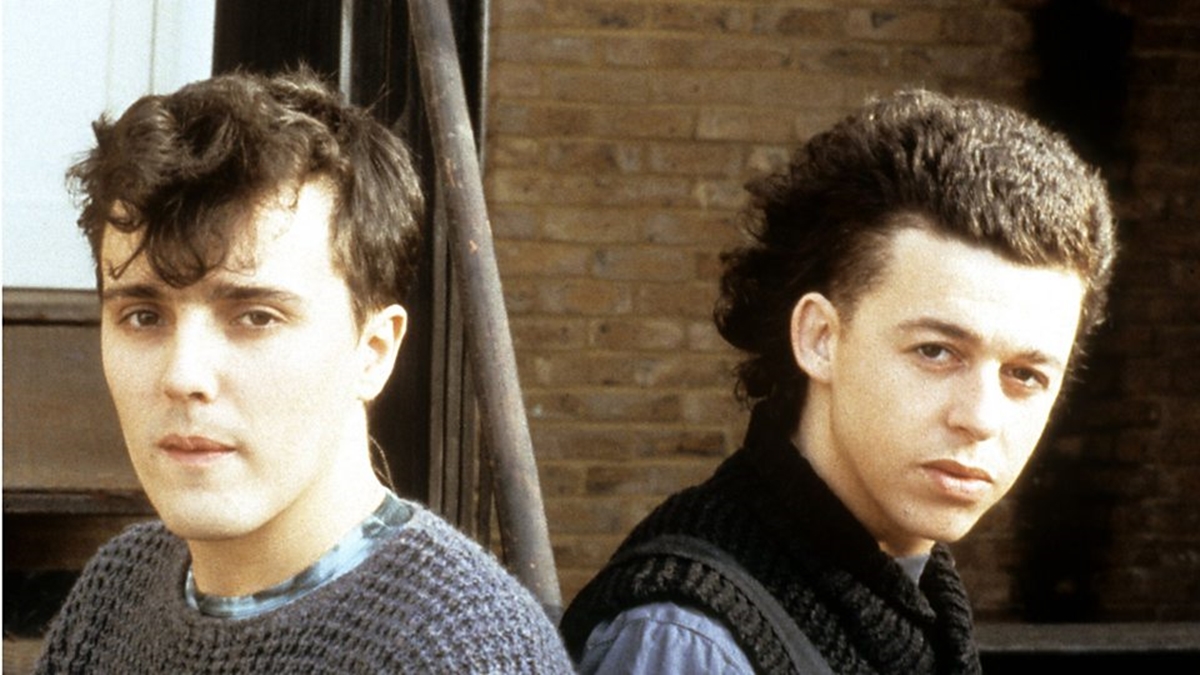
We’re not talking famous duets with the likes of McCartney and MJ, Nicks and Petty, or Queen and Bowie. We’re talking famous, and not so famous, dynamic duos who took the synthpop world by storm in the 1980s. Do you know your Wham! from your Pet Shop Boys? Your Eurythmics from your Roxette? Take the quiz below to find out!
Who is your favorite ’80s band front man (or woman)?
Tell us your favorite ’80s lead singer to enter to win a free, autographed copy of The Music Makes the Man! ENTER BELOW!





 Confessions of a Classic Soul