Monthly Mixtape: Won’t You “Come On”?

We’re well into the summer, and that means family get-togethers and parties…well, in line with social distancing and other safety measures, of course. This summer has been unlike any other, but we can still have fun. ’80s pop duo Wham! is about youth, and this motif comes across in many of their infectious hits. While most songs are based on love and romance, a few lean on the side of partying and having a good time. “Come On” is one of those songs off the debut album, Fantastic, and it often slips between the cracks of Wham!’s discography.

Today we’ll go back in time to 1983 and dive into a preview of who George Michael would later grow into as a legendary singer/songwriter. And if you happened to miss my review of Andrew Ridgeley’s memoir Wham! George Michael & Me, you can read it here:

We’re Still Dancing…

There is no denying that this song was created in the 1980s. The upbeat intro has an underlying synth pop element to it, and we’re off running. We don’t know what’s going to happen yet, but we know we’re preparing for a big moment, and we’re grooving while we wait.

George jumps in and begins on the chorus, and suddenly he’s talking directly to us. Right away we have a call-to-action with two little words: “come on.” Even more, the line “…And don’t let nobody say you’re wrong” hits you out of nowhere. This is a very powerful line. Underneath the simple words, we feel a call-to-freedom. We don’t know what exactly, if anything, is supposed to be holding us back from partying, but George encourages us to continue on and forget about someone. As he keeps singing, we encounter more questions. Why have we lost control? Is it really OK to lose it? Who is going to steal our souls? Why? At first, the questions posed in the opening lines are a bit mysterious. As the song continues, however, we will figure out where we stand and why it’s OK to lose control and have fun.

"And don't let nobody spoil your fun..."

Now we transition smoothly into the verse. This song’s structure is a bit odd, as it really only has two verses and no bridge. Or is that one verse and one bridge? Either way, it’s a little nontraditional. I wonder–does this perhaps have something to do with the fact that we’re supposed to be having fun and not thinking? Does structure go out the window just like our control and problems? While we don’t have much time to think about song structure, we encounter more questions: what’s with these greedy men? Part of you wants to keep dancing and forget about them, but you can’t help wondering what they have done! In any case, George encourages the greedy men to not worry and dance on. This party is a nonjudgmental zone. In other words, who cares who you are or what you have done–just have fun! “Come On” is a call to unity. When you’re having fun at a party, cares are cast aside and the past doesn’t matter.

OK, we’re getting to my favorite parts of this song! Before the second verse (or is it bridge?) we hear this instrumental interlude that is even more synthesized than the beginning of the song. The trumpets that are present in the chorus are gone for a second, and I feel like I’ve transported to an episode of Miami Vice. This interlude always reminds me of Miami Vice music, as Crockett and Tubbs are cruising the streets at night. This interlude marks the first and only time we really hear an instrumental such as this in a Wham! song. It’s so cool and catchy that I want a whole song with just that melody.

After we’ve checked in with Crockett and Tubbs, we go into the next lyrical section. George soars on some high notes here, which hit me every time I hear the song. These high notes show George’s budding vocal talent. And, not surprisingly, we get more questions. What is George scared of? Why would we think he’s not scared? What does he need to be prepared for? Really, those questions don’t need specific answers. As he continues, we realize that we’re back to that same carefree place. He doesn’t need to worry about what his life will bring tomorrow. It’s not like he isn’t scared of the future. Right now, though, he just needs to blow off some steam. Then, he admits that he’s not important. He’s not a VIP, and neither are we. So, we should enjoy our lives and not worry about what others are doing or what others are thinking about us. I don’t want to go so far as to say “we don’t matter,” because it’s more of “we’re not incredibly famous or important; we’re just us.”

The rest of the song is really just repetitive as we dance on. There is another instrumental interlude a bit different from the others, and I love hearing George and Andrew laugh in the middle of it. I don’t how you laugh in a song, but that just makes the song more Wham!-like, as it testifies to George and Andrew’s friendship.

In the end, George wants us to have fun. Should we party every night? Probably not, but we’re reminded that we can always escape if we need to. No one can control us or steal our souls. We are free to be who we want to be. Wow, doesn’t that just have George Michael written all over it? Even as a teenager in 1983, George was writing and singing about freedom. While the 1983 Wham! debut album can be laughed-off at times (George even came to dislike some of the songs), hardcore fans can start to track George’s progression as a singer/songwriter. To me, tracking this progression is one of the most intriguing parts of following a singer’s career.

Now, shouldn’t we be dancing?

Enjoying Monthly Mixtape?

Before you go, check out a new playlist I’ve created featuring all of the songs reviewed on Monthly Mixtape. I know the list looks short, but songs will be added after each new Monthly Mixtape feature. Happy listening, and don’t forget to follow the playlist so you can listen to new updates!

Join the Discussion!

How do you feel about Wham!’s “Come On?”

Simply Wham!tastic!: A Review of Andrew Ridgeley’s “Wham! George Michael and Me”

Nonstop “Party nights and neon lights,” complete with dozens of one-night stands. That wasn’t quite Wham! (unless we’re at “Club Tropicana”). A major rift that results in a lineup change or a crumbling of the band. That wasn’t Wham! either. Pure bubblegum pop accompanied with a teenage image. That was Wham!…to a certain extent. An ’80s pop duo founded on genuine friendship. That was Wham!. A band whose sole ambition was to become the biggest pop act in the world, even if that meant becoming the first Western band to perform in Communist China. That was Wham!. A band whose lead singer built his confidence with his best friend by his side before becoming a legendary singer/songwriter. That was Wham!.

In his 2019 memoir, Wham! George Michael & Me, the second half of the beloved ’80s duo heads back in time to reminisce and narrate the story of two schoolboys who dreamt of forming a hit music group and making it big. Andrew Ridgeley’s memoir is a must-have for all Wham! fans and ’80s music lovers. His prose is full of excellent imagery and poignant storytelling, complete with quips, sentiments, and photographs that uncover everything Wham! fans have always desired to know. The memoir is a touching tribute to his best friend. It’s a fairly quick read (although it took me several months; we’ll blame it on the fact that I’m a busy college student). Even more, as a subgenre of creative nonfiction, Ridgeley’s memoir touches on a few principles of persona, as described by Vivian Gornick in The Situation and the Story. Gornick explains the foundation and techniques of creative nonfiction, which I will apply to Ridgeley’s memoir at the end of this review.

I may have only fallen head over heels for Wham! five years ago, but that doesn’t mean their effect is lost on me. As I conducted more research on George and Andrew over the years, I quickly came to admire their enduring friendship. Who doesn’t want a friendship like that? Wham! are a model of friendship and youth. At the end of the day, you can grow up and mature into your talent and calling (just as George grew into the Faith-era), but you never forget how you arrived at this new place. To me, Wham! is so much more than meets the eye. Yet the youth-infused songs have the ability to allow you to escape life for a while. I bought all three Wham! albums within a year. I couldn’t get enough of the sound. Once I heard George’s voice, there was no going back. Now I’m an almost-21-year-old who goes around blasting Wham!, trying to explain to my friends the magic that I still have trouble forming into words.

I’ve been itching to dive into the Wham!/George files on Confessions of a Classic Soul. So let’s get to it! “Get back, hands off, go for it!”…

*Spoilers Ahead*

Perhaps I shouldn’t say this out loud: when I first saw this cover, I truly believed Andrew was George and George was Andrew since the names are under the wrong faces. And WHY can’t anyone spell “Ridgeley” correctly?!

Synopsis

Naturally, the memoir is chronologically organized. Well, it is and it isn’t. Ridgeley begins in medias res with June 28, 1986: the day of Wham!’s final concert. After successfully capturing the end of Wham!’s journey, Ridgeley takes the reader back to where it all began. Ridgeley highlights his father’s migration to England from Egypt and then details his own childhood. When Andrew was 12, he was bored with school. His grades weren’t exactly up to par. Yet when the new kid walked into the classroom with the teacher, a pre-teen Andrew befriended Georgios Panayiotou, who would later become pop superstar George Michael.

George and Andrew’s friendship, although not at first accepted by George’s parents, was founded on an intense passion for music. This passion would fuel their desire to begin a band. After the failure of their ska-based band The Executive, Andrew persuaded George to start their own band as a duo. And he wasn’t taking no for an answer.

I love this picture, but I honestly don’t know what they’re doing!

Ridgeley chronicles the demos, record label haggling, and gigs that went into forming Wham!. They released their debut album, Fantastic, which included the hits “Wham Rap” and “Young Guns (Go For It!)”. After finding several discrepancies with Innervision, their first record label, the band left the label with the help of their new manager, Simon Napier-Bell, who would later work relentlessly to get Wham! into China (You can read his own memoir: I’m Coming to Take You to Lunch…).

Wham! indeed made it big with their second album, Make It Big. With a new image (no more short shorts) and a bit more of an ’80s pop sound, Wham! worked on becoming number one in other countries beside England. Tackling the U.S. was no easy feat. “Wake Me Up Before You Go-Go,” inspired by a note Andrew had written to his parents to wake him up in the morning, became Wham!’s first number one hit in America. Complete with an underlying ’60s vibe, “Wake Me Up,” has been a pop earworm ever since! After more success with “Careless Whisper,” “Everything She Wants,” and the timeless “Last Christmas,” Wham! was on their way to becoming a global success. However, fans and record companies in the U.S. were not yet sold on Wham!. Before Wham! could embark on a country-wide tour there, the U.S. needed more convincing. After playing two concerts in China, Wham! finally earned America’s appreciation.

It nearly goes without saying that “Careless Whisper” proved George had what it takes to go solo, and Andrew was not blind to this fact. Rumors were circulating about a Wham! split. George and Andrew knew that Wham!’s youthfulness couldn’t last forever. After releasing their third album, Music from the Edge of Heaven, which included “The Edge of Heaven,” “I’m Your Man,” and “A Different Corner,” it was time for Wham! to conclude on a high note. At Wembley stadium on June 28, 1986, Wham! played their final concert, complete with good times, fan favorites, and a few tears. Andrew knew that George needed to go solo, so he gave George the space needed to do so.

Extra! Extra!

Wham! George Michael & Me is packed full of details that I couldn’t possibly cover in a mere synopsis. As mentioned in the beginning of this review, Ridgeley’s memoir touches on facts that every devout Wham! fan desires to know. Below is a brief list of the juicy tidbits fans have been craving. I promise to keep it brief to avoid the risk of spilling too many spoilers!

  1. Just who is Andrew Ridgeley?— Ridgeley, who is known to enjoy a private life (can’t blame him!), ironically dives into his life’s story, including his childhood. He delves into the journey of his father, who migrated to England from Egypt. Readers even learn about the origins of Andrew’s surname.
  2. Schoolboy Days— Additionally, readers get a glimpse into the school life of George and Andrew, including the first day that they met. I never thought I’d see a picture of Andrew Ridgeley’s report card or learn that George and Andrew took a French class (is this how George knew enough French to include it in the 1986 “Battlestations”?).
  3. “Careless Whisper”–Although I’ve only been a fan for a few years, I’ve heard enough stories to realize that someone is incorrect regarding Ridgeley’s involvement in the classic hit. In the memoir, readers find that Ridgeley did in fact take part in the song’s composition. George did not credit Andrew in the songwriting simply so Andrew would receive royalties from the song. Given George’s very generous heart, the story was believable.
  4. Band Aid and Responsibilities–There have been times when I have doubted Andrew Ridgeley’s involvement in Wham!. After all, George later took on the vast majority of the songwriting duties. This memoir quashed any lingering doubt I may have had. Ridgeley explains why he did not attend the infamous Band Aid recording of “Do They Know It’s Christmas?” He also details how he decided to step back from the songwriting. But don’t let this fool you! Ridgeley writes that he missed working with George on the songwriting process. He enjoyed the times when he and George would bounce ideas off one another. But George’s solo career was on the horizon, and Andrew respected George’s need for creative freedom.
  5. Artifacts–One of the best features of this memoir is the number of artifacts that are preserved throughout, mainly photographs. The reader has access to classic Wham! photographs…in color! In addition, the reader gets to see photographs saved by Andrew’s mother, which are preserved in a scrapbook. I was ecstatic to read through the lyrics of one of The Executive’s songs. These artifacts are a wonderful treat for readers, and they really enhance the reading experience!
Fun Fact: I can only identify what year Wham! photos are from by looking at their clothes and their hair!

The Persona

I don’t know about other readers, but I traveled off to “Wham! World” when I read this excellent, touching memoir. In the midst of my “Wham!mania,” I’ve realized that memoir is a form of creative nonfiction. My English major sense is tingling! To conclude my review, I’d like to briefly analyze Andrew Ridgeley’s persona, and how it changes over the course of the memoir.

According to Vivian Gornick, author of The Situation and the Story, the situation of creative nonfiction is the context of the work. The situation could be the plot. For Ridgeley, his friendship with George and the career of Wham! make up the situation. The story, on the other hand, is comprised of what the author experiences emotionally. Ridgeley’s reflections on his experiences, then, make up the story. Meanwhile, the persona is the way in which the author is portrayed in the work. In fiction, an author can hide behind characters. In creative nonfiction, however, the author/narrator is writing about the self, and he or she must choose how to write that self in relation to the subject and experience. The persona is “unsurrogated,” as the author is directly on display. The persona is shaped by the situation and story being told. Over the course of a work, the persona grows and changes. It does not remain stagnant, as the narrator gains more self-knowledge through the experience.

How do these ideas apply to Ridgeley? Wham! is all about youth. If the essence of Wham! was anything other, then perhaps Wham! would’ve stuck together for a longer period of time. Nonetheless, Andrew begins with a very youthful and passionate persona. His incessant passion for music and for kick-starting a band is his initial driving force in his teenage years. However, once Wham! became a household name and achieved success with number-one hits, the youthful exuberance began to fade a bit, especially with George’s wish to eventually go solo and express himself as a mature artist. Both George and Andrew knew that Wham! was equivalent to youth, and youthfulness doesn’t last forever. Andrew, who once created songs with his best buddy, took a backseat to allow George creative space.

Amid the constancy of George and Andrew’s friendship, both George and Andrew had to grow individually. On the page, the reader sees Andrew’s passion for songwriting and performing bend in order to do what’s best for George. In the end, Andrew was fed up with the tabloids invading his personal life, and he decided to pursue other interests while Wham! winded down. Wham! had achieved its goal. While the friendship remained the same, the two boys parted ways to fulfill other dreams and purposes as men.

Without Andrew Ridgeley, there would be no Wham!, and certainly no George Michael. Perhaps the young boy known as Yog would have been a doctor or a lawyer, unaware of another God-given talent. Wham! George Michael & Me is a delight to read. It is a truly inspiring testament to friendship. Ridgeley’s quick wit and beautifully crafted language stamp that friendship onto paper. This memoir is another artifact that Wham! fans can add to their treasure troves.

Years ago, one bored, yet eager, boy volunteered to befriend the new kid. And the rest is pop history…

Read Now!

Photo by Karolina Grabowska on Pexels.com

Works Cited

Gornick, Vivian. The Situation and the Story. 2001. Farrar, Straus, Giroux, 2002, pp. 6-7; 13; 36.

Ridgeley, Andrew. Wham! George Michael & Me: A Memoir. United States: Dutton-Penguin, 2019.

Join the Discussion!

What do you love or remember the most about Wham!?

Lou Gramm’s Got a “Spellbinder” on His Hands (Monthly Mixtape)

https://images-na.ssl-images-amazon.com/images/I/616WWmK2hBL.SX355.jpg

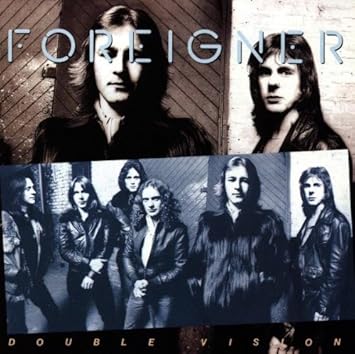
As if having “Double Vision” wasn’t enough, now Lou Gramm’s got a “Spellbinder” on his hands. Liz from Michigan suggested several bands that we could feature on Monthly Mixtape. I got excited at the idea of diving into the Foreigner files since I don’t know many songs besides the classics.

Searching through Foreigner’s discography, I came across “Spellbinder.” True, I judged the song by its title, and I was curious to know what the song sounded like. The title suggests that the song will have a mysterious and even possibly eerie vibe to it, and I wondered how it compares to “Double Vision,” the title track of the 1978 album of the same name. I have a bad habit of forgetting that Foreigner debuted in the late ’70s. Here’s my working theory: music at the beginning of a decade sounds similar to the end of the decade before it. This is a result of the simple fact that the new decade hasn’t completely found its unique sound yet. Thus, my brain automatically associates Foreigner with the early ’80s, when some of their massive hits stormed the airwaves in the late ’70s. From my experience, you can tell when a track belongs to Foreigner. They have their own powerhouse sound that never grows old as the years progress. That’s classic rock for you!

“Spellbinder”

Live version!

On hearing the instrumental to the song, I was surprised that it was soft and sort of gentle. I was expecting it to be a bit more eerie (perhaps I’m still thinking of “Love Potion no. 9” from February!). However, I do like the little pauses that are in this introduction. It’s suspenseful, and you’re waiting for vocals to come in.

Instantly, this song is different than other songs. Here, womanizer ways are put aside. It’s the woman who is victimizing men. Right off the bat, I’m interested in the lyrics. This song seems so simple, yet I enjoy the way the lyrics are arranged. I’m also stuck on the “wrong place, wrong time” reference. Usually it’s the “right place, right time.” When a man looks at a woman across the room, there are positive feelings. It’s usually the perfect night, not a tragic night. Already, this song is a contrast to other songs. The fact that the song itself is not played at a incredibly fast tempo also helps to showcase Gramm’s lament. He’s really reflecting here, and the reflection is about to get deeper.

I have to say, imagery shines through. I can picture him standing there, calling this woman’s name. I see her spin around (maybe a hair toss, too?) and then he’s awestruck. Again, it’s simple, but certainly not lost on the crowd. We’ve seen or encountered these situations before, but now we experience it in a new light because we know something bad happens. The guitar instrumental between the first and second verse also emphasizes that sense of “awestruck.” It’s almost as though he’s frozen, staring at this woman, and the instrumental reminds the listener of that image. It really strings the sound, image, and lyrics together.

The second verse is what strikes me the most. I like that he admits he’s not easy to please, yet this women is able to do so. I love how he says she made “life unreal.” These two lyrics leave me questioning: is that a bad thing? Would he rather live in reality? We definitely see that she is able to captivate him, but where does it all go wrong? The verse goes even further to note that she had it all planned out! So this isn’t her first rodeo! She’s manipulative. She knows what she’s doing.

Before moving on, I’d like to point out the rhyme scheme in this song. All songs are poetry, and “Spellbinder” has a “AABB” rhyme scheme. In other words, couplets. The last word in the first line rhymes with the last word in the second line. The last word in the third line rhymes with the last word in the fourth line. Rhyming in the world of literature today doesn’t always work out, as many readers like free verse. In songs, however, rhyme is perfectly acceptable. In “Spellbinder,” the rhyming is so subtle. I think this is partly due to the slower tempo. It’s still upbeat rock, but the listener isn’t being bashed over the head with couplets that sound cheesy. Lyrically, this song is very well done! But I’d expect nothing less!

As always, Gramm’s vocals soar on the chorus and we’re in full Foreigner land. In the bridge of the song, Gramm laments about knowing what love can do. A-ha! A moral to the story. The song comes full circle. We’ve been taken on this journey, this narrative. We’ve had exposition, a climax, and now we get a resolution. Of course, it’s not a happy ending because he can’t break free from her. A tragedy then. As it’s noted in the end, other men may be in disbelief of this spellbinder’s power, but they only have to fall prey and find out for themselves. Men will be made into tragedies.

The live version of the song takes off in the end. The riffs grow more intense. The instrumental really accompanies Gramm’s emotion about the spellbinder. He’s trying to make a point. He’s spouting out his feelings while trying to warn others. Did he succeed? I guess we’ll never know.

Conclusion

Foreigner is so iconic that they don’t need an introduction. Their music will always be memorable and fresh, whether you’re blasting “Cold as Ice,” chilling with “Waiting for a Girl Like You,” or jamming to forgotten tracks like “Spellbinder.” Maybe Foreigner isn’t so foreign after all.

Request a Song!

Do you know of a lost or underappreciated song that seemed to slip through the cracks–somewhere between 1950 and 1989 (some exceptions apply)? If you think it’s a song we might like to feature on Monthly Mixtape, please go to the “Contact ” page and fill out a form.

Join the Discussion!

What Foreigner song brings back the most memories for you? What song is your favorite?

My Friend the Mourning Dove

About a month or two into quarantine, my friend texts me that she heard the birds chirping outside her window at 2 a.m. She was not pleased. Birds are naturally more active in the morning, but 2 a.m. was just a bit too ambitious. And so, we began a conversation thread about birds. I jokingly suggested she stick her head out the window and yell at the birds, but we decided we don’t want to end up in a modern version of Hitchcock’s The Birds.

Ever since I took an intro to environmental science course last Fall, I’ve begun to notice and appreciate birds a lot more. True, this may sound a bit cheesy. They’re birds. They exist, they help nature, but why obsess over these winged-creatures?

Years ago when I was younger, I heard soft cooing from a bird outside my window. Often times the cooing would greet me as I woke up. At first I found it a bit annoying. There was a rhythm, maybe even a meter to the song of this bird. My annoyance grew into curiosity the more I heard the gentle bird, as I was left wondering, “do we have doves in Western Pennsylvania?” Why yes, we certainly do!

The Mourning Dove

The Mourning Dove, or Zenaida macroura, look like small gray pigeons and generally make a cooing sound when it’s going to rain (or so I’ve read somewhere ages ago). Their diet consists mostly of seeds, which can include peanuts, wild grass, etc. Every once in a while they eat berries and snails. They typically like to be in open land and on the edges of woodlands. They can also be found on telephone wires. In the winter, they will stay in wooded areas. While their nests are not very sturdy, mourning doves don’t mind being around humans.

I soon realized that the coo emitted by these small birds is sort of comforting, even though it is sorrowful. Although the same coos I heard over the years outside of my window were likely not from the same bird, I equated the sounds with one dove. Even when I am away from home, I say to myself, “there’s my dove buddy!” My dove buddies are always around. I guess you could say that their coos represent stability. They’re always around and gently remind you that they are there, perched on a telephone wire. Needless to say, I’m always on the lookout for Mourning Doves.

Mourning Doves like to perch on telephone wires.

References

Dockett, Eric. “16 Common Songbirds of Pennsylvania.” owlcation, 10 January 2019, https://owlcation.com/stem/Songbirds-of-the-Northeast

“Mourning Dove.” The Cornell Lab of Ornithology, 2019, https://www.allaboutbirds.org/guide/Mourning_Dove/overview

Citizen Science

My newfound love for Mourning Doves helped inspire my interest in birds. In my college science course, we learned about the concept of citizen science, which is exactly as it sounds. Citizens like you and me who do not possess a degree in science volunteer to gather data for scientists to analyze. Birding (aka “Bird Watching”) is when citizens log how many birds they see in a specific location for a specific amount of time. The Cornell Lab of Ornithology has an online site where citizens can log their birds and even find more information on certain bird species. Other online logging programs are also available.

Photo by Skitterphoto on Pexels.com

Here is the Cornell Lab site: https://www.birds.cornell.edu/home?utm_campaign=2020%2004%20FY20%20Big%20Day&utm_source=hs_email&utm_medium=email&utm_content=88195201&_hsenc=p2ANqtz-8nzEtMn6huR2w_E4cw8XccttAKEz6in-Q8R-N8lzmCBzS7mphvQMS7s5hWFpSQeA3JXLxxvZMScju302G3a-uH2xY7_R-NAbAG5ZzqENPyUWC1Q4U&_hsmi=88195201

Why Should We Care?

The data that citizen scientists gather about birds helps scientists to learn about the populations of different bird species. As a result, scientists can determine which bird species are thriving and which are headed for endangerment or extinction. Then scientists can implement a plan of conservation for endangered birds. Really, birding in a citizen science context is all about tracking bird populations and developing ways to conserve these populations. According to the American Bird Conservancy, bird conservation is important because scientists use bird populations to estimate how healthy an environment is. Bird conservation is important because over 500 species of birds in the U.S. are heading toward extinction. Birds who eat insects are predators who help continue the food chain.

Did you know that…?

  • Birds help regulate the number of pests on farms and in other locations.
  • Birds carry nutrients from one location to another, which helps plants receive essential nutrients.
  • Birds help combat climate change by spreading seeds; birds help to promote diversity by spreading seeds.

Read more here: https://abcbirds.org/about/mission-and-strategy/why-conserve-birds/

Birds and the Old Soul

Many old souls are introverts, and they need time to themselves to reboot and relieve stress. Birding, whether you submit data or not, is a solitary activity that can help relieve rumination, or those thoughts that keep churning in your brain. Nature is proven to have positive effects on mental health (there are many studies to support this theory). Birds, then, can be medicine for the old soul!

Conclusion

All in all, birds are pretty darn cool. One of my biology friends even went to Cape May New Jersey last year for a birding contest. Birding (and citizen science) is indeed a popular (and apparently competitive) field. Birds are vital to the ecosystem, and they can boost the human mood, too! There are so many species, it’s hard to know where to start. If you’re truly interested, you can always find a guide that will help you decipher the winged-creatures zipping through your backyard.

Birds used to blend into my everyday life. Now I’m starting to take notice, all thanks to my dove buddy! Even more, I have a guest at my house: an American Robin who built a nest on my porch swing. I think baby birds are due soon!

Roberta is making herself comfortable on our porch swing.

Spotlight Year: 1957

https://www.ridetech.com/1957-bel-air-air-ride/

Ah, the Baby Boomer age. Let’s take a minute to shine the spotlight on 1957. It was a time of ginormous cars, Sputnik, and, of course, Elvis! While we couldn’t feature everything those 365 days had to offer, here is a quick glimpse.

Cost of Living

Historically…

The Anne Frank Foundation was created in Amersterdam while JFK won a Pulitzer prize. This was also the year that the U.K. tested a hydrogen bomb while the British Medical Research Council announced that smoking and lung cancer could be connected. Meanwhile, Brown v. the board of Education made segregation illegal, repealing Plessy v. Ferguson. Hurricane Audrey hit southern American states. President Eisenhower became the first U.S. president to ride in a helicopter while the U.S. began its own nuclear testing in Nevada.

How are You Feeling, Daddy-O

Photo by Pixabay on Pexels.com

Think you know Fifties slang? Test your knowledge below!

http://www.poll-maker.com/QZG0XJX

Hitting the Tube

Like any year in history, many TV shows come to fruition and made their way into living rooms. According to IMDB, 1957 came with famous classics like Perry Mason and Leave it to Beaver. But I’d like to focus on the Westerns. A string of Westerns debuted in 1957, and their theme songs will get stuck in your head. That you can count on!

Wagon Train covered a lot of territory (pun intended) while traveling across the prairie. Each episode is named after a character, typically one of the travelers in the wagon train (for example, the “Jane Doe Story.” Ward Bond played Major Seth Adams, the wagon master, until John McIntire (Chris Hale) took command of the wagon train later in the show’s run. Of course, there was also Flint the scout (Robert Horton) and Charlie Wooster the comedic and eccentric cook of the train (Frank McGrath). And don’t forget the instrumental theme song! You’ll be humming it for hours!

Then there were Have Gun Will Travel and Maverick. In Have Gun Will Travel, Palladin (Richard Boone) is essentially a bounty hunter–“a gun for hire.” He’s always seen wearing black, and his symbol is a knight from a chess game. And if you don’t know this theme song, you MUST listen to it! It’s so catchy and even a little…haunting? Meanwhile, Bret Maverick (James Garner) is a gambler who always manages to find trouble. And that theme song? Well, it’s whimsical and, yes, will never leave your brain. Aren’t you living on “Jacks and Queens?”

What Records Do You Have Spinning?

Because The Hot 100 charts did not exist until 1958, the list of top 1957 songs varies among sources. In my handy Billboard’s Hottest 100 Hits reference book (published in 1991), Fred Bronson bases the list on the best-selling hits. According to Bronson, the top ten songs are:

  1. “Love Letters in the Sand” by Pat Boone; I listened and started swaying!
  2. “So Rare” by Jimmy Dorsey; very jazzy!
  3. “Tammy” by Debbie Reynolds
  4. “All Shook Up” by Elvis
  5. “Jailhouse Rock/Treat Me Nice” by Elvis
  6. “(Let Me Be Your) Teddy Bear” by Elvis
  7. “Honeycomb” by Jimmie Rodgers
  8. “Come Go with Me” by The Dell-Vikings
  9. “Bye Bye Love” by the Everly Brothers
  10. “Searchin’/Young Blood” by The Coasters
Talk about “Wah-Wah!”

Which song is you 1957 jam? Vote now! https://linkto.run/p/C5LK1X9Q

Made in the Shade!

And that’s a bit of 1957! Leave a comment to tell us your favorite memory of 1957 or a fact you dig. Perhaps the best product of 1957 is my mother (Happy Birthday, Mom!)

Photo by T Z on Pexels.com
Did you know that the Frisbee disc was invented in 1957?

References and Further Reading

http://www.thepeoplehistory.com/1957.html

1957

https://www.onthisday.com/events/date/1957

https://catslikeus.com/pages/retro-style-rockabilly-quotes

Monthly Mixtape: Respectfully Breaking Chains with Erasure

Andy Bell and Vince Clarke of Erasure

Only we can break the chains of love…and show a little respect! This month we’re featuring two songs–a side A and B–on Monthly Mixtape.

Synth-pop exploded on the airwaves in the 1980s. In 1988, duo Erasure released their second album, The Innocents. The duo formed in 1986 when lead vocalist Andy Bell teamed up with Vince Clarke, a founding member of both Depeche Mode and Yazoo.

In the U.S., the songs “Chains of Love” and “A Little Respect” reached the Top 20. Although Erasure’s career has spanned three decades, it seems to me that, in 2020, these two songs have been skipped over in favor of other totally awesome ’80s hits.

Erasure’s discography is jammed packed with songs that speak to the human condition, specifically love and vices. Their music speaks directly to the soul and dreams about who we can become in the future.

Read more about Erasure here:

“Chains of Love”

The song has a very mild and slow start, which helps the listener to also slow down and pay attention to the lyrics. There is no sense of urgency yet. Bell is setting the mood, preparing to speak his mind about something difficult, something even he isn’t sure he can put into words.

When the tempo picks up and the infectious synth-pop ’80s vibe enters, the mood changes. Things aren’t as serious, but perhaps this is to lighten the mood and keep interest. But as we’ll see, an inspiring message lies at the heart of the song.

I love the verses of this song, because they dive into very deep and inspiring territory. The verses depict how the world used to be–a sense of nostalgia. “Do you remember when…” The sense of loss and need for remembrance contrast the dance-friendly beat, but that’s not necessarily a bad thing. In fact, it makes the listener contemplate the song’s meaning even more. Bell shoots up an octave on the “hand” of verse one. The emotion is there, and it’s raw. He’s lamenting.

The chorus is a plea to us, the listeners and to humans everywhere. But Erasure isn’t preachy in their songs. They’re humans speaking to humans. They’re not playing God and condemning us all. The chorus is upbeat, positive. “Hey human race, we got this!”

I’d also like to note that the opening lyrics pop up again in the bridge of the song, but they’re delivered much faster. Now we’ve cut to the chase. The message is still hard to put into words, but he’s attempting. Perhaps this tempo increase shows how emotional he is about the the topic. His emotions are ramping up, just like the song.

I’ll never get enough of this song, and watching Andy Bell swing around chains is also very fun!

“A Little Respect”

From the start, this song is already at a mid-tempo, but there is a tinge of sadness, or even contemplation and reflection. When Bell comes in, the emotion is raw once more. I’m a sucker for octave jumps, and his vocals soar and fall in an instant (it hits the heart, that’s for sure).

This song is most definitely another plea. He doesn’t want his heart to be broken when he has good intentions. He’s trying to save himself, his own heart, even though it might not work out the way he desperately hopes. Every human relationship demands and deserves respect, and the emotion in Bell’s voice comes straight from the heart (and soul, I might add). It’s his moment of weakness when he’s trying to be strong.

As we continue to the second verse, Bell again begs for peace and love. There’s a beauty in these lines. Instead of breaking up and going separate ways, love can in fact win, or at least that’s what Bell is striving for. He’s broken, and we, as the listeners, feel and relate to that brokenness as well. After all, we are all human and experience similar emotions at various points in our lives.

By the end of the song, it’s clear that he is giving his all and just wants respect from the the other person. Wow, don’t we all?

The Erasure Legacy

Contrary to their name, Erasure should not be wiped away from our treasure troves of powerful music. “Chains of Love” and “A Little Respect” both combine the need for love, respect, and peace. These songs convey the message that we all have the ability to respectfully break the chains… of love, that is.

When I first fell in love with Erasure, I was naive. I played The Innocents in the background while I worked and didn’t pay much attention. At first, the other songs didn’t hit me as much as these two featured ones did. But I’ve recently come back to Erasure’s catalogue. While I have much listening and analyzing to do, I’m excited to dive in. Erasure’s songs shouldn’t be ignored because they are so relevant, and their lyrics are so beautifully crafted. Bell and Clarke are true poets, and we still need poets like them today. The emotion they weave into their music captures the heart and makes you feel utterly human.

Join the Discussion!

How do Erasure’s songs impact you?

Wait, there are TWO of Them?!

An only child can’t write about twins!

Are you sure about that? In 2019, my short story “The Branded Shadow” was published in The Twofer Compendium by Celestial Echo Press. It has also been nominated for the Washington Science Fiction Association Small Press Award.

Plot Summary

Blake seeks help from his twin brother Ben after shooting a competing rancher in self-defense. Ben, who is the sheriff, probes Blake to discern the facts. Offended, Blake skips town, knowing that the son of the rancher he killed will be after him. Blake finds Rosemary stranded outside of town and kidnaps her out of anger for his brother. Blake just can’t shake the feeling of living in Ben’s shadow…

New Review!

Recently, book reviewer Chris Fried wrote an excellent review of The Twofer Compendium. Please see the link below to find out more. The anthology is currently available on Amazon.

Twofer Compendium Review

There’s never been a better time to read. Enjoy!

A Glimpse at Mindset through the Minds of Capt. Kirk, Mr. Spock, and Prof. Gordon Zellaby

https://www.history.com/.image/c_limit%2Ccs_srgb%2Cq_auto:good%2Cw_686/MTU3ODc4NjAyOTg2OTU2NTEx/image-placeholder-title.webp

A few weekends ago, MeTV (Memorable Entertainment, that is), aired two “mindful” programs on their Sci-Fi Saturday Night. Both the Village of the Damned (presented by Svengoolie) and the Star Trek episode “Spectre of the Gun” explored the notions of mindset, specifically instances of a fixed and a growth mindset. By delving into the mindsets of the main characters, we realize that a fixed mindset and a growth mindset can both apply to the same situation. Sometimes, one mindset is more applicable and beneficial than the other.

Mindset

Today, much research and discussion has been geared toward fixed and growth mindsets. In sum, a fixed mindset stems from the belief that an individual’s talents and abilities cannot be changed. A person is born with an ability. Growth mindset, then, is the opposite. An individual’s abilities can grow and improve with effort and positivity. Feedback isn’t a deterrent but a learning opportunity. Check out more information on mindset in the video below!

Village of the Damned

A strange occurrence takes Midwich by storm, er, sleep. One day everyone in town mysteriously falls asleep for no reason. When they wake up, a great deal of time later, all of the women, young and old, are with child. Some of the men are furious at their wives. Who are the real fathers of these soon-to-be children?

https://www.imdb.com/title/tt0054443/

Professor Gordon Zellaby is ecstatic to be a father. At first he doesn’t realize that he isn’t actually the father. Nonetheless, he is excited. Once Gordon’s wife, Anthea, gives birth, the doctor notices that all of the children look similar: blond hair, big eyes. The children don’t seem to show emotion. They are robotic, cold and calculating. Zellaby is fascinated that all of the children are incredibly intelligent, including his son, David.

These mysterious (dare I say “alien”) children make the townspeople anxious, and they known it. Zellaby gathers them into a makeshift schoolhouse and teaches them. However, once the children kill two brothers with their odd powers (think: eyes glow and weird things happen), Zellaby realizes the danger these children present.

What’s more is that towns across the world have experienced this problem. The children know that others like them have been killed, so they ask Zellaby to find homes for each of them with parents who won’t turn them away.

All along, Zellaby has maintained a growth mindset. From an academic perspective, the children are fascinating. He teaches them on a highly intellectual level. At first he pushed aside their oddities. He believed they could change the future, find cures for diseases. Once the brothers are murdered and townspeople hypnotized, Zellaby learns his lesson.

In order to get rid of the kids, Zellaby creates a bomb. Knowing that the kids can read his mind, he resolves to think of nothing but a brick wall. The kids can’t penetrate his mental brick wall. Naturally, the kids get suspicious, but Zellaby holds onto this fixed mindset. He knows that the children are naturally no good. His mental wall almost crumbles completely, but the timer goes off and the schoolhouse is blown up, Zellaby with it. The final scene shows the children’s eyes floating from the flames, and Zellaby is nowhere in sight. For Zellaby, a fixed mindset worked in his favor, although he met a tragic end.

“Spectre of the Gun”

https://www.pinterest.com/pin/560064903662296242/

If it’s one thing Captain James Tiberius Kirk knows how to do, it’s to get in trouble by not following directions. After a warning to not enter the planet Melkot, Kirk decides to beam down anyway to try and establish peaceful relations. Of course the leader of the inhabitants, partially hidden by fog, says the away team must die as punishment for intruding . The method of death is peculiar. The away team (Kirk, Spock, McCoy, Scotty, and Chekov) are transported to an old western town. They are known as the historical Clanton gang while the Earps are going to kill them at 5 o’ clock. They will relive history and meet an inevitable end.

Chekov falls for a pretty girl who already belongs to one of the Earps. Poor Chekov doesn’t listen and is shot. The rest of the Enterprise believes he is actually dead in this “world.”

Then, McCoy concocts a tranquilizer to try and knock out the Earps. Scotty volunteers to be the Guinea pig, but the tranquilizer has no effect. How can that be when they did everything right? It should’ve worked! Should is the key word! Kirk, in his fixed mindset, is convinced that the tranquilizer was their only hope. Spock concludes that they must change their way of thinking. They can’t leave town due to a force field so they end up at the O.K. Corral at 5 o’ clock, waiting for the Earps.

As always, Spock has a solution. To override the effects of this strange world, they must believe that the bullets won’t hurt them. Spock does a classic mindmeld and “gives” the other Enterprise members the growth mindset needed to be indestructible. The world inside the force field doesn’t play by physical rules. This world isn’t real. It’s only real if you believe it. Realizing the bullets aren’t real (without doubt) is key to making it out alive. The mindmeld removes the doubt from the other’s minds. And don’t worry, Chekov is alive!

Check out more info here: https://m.imdb.com/title/tt0708448/plotsummary?ref_=m_tt_stry_pl

What’s on Your Mind?

Gordon Zellaby, Captain Kirk, and Mr. Spock all experienced situations where their mindset was crucial to the outcome of the situation. Characters in both Village of the Damned and “Spectre of the Gun” used a fixed mindset and a growth mindset. For Zellaby, his growth mindset needed to change into a fixed mindset in order to help rid the town of the strange children (supposedly, anyway). The children would never be good, and a brick wall was essential. Meanwhile, the Enterprise crew needed a growth mindset to realize that they could solve their own problem. They needed a fixed mindset to believe that they wouldn’t die on Melkot.

Everyone uses both mindsets at different times in life. In most cases, one mindset is usually more helpful than the other. Just as Kirk and Zellaby.

Easter Blessings! (And a Sneak Peek Ahead)

Dear Reader,

Happy Easter to you and your family! I hope that you find the peace and strength needed to carry on during these chaotic and trying times. But I don’t want to be depressing–it seems like everyone is these days.

I’d like to thank you for all of your support! Thank you for reading and following Confessions of a Classic Soul! Thank you for following me on Facebook and Instagram! Thank you for reading my blog posts, poems, and videos.

There’s much more to come, so, as always, stay tuned! And spread the word!

Coming Soon

  • Monthly Mixtape, Featuring Erasure– April 25
  • A Glimpse at Mindset through the Minds of Capt. Kirk and Prof. Gordon Zellaby
  • My Best Friend, the Mourning Dove

And if you haven’t yet had the chance to view this month’s Sticky Notes video poem, you can watch it below.

April Sticky Notes

No Nut Roll, No Easter!

In my house it’s called “nut roll,” which is equivalent to “nut bread.” In Croatia it’s called “povitica.” The Slovenians call it “potica.” No matter what you call it, the famous dessert roll with walnuts spread inside is a traditional Christmas and Easter food. The dessert is a tradition for many European countries, which is why it is still popular in the U.S., as many Americans come from similar European cultural backgrounds. While every country has its own recipe, the walnuts have become a classic.

Below you’ll find my family’s recipe for these sweet, addicting nut rolls, er, povitica, as my ancestors would say!

Ingredients

Bread:

  • 8 cups of flour
  • 1 tablespoon of salt
  • 1 cup of sugar
  • 4 sticks of margarine/oleo at room temp.
  • 4 eggs well beaten
  • 2 cups milk
  • 1 cup water
  • 2 packets of dry yeast

Walnut filling:

  • 7-8 cups of ground walnuts
  • 2 cups sugar
  • 2 teaspoons vanilla
  • 2 eggs well beaten
  • 1 cup milk
  • 1 stick margarine

Before You Start

Yields 8 rolls. Time: TBD. This is usually an all-day project, but very well worth the time and energy!

First, the Bread!

  1. In a large bowl, put in the flour. Make a well, or hole, in the flour.
The “well” doesn’t have to go all the way to the bottom.

  1. Put salt and sugar in the well.
  2. In medium sauce pan, put in margarine, milk, and water. Heat until the mixture is hot enough to melt yeast. The butter should be soft enough to squeeze by hand. Remove from heat.
  1. Add beaten eggs to pan with the mixture. Stir.
  2. Take 1/2 cup of mixture and put in separate bowl. Add yeast to this mixture and stir it until it dissolves completely.
  3. Put this yeast mixture in the well with the salt and sugar. Start mixing.
  4. Little by little, add the rest of the milk, water, and margarine mixture from the saucepan.
  5. Mix dough until it’s sticky some lumps.
  6. Add 1-2 cups of flour as necessary to make dough firmer.
  7. Take dough out of the bowl and grease the bowl. Then put the dough back in.
  8. Cover the top of the bowl with an old towel or sheet. Put the bowl someplace very warm. You can crank up your furnace or set the bowl on a space heater, with supervision.
If the bowl is not in a hot location, then the
the bread will not rise.
In a few hours, your bread should rise.
  1. Put down a cloth and place 8 balls of dough on the cloth.
  2. Cover the dough and let it rise again for a few minutes.
  3. Meanwhile, preheat your oven to 350 degrees and whip up your walnut filling.

Walnut Filling

  1. Boil milk and margarine similar to the way you did for the bread.
  2. In a separate bowl, mix ground walnuts, sugar, vanilla, and beaten eggs. Mix well.
  3. Add milk mixture a little at a time to the bowl.
  4. Mix until it’s smooth enough to spread.

Time to Roll!

  1. Roll out one ball of dough at a time with a rolling pin.
  2. Spread nuts over dough. Try not to make it too full.
  1. Roll dough like a jelly roll. Try to make the seam on the bottom.
  2. Put roll on baking sheet. Brush with an egg/milk mixture. Prick the top of the roll the whole way across with a fork.
  3. Bake for approx. 30 minutes until golden brown.
  4. Let rolls cool. To store, wrap in foil and freeze.

It’s quite normal for the nuts to gush out while they’re baking. Don’t panic!

There’s still time before Easter. Start baking now!

https://www.pinterest.com/pin/240872280041974888/

Join the Discussion!

What memories does nut roll bring back for you? Have you ever made it before?

Design a site like this with WordPress.com
Get started